
Reviewed · MUSEUMS
London: British Museum Guided Tour with Priority Entrance
History gets a fast, lively introduction here. This two-hour British Museum tour is a smart way to see major treasures without wandering the world’s largest museum in a daze. I especially like the priority entrance and the clear route through Egypt, Greece, Anglo-Saxon England, and Asia. I also like that guides such as Antonio, Mira, Alex, Tony, Tara, and James bring stories and context rather than simply pointing at display cases. The main drawback is time: two hours can show you the museum’s headline acts, but never the whole collection.
You meet your guide inside by the information desk at 52 Great Russell Street, not outside on the pavement. That detail matters in a huge museum. Headsets help you hear the commentary in crowded rooms, though the experience is not suitable for wheelchair users or people with mobility impairments, and the museum visit may feel too quick if you want a slow look at every object.
In This Review
- Key points to know before booking
- Why a guided visit helps at the British Museum
- Starting at 52 Great Russell Street
- The Great Court and its glass roof
- Egyptian mummies, the Rosetta Stone, and Ramesses II
- The Parthenon Sculptures and ancient Greek myths
- Sutton Hoo and Anglo-Saxon England
- The Enlightenment Room and the Asian collections
- The guides, headsets, and group experience
- Is $53.87 good value?
- Timing, access, and practical limits
- Who should book this British Museum tour?
- Should you book it?
- FAQ
- How long does the British Museum guided tour last?
- Where does the tour begin?
- Does the tour include priority entrance?
- Which languages are available?
- Are headsets provided?
- Is the tour suitable for wheelchair users?
Key points to know before booking
- Priority entry with an allocated timeslot: You use a separate entrance arrangement, which can make arrival less stressful.
- A world-history route in two hours: The tour links Egyptian mummies, Greek sculpture, Sutton Hoo, Asian art, and the Enlightenment Room.
- The Great Court begins the experience: Its glass roof gives you an immediate sense of the museum’s scale.
- Strong guide-led storytelling: Antonio, Mira, Alex, Tony, Tara, and James are among the guides praised for clear explanations and friendly delivery.
- Headsets help in crowded galleries: You can keep listening while standing back from a display.
- Best for a first visit: The tour gives you a useful map of the museum, but you should plan extra time afterward if possible.
Why a guided visit helps at the British Museum
The British Museum contains more than 8 million objects, displayed across more than 70 galleries. That is exciting until you walk through the doors and realize that the problem is not finding something interesting. The problem is choosing what to see first.
A guide solves that problem. Instead of spending your first hour reading floor plans and drifting into whichever room looks busy, you follow a planned route through major periods and cultures. The aim is not to cover every gallery. It is to give you a clear first picture of the collection and show you where to return later.
I like this approach for a first visit, especially if your London schedule is tight. Several guides are praised for choosing important objects well, keeping the pace moving, and adding myths, stories, and historical background. That turns a short visit into a connected lesson rather than a series of famous names.
You should keep your expectations sensible. A two-hour tour cannot offer a detailed study of the Rosetta Stone, the Parthenon Sculptures, Egyptian burial customs, Asian art, Sutton Hoo, and every other major collection. It is a highlights tour, and that is its strength. You get orientation first, then you can spend another hour or more returning to the rooms that caught your attention.
More Museum Visits in London
- Tower of London and Crown Jewels Exhibition Ticket
★ 4.5 · 6,677 reviews - London: Chelsea Football Club Stadium and Museum Tour
★ 4.8 · 4,576 reviews - Chelsea FC Stadium Tours and Museum
★ 5.0 · 1,908 reviews
Starting at 52 Great Russell Street
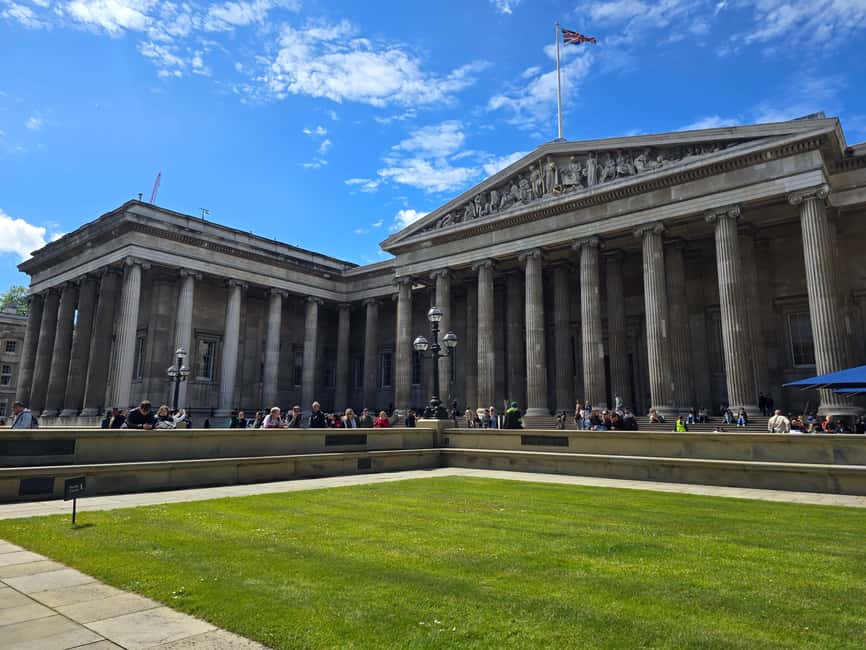
The stated starting point is 52 Great Russell Street, but your guide waits inside the museum next to the information desk. You need to enter the museum and make your way to that meeting point. Do not simply wait outside the address expecting a guide to find you.
The priority ticket uses an allocated entry time and a separate entrance arrangement. That is useful in central London, where a fixed appointment can help you plan the rest of your day. It does not mean the museum becomes private or quiet. Once inside, you are sharing the galleries with other people, so the guide’s headsets become valuable.
The tour returns to the same meeting point after the two-hour visit. Transportation, food, and drinks are not included, but this is a central museum visit rather than a day excursion, so you can easily arrange your own plans before or after it.
The Great Court and its glass roof
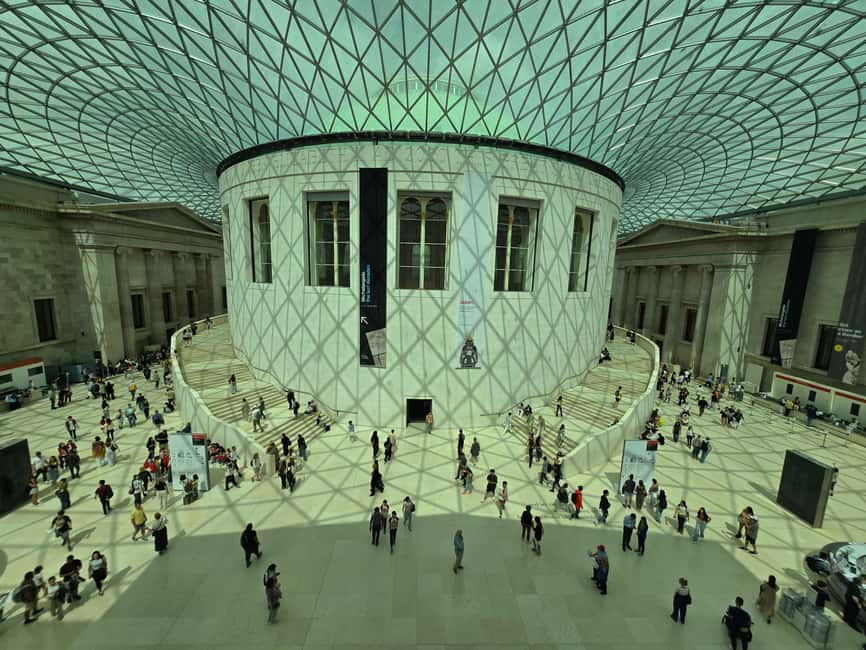
The Great Court is a strong opening because it gives you a sense of the building before you start focusing on individual objects. The dramatic glass roof is not just a ceiling you pass beneath on the way to the galleries. It is one of the museum’s visual highlights in its own right.
Your guide uses this first view to set the scene for the collection. The court also helps you understand the museum’s scale. From here, the route can lead in several directions, and that is exactly why a planned visit helps.
Take a moment to look upward before following the group. The tour has a schedule, but this is one place where a short pause pays off. You are seeing an architectural feature that feels modern while the objects around it reach back thousands of years.
Egyptian mummies, the Rosetta Stone, and Ramesses II
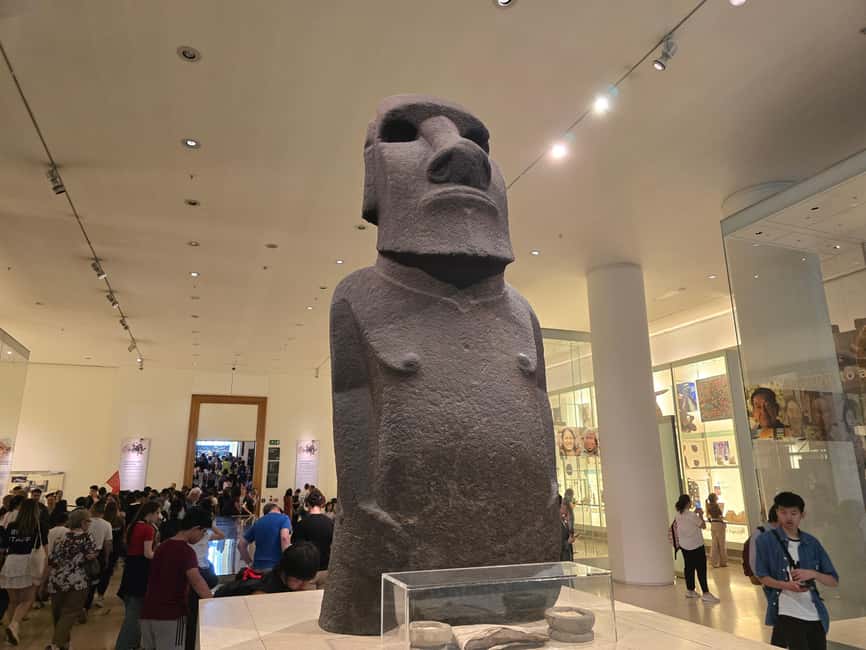
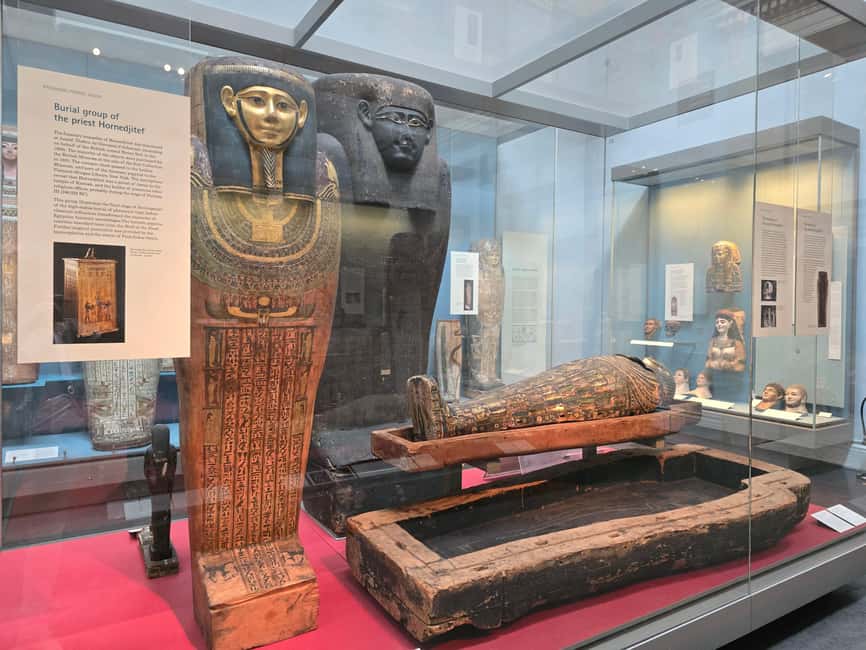
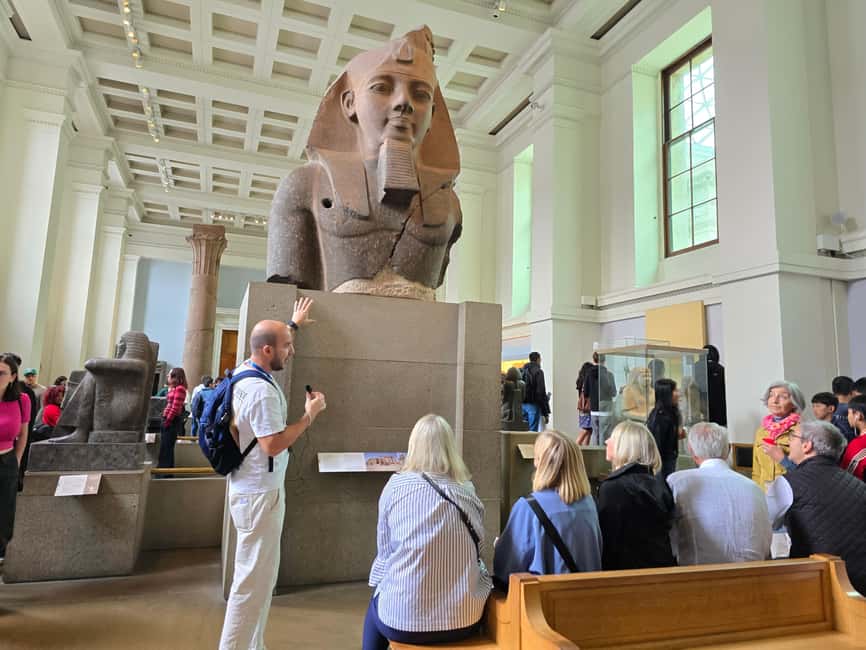
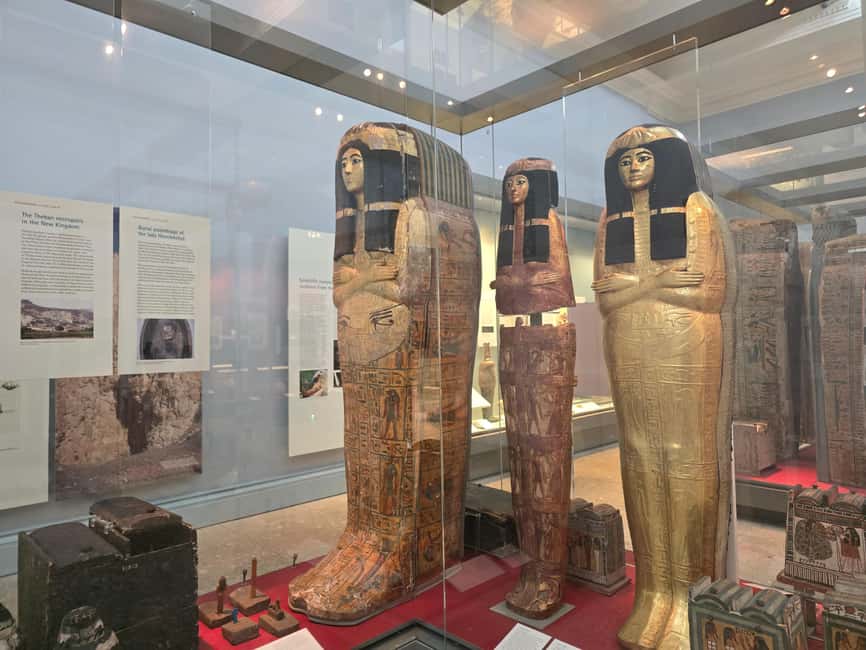
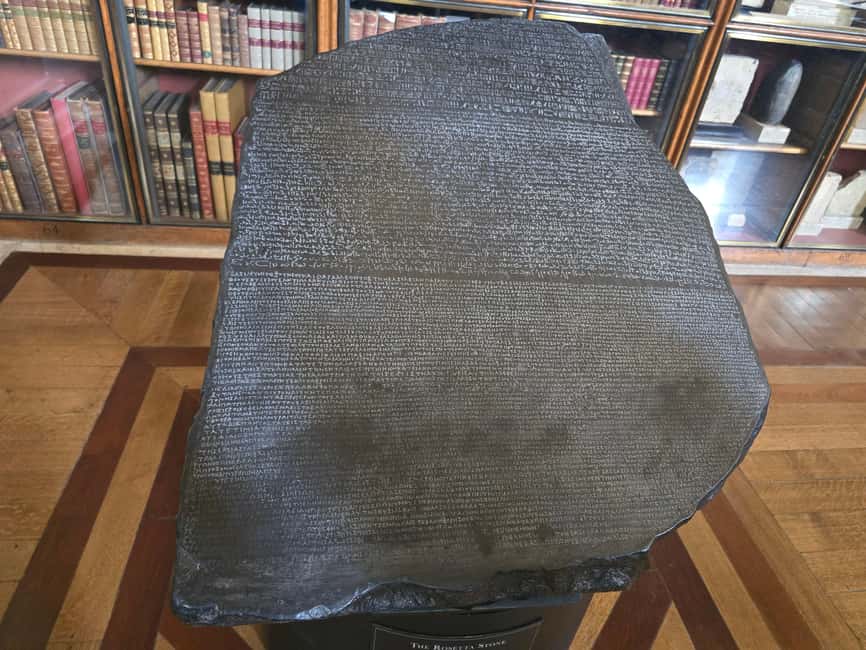
The Egyptian section supplies some of the tour’s most familiar sights. You are shown Egyptian mummies, the Book of the Dead, the Rosetta Stone, and the imposing bust of Ramesses II.
The value here is the explanation between the objects. A mummy is more than an ancient body behind glass, and the Book of the Dead opens a path into Egyptian religious beliefs and burial practices. The guide connects those ideas so the displays make sense as part of a society’s view of death and the afterlife.
The Rosetta Stone offers another kind of story. It represents the work of interpreting ancient writing and the role of language in recovering the past. A guide can give you the basic context quickly, then point out why the object matters beyond its famous name.
The bust of Ramesses II provides a powerful visual stop. You do not need a long lecture to appreciate its scale, but the background helps you place the ruler within ancient Egyptian culture. The tour’s Egyptian section is especially useful if you have never visited the museum before and want a firm starting point.
If hieroglyphics interest you, pay close attention during this portion. Some guides have been praised for explaining the subject clearly, and the format allows you to ask questions rather than simply read a label and move on.
A different sort of outing around London:
- London: The London Eye Entry Ticket
★ 4.6 · 35,875 reviews - From London: Harry Potter Warner Bros Studio Tour
★ 4.7 · 26,588 reviews - London: Westminster to Greenwich River Thames Cruise
★ 4.5 · 22,836 reviews - Magical London: Harry Potter Guided Walking Tour
★ 4.7 · 22,044 reviews
The Parthenon Sculptures and ancient Greek myths
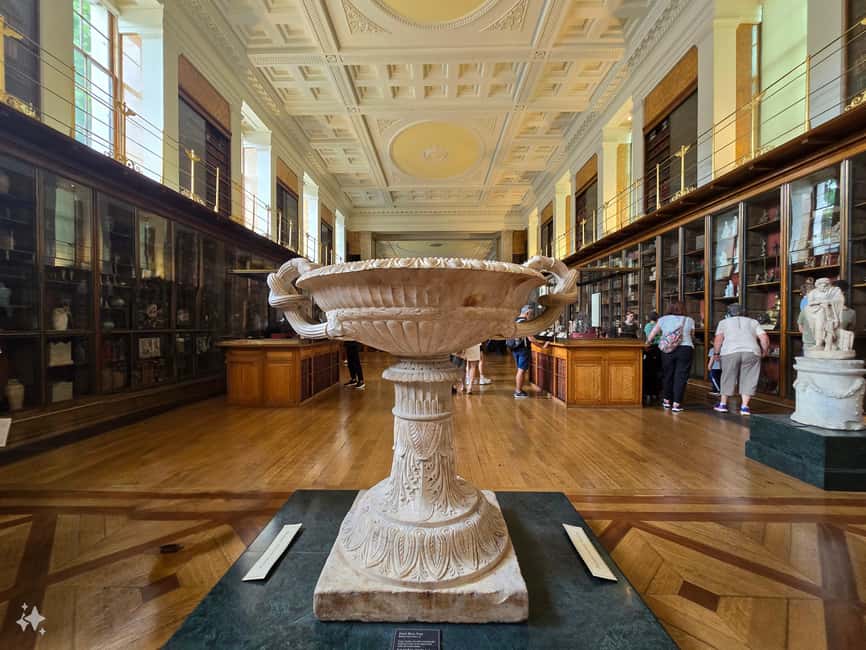
The Parthenon Sculptures, also called the Elgin Marbles, are among the museum’s best-known objects. The guide places them within ancient Greek art, architecture, myths, and legends.
This is one of the points where a guided explanation adds real value. The sculptures are fragments removed from the Parthenon, and their display raises questions about ownership, preservation, and the movement of cultural objects. The supplied information does not promise a full debate on the controversy, so do not expect a long specialist discussion, but you can ask your guide about the subject if time allows.
The tour focuses on the classical masterpieces themselves and the stories connected with them. Look closely at the carved figures and the remains of the original architectural setting. Without context, you may see beautiful marble fragments. With context, you begin to understand how they once worked as part of a larger monument.
This is also a good reminder that the museum presents objects from many places and periods. The guide’s job is to help you make connections without turning every stop into a lecture. Tony and Antonio are praised for giving useful background stories while keeping the two-hour route enjoyable.
Sutton Hoo and Anglo-Saxon England
The Sutton Hoo ship burial takes you into early medieval England. The display includes the famous helmet, shield, and other carefully made objects linked with the burial.
This part of the tour gives the museum a welcome change of pace. After the large civilizations of Egypt and Greece, you move into the history of Anglo-Saxon England and see evidence of skilled metalwork, ceremony, status, and burial customs.
The helmet is an obvious focus, but do not rush past the other pieces. The shield and associated objects help show the level of craftsmanship and the social world behind the burial. Your guide can turn what might look like a group of disconnected artifacts into a story about power and identity.
I like that Sutton Hoo is included alongside the more predictable Egyptian and Greek highlights. It gives you a stronger sense of the museum’s range and reminds you that British history is part of a much wider collection.
The Enlightenment Room and the Asian collections
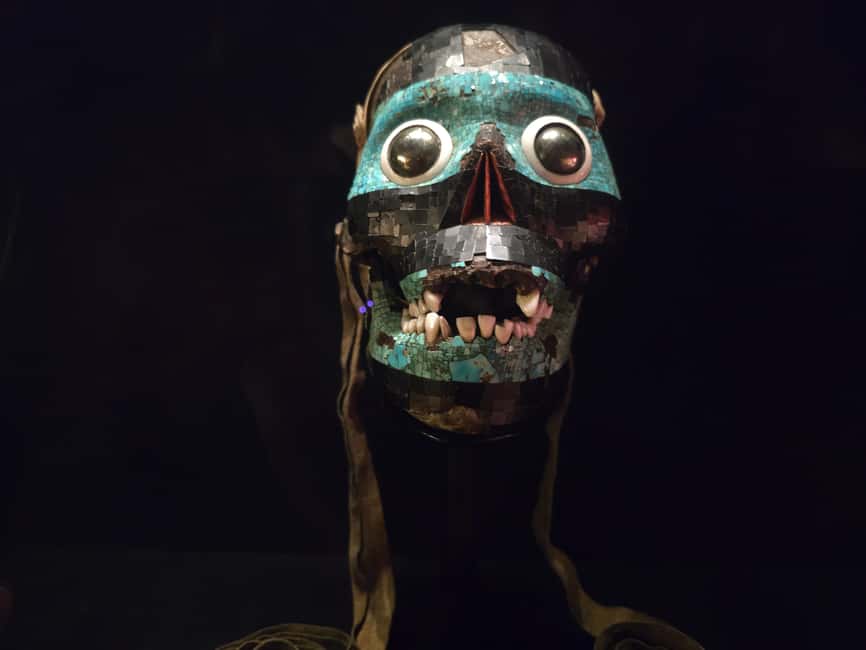
The Enlightenment Room reflects the intellectual curiosity and scientific progress of the 18th century. Its objects represent attempts to classify, study, and understand the world.
This room works well in a highlights tour because it changes the focus from ancient ritual and royal power to collecting, research, and the pursuit of knowledge. Your guide can show how the museum’s objects also tell the story of European ideas and institutions, not just the cultures that produced the artifacts.
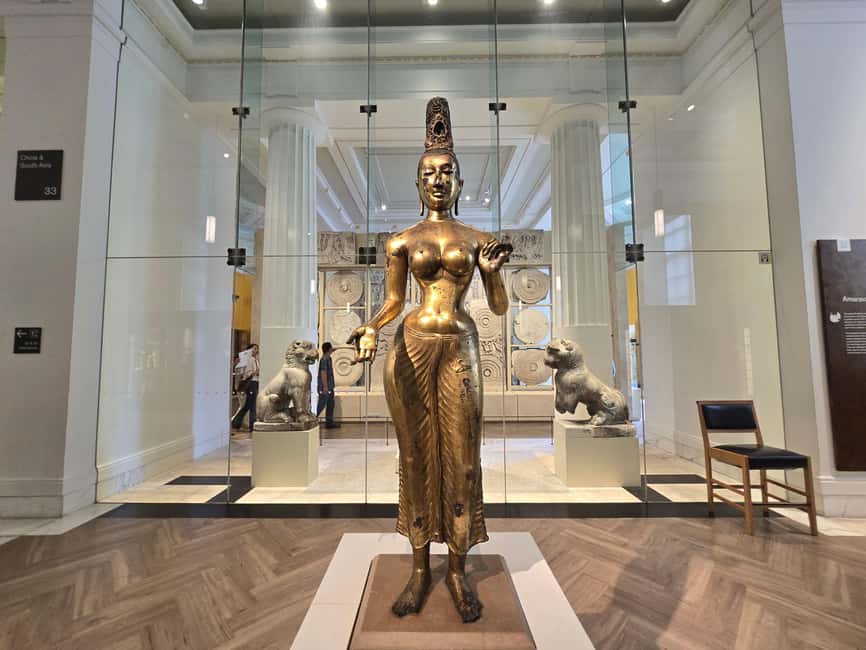
The route also includes Chinese collections and objects from Southeast Asia. The stated focus is on artistic traditions and the histories of the region. That gives you a useful counterweight to the European and Mediterranean galleries.
Do not expect a long, detailed tour of every Asian gallery in the available time. Instead, think of these stops as a sample. If Chinese or Southeast Asian art is your main interest, note the rooms and return after the guided portion. The tour is designed to give you a broad sweep across continents, not a specialist session in one collection.
The guides, headsets, and group experience
The guide is the heart of this activity. Antonio is praised for being interesting, professional, open to questions, and able to place objects in a wider world-history setting. Mira and Alex receive especially strong praise for their timing, humor, organization, and care in keeping the group together.
Tara is described as friendly, fun, and well informed about the exhibits. Tony is praised for creating a useful introduction and pointing out where to return for more time. James receives credit for helping people get around the museum and locate the main historic objects.
Guide assignments can change, so you should not book expecting one named person. Still, the repeated praise for different guides suggests that the operator places real weight on presentation. The best guides do more than recite dates. They check that the group is together, invite questions, use anecdotes, and adjust the pace when needed.
Headsets are available, and the experience information describes them as provided for clear commentary. One practical detail is that the audio system has been praised for working well in crowded rooms. That matters at the British Museum, where you may be standing several steps from the display while other people move around you.
A small group is available. If that option is offered at your chosen time, it should make questions easier and reduce the chance of being lost in a large crowd. On very small departures, the format may feel almost private, although you should not assume that will happen.
Is $53.87 good value?
At $53.87 per person, this is not the cheapest way to enter the British Museum. The museum itself is known for free general admission, although special entry arrangements and guided services can carry a charge. You are paying for the priority entry setup, the guide’s time, the planned route, and the audio equipment.
For me, the value depends on how you use the two hours. If you want to wander slowly and read every label, you may prefer to enter independently and keep your money. If you want a strong first orientation, the cost is easier to justify.
The tour is also more useful when time has a price. A first-time visitor can lose a large part of a morning finding the major galleries and working out what deserves attention. Here, you get a prepared route through the main eras, then the option to continue on your own.
I would book it for a short London stay, a first museum visit, or anyone who finds enormous collections tiring. I would skip it if you have already seen the highlights and want to spend several hours on one narrow subject.
Timing, access, and practical limits
The experience lasts two hours, with starting times shown when you check availability. Plan to arrive early enough to locate the entrance and the information desk, since the guide waits inside rather than outside at the street address.
The tour is not suitable for people with mobility impairments or wheelchair users. It is also not suitable for babies under one year or people with hearing impairments. Those restrictions are important, especially because the route moves through a large museum and relies on spoken commentary and headsets.
Flash photography is not allowed. Food and drinks are not included, and no transportation is provided. You can cancel up to 24 hours in advance for a full refund, and the reserve-now, pay-later option lets you hold a place without paying immediately.
The listed language information includes English, Italian, and Chinese for the live guide, while the included section specifically names English and Italian commentary. Check the language offered for your selected departure before booking if this matters to you.
Who should book this British Museum tour?
I would recommend it to first-time visitors who want the main story without spending a full day inside. It suits couples, families with older children, and curious adults who enjoy asking questions and hearing the background behind famous objects.
It is also a good choice for anyone who feels overwhelmed by a museum with 70-plus galleries. The guide gives you a route, a sense of proportion, and a list of places worth revisiting.
You should think twice if you need step-free suitability, use a wheelchair, have a hearing impairment, or want to study one collection at length. The tour moves across many subjects, so its purpose is orientation and highlights, not specialist research.
Should you book it?
Book this tour if you want an efficient first look at the British Museum, value lively explanation, and can accept that two hours only scratches the surface. The combination of priority entry, headsets, a small-group option, and a route through the museum’s best-known collections makes the price reasonable for a busy London schedule.
Skip it if you prefer a completely self-directed visit or plan to spend most of the day with one gallery. For everyone else, it offers a practical beginning: see the great objects, learn why they matter, and then return to the rooms that pull you back.
FAQ
How long does the British Museum guided tour last?
The guided tour lasts two hours. You can check available starting times when you select your date.
Where does the tour begin?
Your guide waits inside the British Museum next to the information desk. The listed meeting address is 52 Great Russell Street.
Does the tour include priority entrance?
Yes. The activity includes priority tickets for the main entrance with allocated timeslots and access through a separate entrance arrangement.
Which languages are available?
The live guide is listed as available in English, Italian, and Chinese. The included section specifically lists English and Italian commentary, so check the language for your selected departure.
Are headsets provided?
Headsets are available, and the experience information describes them as provided for the commentary. They help you hear the guide in crowded galleries.
Is the tour suitable for wheelchair users?
No. The experience is listed as unsuitable for wheelchair users and people with mobility impairments. It is also listed as unsuitable for people with hearing impairments and babies under one year.
Recently added around London
- PRIVATE HIRE 45 min Speedboat Tour – Embankment/Westminster Pier★ 5.0 · 55 reviews
- Private Tour of London’s Historic Pubs★ 5.0 · 55 reviews
- From London: Glastonbury and Cheddar Gorge Guided Day Trip★ 4.8 · 55 reviews
- London: Kew to Westminster River Thames Cruise★ 4.2 · 55 reviews
- Gatwick Airport Taxi – Private Transfer to/from London★ 5.0 · 55 reviews
- London by Night – Tootbus Sightseeing Tour★ 3.5 · 55 reviews
- London: Tower of London After Hours Tour and Key Ceremony★ 4.8 · 56 reviews
- From London: Cotswolds Guided Trip Including Bourton-on-the-Water★ 4.5 · 56 reviews
Museums, compared.

Liverpool Football Club Museum and Stadium Tour
Read our review →
Tower of London and Crown Jewels Exhibition Ticket
Read our review →
Chelsea Football Club Stadium and Museum Tour
Read our review →




Browse the lists this tour appears in