
Reviewed · MUSEUMS
London: British Museum Highlights Guided Small Group Tour
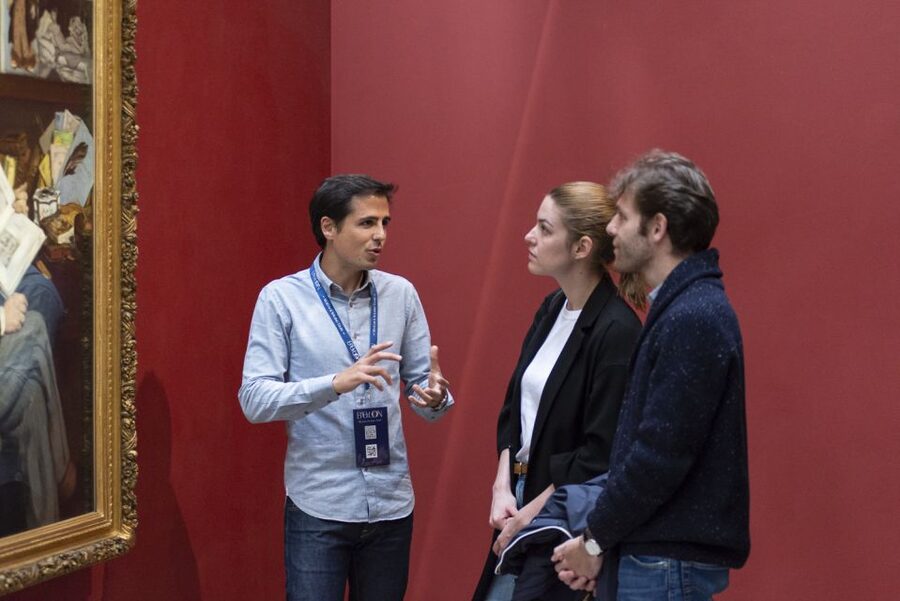
History comes alive in two focused hours. This British Museum tour makes sense of an enormous collection by taking you to headline objects such as the Rosetta Stone and the Parthenon Sculpture, then adding less familiar treasures, including the Oxus Treasure and Lewis Chessmen. I like the way the guides connect objects across different cultures instead of treating each display as an isolated curiosity. I also like the small-group format, with semi-private tours capped at eight people.
The main drawback is time. Two to two and a half hours is enough for a strong introduction, but not enough to see the museum properly. You may leave wanting more, especially if you enjoy ancient Egypt, Greece, Assyria, or Asian art. At $112 per person, the price is easiest to justify if you want context and direction rather than simply wandering through the galleries.
In This Review
- Key points to know before booking
- Why a guide helps inside the British Museum
- The Rosetta Stone gives the tour an ideal opening
- Assyrian lion hunts show power in motion
- The Parthenon Sculpture brings history and controversy together
- The Lewis Chessmen make medieval life feel close
- The Oxus Treasure reveals wealth, belief, and craftsmanship
- Mummy of Katebet adds a personal Egyptian story
- Samurai armor expands the museum beyond Europe
- The Royal Game of Ur connects play with ancient cities
- A fast route through a very large museum
- What the guides do particularly well
- Is $112 per person a fair price?
- Practical advice before you go
- Who should book this British Museum tour?
- Should you book it?
- FAQ
- How long does the British Museum highlights tour last?
- What language is the tour offered in?
- Is this a private tour or a small-group tour?
- What is the minimum number of people required?
- What happens if the semi-private tour does not reach its minimum?
- Which British Museum objects are normally included?
- Can the advertised objects be unavailable?
- Can wheelchair users join the tour?
- What should I bring, and what is not allowed?
Key points to know before booking
- The Rosetta Stone is the actual ancient stele, not the language-learning software, and it anchors a useful look at how scholars read Egyptian writing.
- The tour links famous objects with overlooked ones, including the Mummy of Katebet, the Royal Game of Ur, and the Oxus Treasure.
- Guides do the hard work of navigation, helping you cross a vast museum without wasting half your visit deciding where to go next.
- The tone is serious but lively, with humor and stories that have worked well for teenagers and younger children.
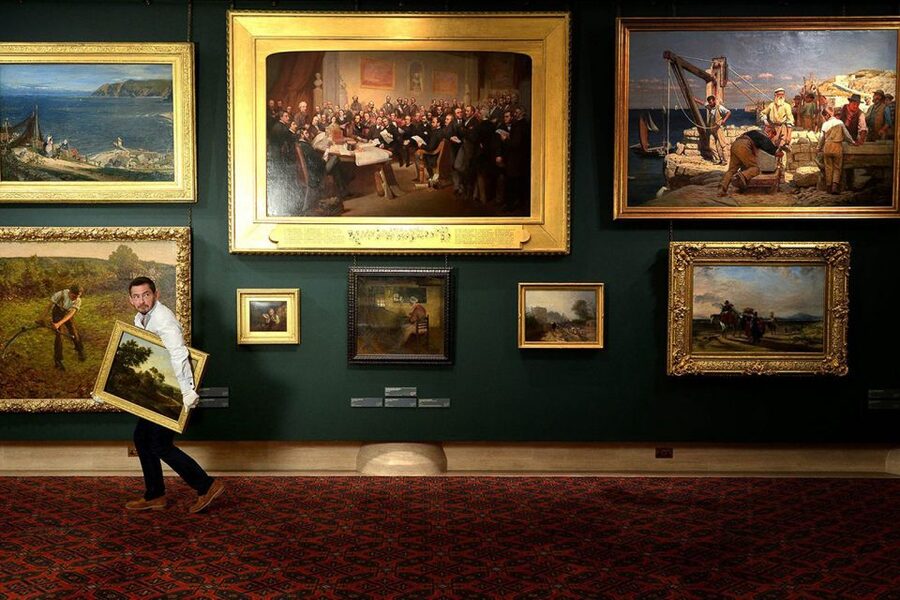
- Semi-private groups hold no more than eight people, while private tours give you more control over pace and questions.
- Plan to travel light: large bags and luggage are not allowed, and the meeting point can vary by booking option.
Why a guide helps inside the British Museum

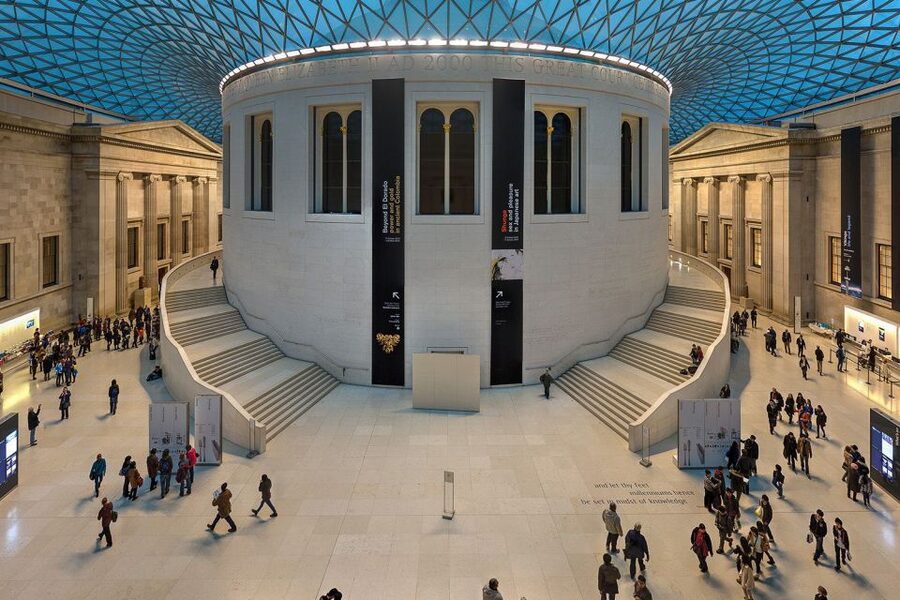
The British Museum is not a small, tidy gallery where you can stroll from one masterpiece to the next. Its holdings cover roughly 6,000 years of human history, with objects connected to societies from many parts of the world. Without a plan, it is easy to spend too long in one room and miss the pieces you came to see.
I like the purpose of this tour: it gives you a route through the museum and explains why selected objects matter. The guide does not try to recite every label. Instead, the visit uses a manageable group of objects to tell a larger story about technology, belief, warfare, trade, art, and daily life.
That approach is especially useful if you have limited time in London. You can leave with a working sense of the museum rather than a blur of names and dates. Several guides praised by name in the feedback, including Andy, Sacha, Stef, Sheldon, Luis, and James, were described as clear, funny, and good at turning an object into a story.
The strongest guides also seem willing to discuss uncomfortable parts of British collecting. Emily was especially appreciated for speaking frankly about the less flattering sides of British history and the way some objects reached the museum. That candor matters. A museum built from objects gathered across the world deserves more than a parade of beautiful things without context.
More Museum Visits in London
- Tower of London and Crown Jewels Exhibition Ticket
★ 4.5 · 6,677 reviews - London: Chelsea Football Club Stadium and Museum Tour
★ 4.8 · 4,576 reviews - Chelsea FC Stadium Tours and Museum
★ 5.0 · 1,908 reviews
The Rosetta Stone gives the tour an ideal opening
The Rosetta Stone is one of the museum’s famous stops, and for good reason. It is a physical object with an unusually clear role in the history of understanding ancient Egypt. Your guide can help you see it not just as a celebrated slab of dark stone, but as evidence of how one message written in different scripts helped scholars make progress with Egyptian hieroglyphs.
The exhibit can attract plenty of attention, so a guide is useful here. You get help identifying the object and a short explanation of why it changed the study of ancient Egypt. The tour does not promise a long scholarly lecture, but it should give you enough background to understand why this particular stone became so important.
This is also a good example of the tour’s basic method. You look at one object, then use it to discuss a wider human achievement: preserving language, recording authority, and finding ways for writing to cross time. The joke about the actual rock rather than the software is harmless, but the object itself deserves the attention it gets.
Assyrian lion hunts show power in motion

The Assyrian Lion Hunt reliefs offer a very different experience. Instead of a single famous stone, you see a sequence of carved scenes filled with movement, violence, royal display, and careful observation of the animals. The reliefs show the king hunting lions, turning the event into both spectacle and political message.
Your guide can point out how the reliefs work as art and propaganda. They are not simply records of a sporting event. They help show how an empire wanted its ruler to be seen: brave, controlled, and powerful enough to face a dangerous animal.
This stop is likely to appeal to children and teenagers because the scenes are easy to read at a glance. Adults get more from the details and the discussion of kingship, empire, and the way rulers used images to shape public opinion. If you are short on time, this is one of the exhibits where a good explanation can make a major difference.
The Parthenon Sculpture brings history and controversy together
The Parthenon Sculpture is another expected highlight, but it is not just a chance to admire ancient Greek carving. The objects also raise questions about ownership, removal, museum display, and the complicated relationship between Britain and Greece.
A strong guide can give you the artistic basics while also addressing the wider dispute in plain language. Look for details in the figures, clothing, posture, and carved movement. Then listen for the explanation of how the sculptures arrived in Britain and why their presence remains debated.
This is one of the places where the quality of the guide matters most. A rushed presentation can make the stop feel like a standard art-history lesson. A thoughtful one can help you understand both the beauty of the work and the ethical questions surrounding it. Emily’s direct approach to difficult aspects of British collecting suggests that some guides are comfortable treating the museum as a place for discussion, not just admiration.
A different sort of outing around London:
- London: The London Eye Entry Ticket
★ 4.6 · 35,875 reviews - From London: Harry Potter Warner Bros Studio Tour
★ 4.7 · 26,588 reviews - London: Westminster to Greenwich River Thames Cruise
★ 4.5 · 22,836 reviews - Magical London: Harry Potter Guided Walking Tour
★ 4.7 · 22,044 reviews
The Lewis Chessmen make medieval life feel close
The Lewis Chessmen are smaller than the monumental reliefs and sculptures, but they have an appeal that crosses age groups. These carved chess pieces connect play, craftsmanship, trade, status, and medieval life in one compact display.
Your guide may use them to explain how an object made for a game can tell us about the society that produced and valued it. You can look closely at the faces and poses, which give the pieces more personality than most game counters. They are memorable because they feel human, slightly comic, and easy to imagine in use.
Families often get a lot from this stop. The pieces give younger visitors something concrete to look at, while the conversation can move toward trade routes, craftsmanship, and the role of games in society. It is a welcome change of scale after the large Assyrian and Greek displays.
The Oxus Treasure reveals wealth, belief, and craftsmanship
The Oxus Treasure is less instantly familiar than the Rosetta Stone, yet it can become one of the most rewarding stops. The collection includes precious objects associated with the ancient Persian world, giving the guide a chance to discuss metalwork, wealth, religious practice, and connections between regions.
This is where a tour can help you avoid simply walking past a display of small, finely made objects. Without context, you might admire the workmanship and move on. With context, you can begin to understand what the objects suggest about the people who made them, used them, and valued them.
The Oxus Treasure also fits the tour’s wider theme: human achievement is not limited to the best-known civilizations. Forgotten kingdoms and less familiar communities produced sophisticated art, tools, and systems of belief. That broader view keeps the visit from becoming a greatest-hits tour of only Egypt, Greece, and Rome.
Mummy of Katebet adds a personal Egyptian story
The Mummy of Katebet gives the Egyptian section a more personal focus. Instead of considering only rulers, monuments, and writing systems, you encounter the remains of an individual woman and the practices surrounding death and remembrance.
A guide can explain what the mummy tells us and what it cannot tell us. That distinction is important. Museum displays can make ancient people seem like symbols, but Katebet’s burial helps return some human scale to the subject. You are looking at evidence of a person, not only an example of an ancient custom.
This stop may be especially helpful for children who are curious about mummies but need a calm, respectful explanation. The tour presents the subject as part of a society’s beliefs and rituals, rather than relying on sensational treatment.
Samurai armor expands the museum beyond Europe
The Samurai armor provides a useful change of direction. After ancient Mesopotamia, Egypt, Greece, and Persia, the tour can shift toward Japan and introduce a different tradition of warfare, identity, and craftsmanship.
Armor is an effective museum object because it combines practical design with status and visual display. Your guide can help you notice how materials, decoration, and construction communicate the wearer’s position and the culture that produced the equipment.
This stop also helps fulfill the promise of a world collection. You are not simply moving through a sequence of European galleries. You are seeing how different societies addressed similar human concerns, including defense, rank, ceremony, and skilled manufacture.
The Royal Game of Ur connects play with ancient cities
The Royal Game of Ur is another compact object with a broad story behind it. A board game may seem less grand than a sculpture or a carved relief, but it can reveal how people spent their free time and what materials were available to skilled makers.
The guide can place the game within the setting of ancient Mesopotamia and use it to discuss ordinary behavior alongside royal culture. That balance is valuable. Museums often give the most space to rulers and temples, while a game offers a glimpse of leisure and social life.
You should not expect a full explanation of every object listed in the tour description. The route and exact stops can change if an item is being restored or lent elsewhere. Still, the Royal Game of Ur is the kind of object that benefits from a few well-chosen facts.
A fast route through a very large museum
The tour lasts two to two and a half hours. That sounds generous until you remember the size of the British Museum. You will walk between galleries, stop for explanations, and deal with the pace of other people in the building.
The guides receive especially strong praise for moving groups efficiently through crowded areas. James was singled out for finding a practical route to the main pieces, while Luis was praised for giving the group time with objects despite busy galleries. That is not a minor skill. A good museum guide must manage both history and traffic.
You should expect a highlights visit, not a complete survey. Some people wanted another half hour and a few more objects. That is a fair criticism, but extending the tour too much could also weaken its focus. I prefer a guide who spends enough time on fewer objects rather than rushing past a long list.
After the tour, you can continue independently if you still have energy. One advantage of a guided introduction is that you finish with a better sense of which galleries deserve your extra time.
What the guides do particularly well
The most consistent strength is the guides’ ability to make information usable. They are not simply naming dates and civilizations. They are explaining what you are looking at, why it matters, and how it fits into a larger human story.
Humor is another recurring strength. Stef was praised for combining facts, stories, and wit. Sacha was described as passionate and engaging. Luis was especially good with children aged eight and thirteen, and other guides helped teenagers stay interested. That matters in a museum where long labels and unfamiliar names can quickly lose a young audience.
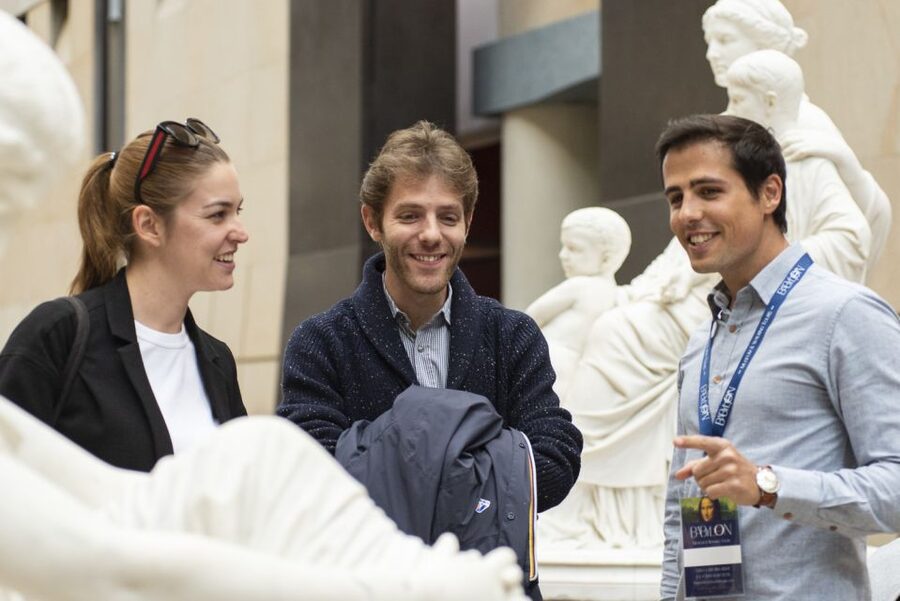
The best guide for you will depend partly on your own interests. A history enthusiast may value Andy’s academic background and extended explanations. A family may prefer someone like Ivo, who was praised for selecting objects that worked for both children and adults. The tour provider is Babylon Tours London, and the available guide is assigned rather than chosen in the information provided.
Is $112 per person a fair price?
At $112 per person, this is not a budget activity. The price pays for a professional local guide and the efficiency of a private or semi-private visit, not for hotel transfers, food, drinks, or temporary exhibitions.
I think the value is strongest in three situations. You have only one visit to the British Museum, you feel overwhelmed by large museums, or you want historical context instead of independent browsing. In those cases, the guide can save time and turn a famous building full of objects into an intelligible experience.
The value is weaker if you enjoy reading labels at your own pace, already know the museum well, or plan to spend a full day exploring slowly. You may get more from visiting independently and choosing your own rooms.
Semi-private tours are limited to eight people, and private tours are available. A small group usually makes it easier to hear the guide and ask questions. A private booking is the better choice if you need a wheelchair-accessible format, since wheelchair tours are available only privately and must be requested.
Practical advice before you go
Bring a passport or ID card, and avoid luggage or large bags. The meeting point can vary depending on the option you book, so check your confirmation carefully rather than assuming every group meets at the same place.
The tour involves a small amount of walking. Wheelchair users should request a private tour in advance, since the small-group format is not available for guests who require a wheelchair.
The experience is offered daily in English. There is a minimum booking requirement of two people, and the semi-private tour needs at least two participants to run. If that minimum is not met, an alternative date or full refund is offered.
You can cancel up to 24 hours before the tour for a full refund, and reserve now while paying later. Those terms are useful if your London schedule is still changing.
Who should book this British Museum tour?
I would recommend it to first-time visitors, families with older children or teenagers, and anyone who wants a clear route through a giant museum. It also suits history fans who enjoy asking questions and discussing how objects reached a collection.
The tour is less suitable for someone who wants an exhaustive visit. You will not see everything in two and a half hours, and even the highlighted objects may change if a piece is on loan or being restored.
Should you book it?
Book this tour if the British Museum feels too large to tackle alone. The strongest reason to go is not simply access to famous objects. It is the guide’s ability to connect the Rosetta Stone, Assyrian reliefs, Persian treasure, Japanese armor, Egyptian remains, and medieval chess pieces into a readable story about human ambition and daily life.
Skip it if you prefer a slow, self-directed museum day or already have a detailed plan. For most first-time visitors with limited time, though, the small group, strong guide feedback, and focused route make $112 a reasonable price for a much more meaningful introduction.
FAQ
How long does the British Museum highlights tour last?
The tour lasts between two and two and a half hours.
What language is the tour offered in?
The tour is offered in English with a live tour guide.
Is this a private tour or a small-group tour?
Both options are available. The semi-private tour has a maximum of eight guests, and private tours can also be booked.
What is the minimum number of people required?
There must be at least two people per booking. The semi-private tour also requires a minimum of two guests to run.
What happens if the semi-private tour does not reach its minimum?
An alternative date or a full refund will be offered if the minimum number is not met.
Which British Museum objects are normally included?
The highlights generally include the Rosetta Stone, Assyrian Lion Hunt reliefs, Parthenon Sculpture, Lewis Chessmen, Oxus Treasure, Royal Game of Ur, Mummy of Katebet, and Samurai armor.
Can the advertised objects be unavailable?
Yes. Objects may be unavailable if they are on loan or being restored, so the exact selection can change.
Can wheelchair users join the tour?
Wheelchair tours are available on request, but only as private tours. A small-group tour is not available for guests who require a wheelchair.
What should I bring, and what is not allowed?
Bring a passport or ID card. Luggage and large bags are not allowed, and the visit involves a small amount of walking.
Recently added around London
- PRIVATE HIRE 45 min Speedboat Tour – Embankment/Westminster Pier★ 5.0 · 55 reviews
- Private Tour of London’s Historic Pubs★ 5.0 · 55 reviews
- From London: Glastonbury and Cheddar Gorge Guided Day Trip★ 4.8 · 55 reviews
- London: Kew to Westminster River Thames Cruise★ 4.2 · 55 reviews
- Gatwick Airport Taxi – Private Transfer to/from London★ 5.0 · 55 reviews
- London by Night – Tootbus Sightseeing Tour★ 3.5 · 55 reviews
- London: Tower of London After Hours Tour and Key Ceremony★ 4.8 · 56 reviews
- Palaces, Parliament & Power: A Walking Tour of London’s Royal City★ 5.0 · 56 reviews
Museums, compared.

Liverpool Football Club Museum and Stadium Tour
Read our review →
Tower of London and Crown Jewels Exhibition Ticket
Read our review →
Chelsea Football Club Stadium and Museum Tour
Read our review →




Browse the lists this tour appears in