
Reviewed · MUSEUMS
London: British Museum Tour with Archaeologist Guide
The British Museum can swallow a whole day. This 2.5-hour guided visit makes the vast collection manageable, taking you from the Rosetta Stone and Ramses II to Viking chess pieces and Sutton Hoo treasures. I like the sharp focus on major objects, and I like having an archaeologist explain the people, politics, and mysteries behind them. The main drawback is simple: you will see only a fraction of the museum, and crowded galleries can make listening harder.
Meet at Russell Square Station, then walk about five minutes to the museum with the guide. Rossa is frequently praised for his lively storytelling, clear voice, and ability to keep children and adults interested. You must leave Russell Square promptly at 9:45 a.m. to make the museum entry slot, so this is not a morning for arriving at the last second.
In This Review
- Key points to know before booking
- Meeting at Russell Square at 9:45 a.m.
- Entering a museum too large for one visit
- The Rosetta Stone and the power of one object
- Assyrian palaces and the politics of stone
- The Parthenon Marbles and a difficult museum question
- Moai, Aztec treasures, and the world beyond Europe
- The Lewis Chessmen and the Viking Age
- Sutton Hoo and the mystery of King Raedwald
- How Rossa’s guiding style changes the visit
- Price, time, and what you receive for $58
- Who should book this British Museum tour?
- Should you book it?
- FAQ
- Where does the tour begin?
- What time must I arrive?
- What happens if I am late?
- How long does the tour last?
- Where does the tour finish?
- Is museum entry included?
- Is food included?
- What language is the tour in?
- Is the tour wheelchair accessible?
- Can I cancel for a refund?
- What should I bring?
Key points to know before booking
- An archaeologist leads the tour: Rossa brings academic training, strong storytelling, and detailed answers to questions.
- The route covers famous and less familiar objects: Expect the Rosetta Stone, Parthenon Marbles, Ramses II, Assyrian palace pieces, Lewis Chessmen, Moai statues, and Sutton Hoo.
- Sutton Hoo adds a British connection: The hoard linked to King Raedwald gives the tour a striking look at the early medieval world.
- The museum’s scale becomes manageable: A fixed route helps you avoid wandering from room to room without knowing what matters.
- It suits families and short visits: Children aged 12 and 14 were reported to enjoy the stories, and the timing works well when you cannot spare a full day.
- Crowds are the chief nuisance: Busy rooms may make movement and conversation difficult, even with a guide who projects well.
Meeting at Russell Square at 9:45 a.m.
The tour begins outside Russell Square Underground Station. Look for a guide holding a tablet marked Spirit of Discovery. From there, the group walks roughly five minutes to the British Museum.
That short walk is useful. You do not have to search for the museum entrance on your own, and the group arrives together for its timed entry. The schedule is firm because the tour must reach its entry slot. If you are running late, call the provider for directions to the group, but do not count on the guide waiting at the station.
This meeting point also makes an early start practical. Russell Square is close to the museum, and you can arrive in the area by Underground rather than dealing with a complicated transfer. Wear comfortable shoes and carry water. You will be on your feet for the entire visit.
Large bags and luggage are not allowed, and weapons or sharp objects are prohibited. This matters if you are coming straight from a hotel or railway station. The safest plan is to leave bulky bags elsewhere before meeting the guide.
More Museum Visits in London
- Tower of London and Crown Jewels Exhibition Ticket
★ 4.5 · 6,677 reviews - London: Chelsea Football Club Stadium and Museum Tour
★ 4.8 · 4,576 reviews - Chelsea FC Stadium Tours and Museum
★ 5.0 · 1,908 reviews
Entering a museum too large for one visit
The British Museum is famous partly because it is so difficult to take in. Its galleries range across ancient Egypt, Assyria, Greece, the Viking Age, early medieval Britain, the Americas, and the Pacific. Without a plan, you can spend twenty minutes reading one case and still feel as if you have barely begun.
A guide changes the rhythm. Instead of treating every object as equally important, Rossa focuses on selected pieces and explains why they matter. That approach gives you a usable framework for the rest of your visit. After the tour, you can return to galleries that caught your attention, rather than trying to make sense of the entire building at once.
The separate entrance is another practical benefit. It is described as a skip-the-line entry, though you should still expect security procedures and museum crowds once inside. The tour does not promise an empty gallery. In fact, the museum can be noisy and packed, particularly around its best-known objects.
Rossa’s clear, strong voice helps. Several people specifically valued being able to hear him in crowded rooms. Still, you should stay close to the group and keep your attention on the guide. A busy museum is not the place to drift several displays away while examining a case.
The Rosetta Stone and the power of one object
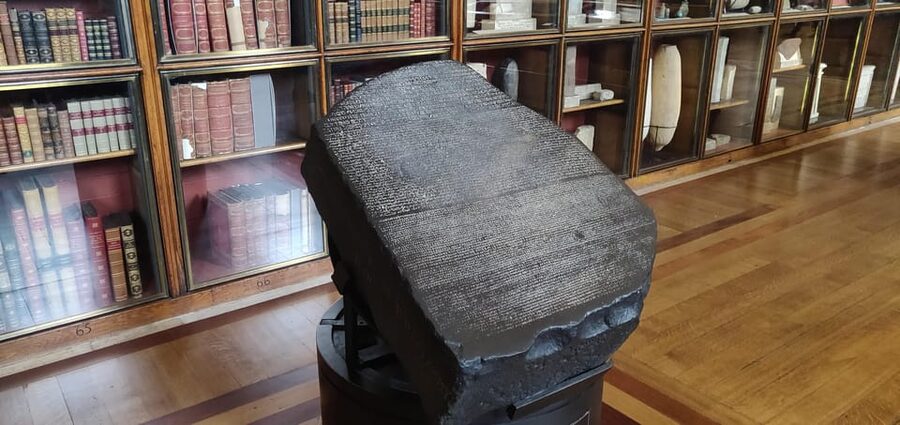
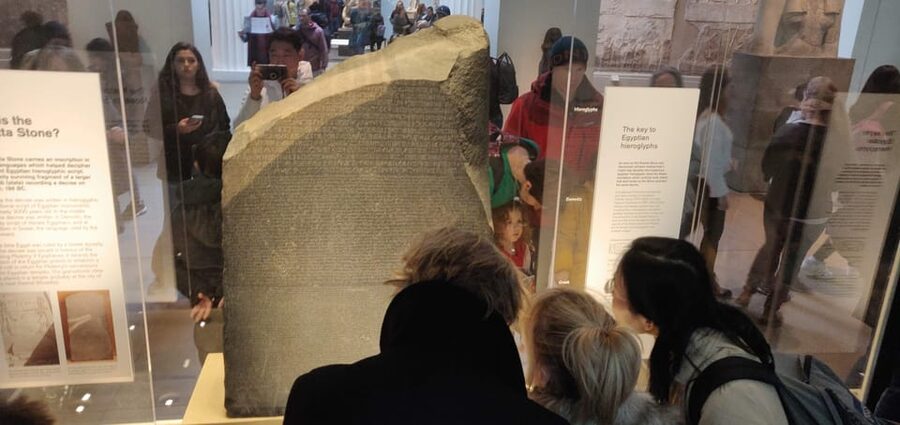
The Rosetta Stone is an obvious first stop, but it earns the attention. The stone carries the same decree in three scripts, including Egyptian hieroglyphs. Its importance is not just that it is old or famous. It provided the key for comparing languages and interpreting hieroglyphic writing.
A guide can make this familiar object feel less like a celebrity photo stop. You hear how scholars used the repeated text, why the scripts mattered, and how the stone changed the study of ancient Egypt. That context is the point of the tour. Museum labels give essential facts, while a good explanation shows how the facts fit together.
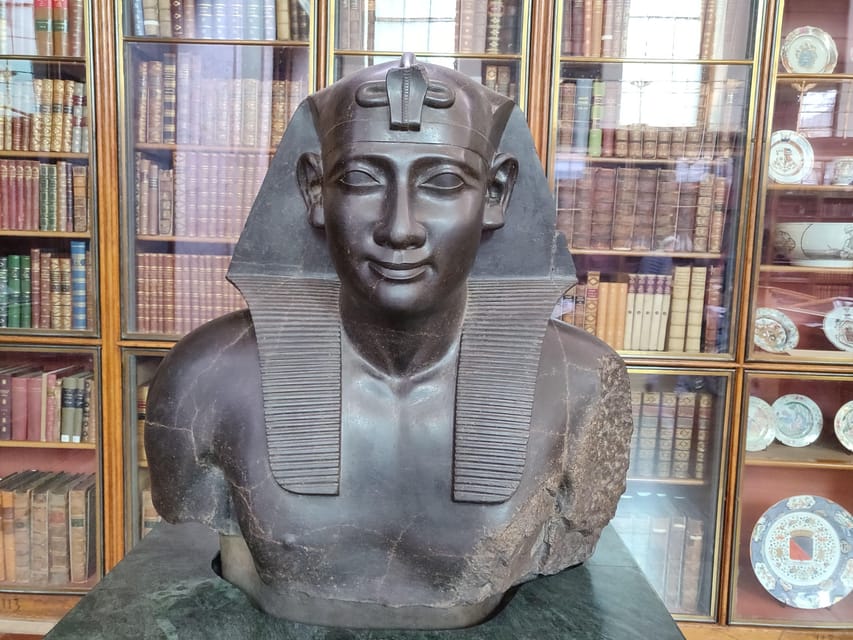
You will also encounter monumental Egyptian material, including the colossal statue of Ramses II. Its size gives you an immediate sense of royal power, but the story is not only about scale. The guide places the statue within the world of pharaohs, state authority, and the way rulers wanted to be remembered.
The Egyptian galleries are especially helpful for families. Younger visitors may not want a long lecture about writing systems or royal propaganda, but a guide who connects the object to a puzzle, a ruler, or a discovery gives them a reason to keep watching. The tour’s family appeal comes from this storytelling approach rather than from trying to turn the museum into a children’s attraction.
Assyrian palaces and the politics of stone
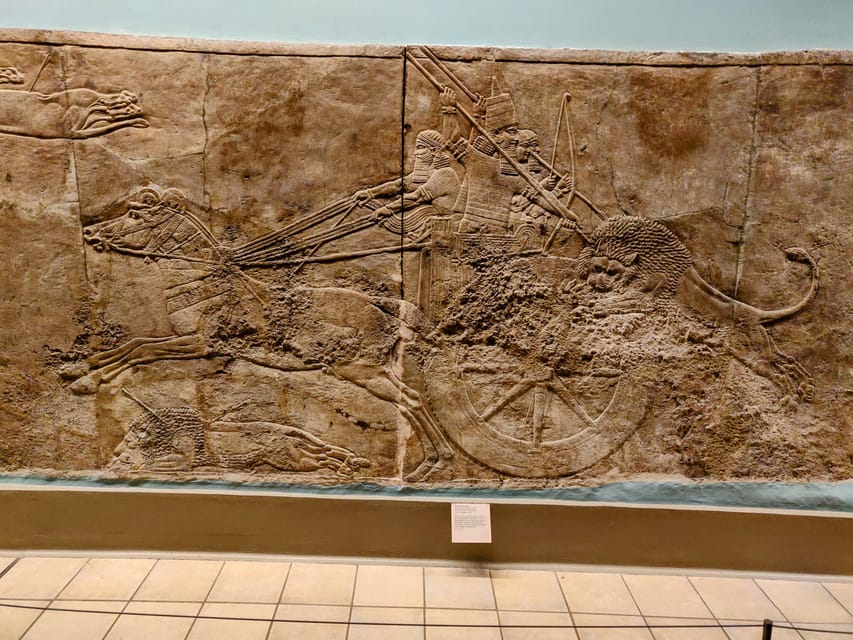
The Assyrian displays shift the mood from Egyptian kingship to imperial power. You will see imposing palace reliefs and other remains connected with the Assyrian Empire. These works show rulers, attendants, animals, and military scenes through carved stone and carefully arranged imagery.
The useful question here is not simply what the relief depicts. It is why an empire placed such scenes in its palaces and what the images told people who entered those spaces. Rossa’s archaeological background helps connect the object to its original setting, rather than leaving it as a beautiful fragment on a museum wall.
This is one of the tour’s strongest features: the guide discusses not only the artifact but also the people involved in its discovery and removal. That adds another layer to the visit. You are looking at an ancient object, but you are also considering how modern archaeologists, collectors, and museums came to possess it.
Because the British Museum covers so much ground, the route cannot give every Assyrian object equal time. If this is your main interest, you may want to return after the guided portion and explore the gallery at your own pace.
A different sort of outing around London:
- London: The London Eye Entry Ticket
★ 4.6 · 35,875 reviews - From London: Harry Potter Warner Bros Studio Tour
★ 4.7 · 26,588 reviews - London: Westminster to Greenwich River Thames Cruise
★ 4.5 · 22,836 reviews - Magical London: Harry Potter Guided Walking Tour
★ 4.7 · 22,044 reviews
The Parthenon Marbles and a difficult museum question
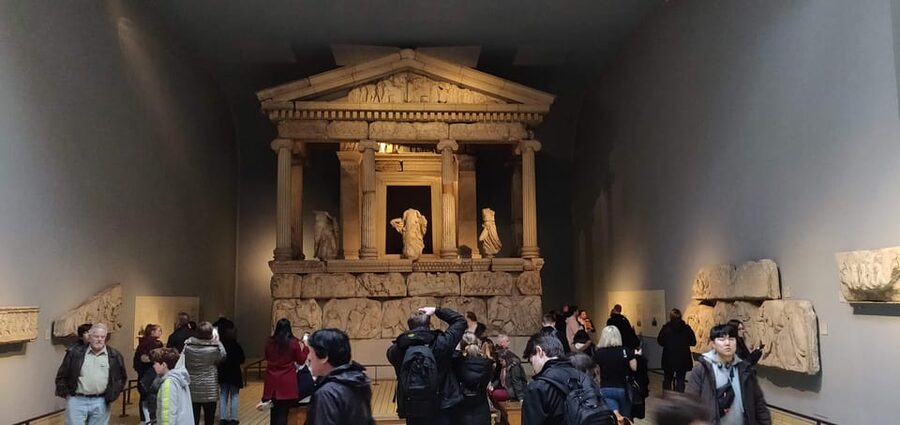
The Parthenon Marbles are among the museum’s best-known displays. These sculptures once formed part of the Parthenon in Athens, and they offer a chance to look closely at ancient Greek art, religious buildings, and the way sculptors represented the human body and the gods.
The objects also raise questions about ownership and removal. A thoughtful guide can explain the historical setting without reducing the subject to a simple slogan. You get more from the gallery when you consider both the original monument and the modern story of how the sculptures arrived in London.
The marbles are a major reason many people choose this tour. Seeing them with a guide gives you a better sense of their original architectural role. Instead of viewing isolated figures and fragments, you begin to picture how they worked as part of a larger building.
Crowding can be a problem here. The Parthenon galleries attract plenty of attention, and people may gather around the most recognizable pieces. Keep your expectations realistic: the guide can improve your understanding, but cannot control the number of people in the room.
Moai, Aztec treasures, and the world beyond Europe
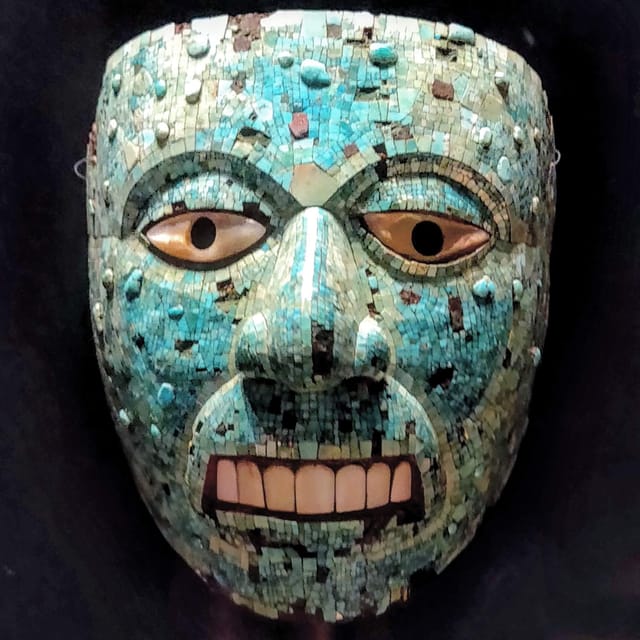
The route does not stay in the ancient Mediterranean. It reaches the Moai statues of Easter Island and objects connected with the Aztec Empire. This wider range is important because it prevents the museum from feeling like a tour of only Egypt, Greece, and Rome.
The Moai raise questions about how monumental statues were made, moved, and understood within their island society. The Aztec material brings a different set of concerns, including power, ceremony, precious materials, and the way European accounts shaped later understanding of the empire.
The supplied highlights refer to the crown jewels of the Aztec Empire. Treat that phrase as a broad description of spectacular Aztec treasures, not as a promise that you will see a complete royal crown collection. The museum route focuses on selected highlights, and display arrangements can change.
This part of the tour is valuable because it gives you contrast. You move from carved stone and imperial monuments to objects that express belief, status, and community in different ways. You also get a reminder that no single civilization provides the whole story of the past.
The Lewis Chessmen and the Viking Age
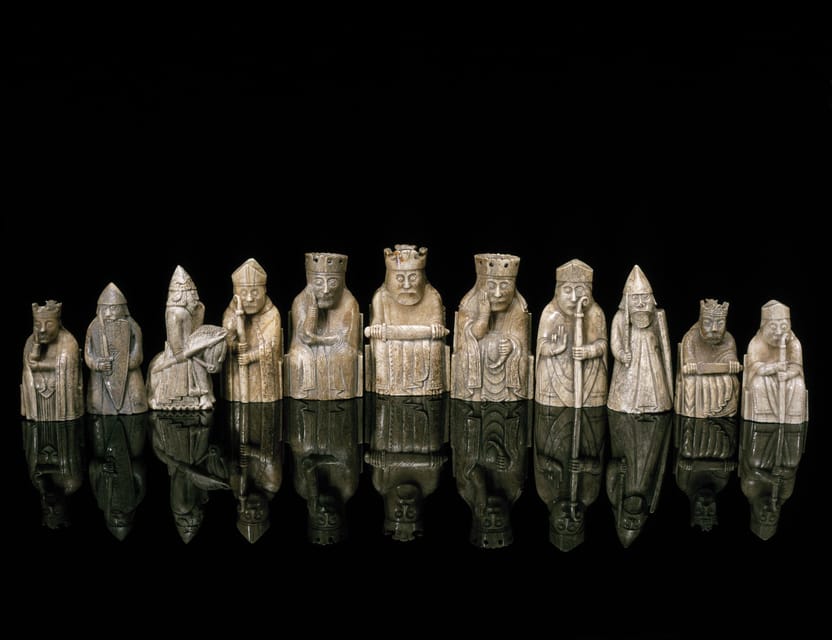
The Lewis Chessmen are among the most charming objects on the route. These small carved figures, associated with the Viking Age, are easy to underestimate until you learn what they reveal about trade, craftsmanship, games, and social life.
The set includes expressive human figures rather than plain tokens. Some look stern, worried, or almost comical. That personality makes them especially effective for families and for anyone who finds large monuments less approachable.
Here, the guide can turn a case of tiny objects into a story about movement across the medieval North Atlantic. Their appeal is not just their age. They show that people in the Viking world played games, valued skilled carving, and carried objects across long distances.
This stop also gives your eyes a break from enormous statues and palace walls. After the scale of Ramses II and the Assyrian reliefs, the chessmen reward close attention. You may want to return to them later, since a short explanation cannot capture every figure in the set.
Sutton Hoo and the mystery of King Raedwald
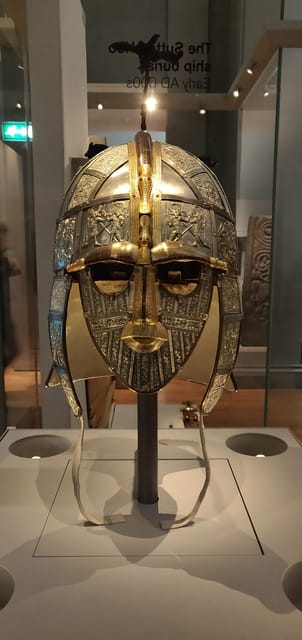
The Sutton Hoo hoard is one of the tour’s most memorable British highlights. It offers a rare look at the early medieval period, sometimes called the Dark Ages, through objects associated with a ship burial and a powerful ruler identified with King Raedwald.
The helmet is the object most people remember, but the larger lesson is the range of materials found with the burial. Gold, silver, weapons, ceremonial objects, and imported goods point to a society with strong connections, skilled craftspeople, and clear social rank.
Sutton Hoo also introduces uncertainty. Archaeology rarely gives us a complete written account of the person in the grave. You have objects, burial choices, comparisons with other finds, and later historical records. The guide can show how scholars build an interpretation from incomplete evidence.
That sense of mystery works well in a guided setting. You are not simply told that this is an important hoard. You learn why it matters and why the identity of the buried ruler remains part of the discussion. For a London visit, it is a fine reminder that Britain’s early medieval story was connected to the wider world.
How Rossa’s guiding style changes the visit
Rossa receives especially strong praise for his storytelling, preparation, and enthusiasm. He uses historical notes and an iPad, and he is described as speaking clearly enough to be heard in noisy galleries. Those details matter more than they may sound. A guide can know a great deal, but you also need to hear the explanation and follow its thread.
His method appears to favor depth over speed. You stop at a smaller number of major objects and spend enough time to understand their significance. One person felt that some explanations ran a little long, which is the fair tradeoff for this approach.
If you prefer racing through every headline object, this may feel slow. If you like asking questions and hearing the story behind an artifact, the pace should suit you. The guide also offers suggestions for what to see afterward, giving you a useful plan for the rest of your time in the museum.
The tour seems particularly strong for mixed-age groups. Parents with teenagers appreciated the ability to hold their attention, while adults valued the historical detail. The stories provide an easier entry point than a long sequence of dates and names.
Price, time, and what you receive for $58
At $58 per person, this is not the cheapest way to enter the British Museum, especially since general museum admission is commonly free. You are paying for the archaeologist guide, the structured route, the timed entry arrangement, and the hours of preparation behind a coherent explanation.
I consider that fair value if this is your first visit or if you have only one morning. The museum is huge, and the cost of wandering without direction can be a lost half-day. A focused tour can help you see the main pieces and understand them before returning to your own interests.
The value is less clear if you already know the museum well or want to explore at a very slow pace. The group follows a set program, and the 2.5-hour duration cannot cover every gallery. Food and drinks are not included, so plan your refreshment separately.
The tour finishes at the British Museum, not back at Russell Square. That is convenient because you can continue exploring after the guide leaves. You can also head elsewhere in London without retracing the route to the station.
Free cancellation is available up to 24 hours before the start time, and you can reserve now and pay later. The tour is wheelchair accessible. English is the only listed tour language.
Who should book this British Museum tour?
I would choose this for a first-time visitor who wants the museum’s major sights without spending a full day inside. It is also a good match for families with older children and teenagers, history fans, and anyone who prefers explanations to silent label reading.
The tour is a particularly sensible choice if you want to see the Rosetta Stone, Parthenon Marbles, Egyptian pieces, Lewis Chessmen, and Sutton Hoo in one morning. You will not study each gallery in full, but you will leave with a clear sense of how the objects connect to larger questions about power, belief, trade, burial, and discovery.
I would think twice if you dislike fixed schedules, crowded rooms, or guides who spend several minutes on one object. The museum can be busy, and the route is designed around selected highlights rather than personal wandering.
Should you book it?
Book this tour if the British Museum feels intimidating, if your London schedule is tight, or if you want an archaeologist to turn famous objects into memorable stories. Rossa’s clear delivery and lively style appear to be the main reasons this experience earns such strong approval.
Skip it if you already have a detailed museum plan and prefer complete freedom. For most first-time visitors, though, $58 buys more than entry. It buys direction, context, and a sensible way to make sense of one of London’s biggest cultural stops.
FAQ
Where does the tour begin?
The meeting point is at the entrance of Russell Square Underground Station. The guide will hold a tablet displaying Spirit of Discovery.
What time must I arrive?
The group leaves Russell Square promptly at 9:45 a.m. to make the British Museum entry slot.
What happens if I am late?
You should call the tour provider if you are running late so the group can direct you to its location. The guide cannot wait for late arrivals at the meeting point.
How long does the tour last?
The guided visit lasts 2.5 hours.
Where does the tour finish?
The tour finishes at the British Museum.
Is museum entry included?
Yes. Entry to the British Museum and the guided museum tour are included.
Is food included?
No. Food and drinks are not included.
What language is the tour in?
The live tour guide speaks English.
Is the tour wheelchair accessible?
Yes, the activity is listed as wheelchair accessible.
Can I cancel for a refund?
You can cancel up to 24 hours in advance for a full refund. You can also reserve now and pay later.
What should I bring?
Bring comfortable shoes and water. Large bags, luggage, weapons, and sharp objects are not allowed.
Recently added around London
- PRIVATE HIRE 45 min Speedboat Tour – Embankment/Westminster Pier★ 5.0 · 55 reviews
- Private Tour of London’s Historic Pubs★ 5.0 · 55 reviews
- From London: Glastonbury and Cheddar Gorge Guided Day Trip★ 4.8 · 55 reviews
- London: Kew to Westminster River Thames Cruise★ 4.2 · 55 reviews
- Gatwick Airport Taxi – Private Transfer to/from London★ 5.0 · 55 reviews
- London by Night – Tootbus Sightseeing Tour★ 3.5 · 55 reviews
- London: Tower of London After Hours Tour and Key Ceremony★ 4.8 · 56 reviews
- From London: Cotswolds Guided Trip Including Bourton-on-the-Water★ 4.5 · 56 reviews
Museums, compared.

Liverpool Football Club Museum and Stadium Tour
Read our review →
Tower of London and Crown Jewels Exhibition Ticket
Read our review →
Chelsea Football Club Stadium and Museum Tour
Read our review →




Browse the lists this tour appears in