
Reviewed · MUSEUMS
London: Natural History Museum Guided Tour
The museum is a world of big questions. This 2.5-hour guided visit makes sense of its 80 million specimens, taking you from the earth’s beginnings to early human history without leaving you to wander its vast galleries alone. I especially like the close look at the Dodo skeleton and the chance to see a first edition of On the Origin of Species. The Pompeii casts and the rare Archaeopteryx add real drama.
The tour’s other strength is its guide. Ivo, Matilda, Sacha, Luis, Guy V., and others have been praised for clear explanations, humor, patience, and a knack for involving children. The main consideration is price: at $112 per person, it makes the most sense if you value expert guidance and a focused route. Independent museum visitors may prefer to explore at their own pace.
Small groups are capped at eight people, and private bookings are available. You will do some walking, and large bags cannot enter. Wheelchair access is available only by request through a private tour, so this is not a suitable choice for wheelchair users without arranging that option ahead of time.
In This Review
- Key points to know before booking
- Why a guide helps in a museum this large
- Iguanodon teeth and the early story of life
- Archaeopteryx and the link between dinosaurs and birds
- The Dodo skeleton and the meaning of extinction
- Pompeii casts and the human cost of disaster
- The Cursed Amethyst and the Giant Sequoia
- A first edition of Darwin’s most important book
- What the guide adds to the experience
- Is $112 per person good value?
- Practical details that affect your day
- Who should book this Natural History Museum tour?
- Should you book it?
- FAQ
- How long does the Natural History Museum guided tour last?
- What language is the tour offered in?
- What are the main highlights?
- How many people are in the group?
- Is skip-the-line access included?
- Can I bring luggage?
- Is the tour suitable for wheelchair users?
- What happens if the museum closes or opens late?
Key points to know before booking
- Follow the story of life: The route links fossils, extinct animals, geology, human origins, and famous scientific works.
- See rare and memorable objects: Expect Iguanodon teeth, a Dodo skeleton, Archaeopteryx, Pompeii casts, and the Cursed Amethyst.
- Choose between intimacy and value: Private tours are available, while group tours hold no more than eight people.
- A strong choice for families: Guides such as Ivo and Guy V. have been especially good at answering children’s questions.
- Plan for museum security: Bring a passport or ID card, but leave luggage and large bags behind.
- Allow 2.5 hours: The timing is long enough for major highlights without turning into an exhausting all-day visit.
Why a guide helps in a museum this large
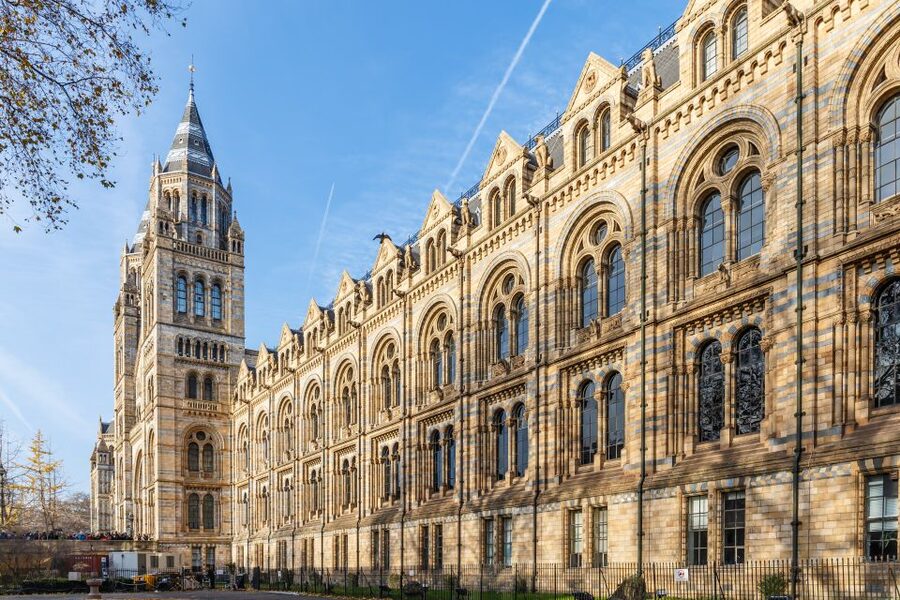
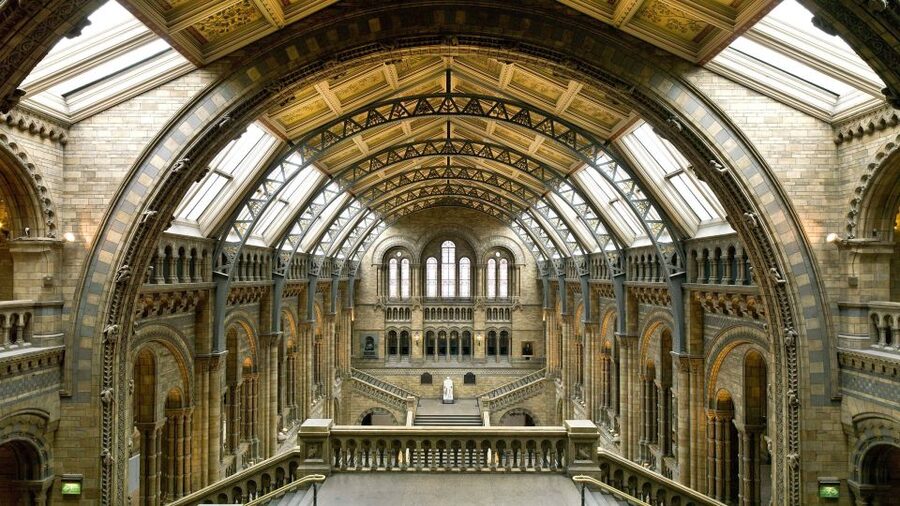
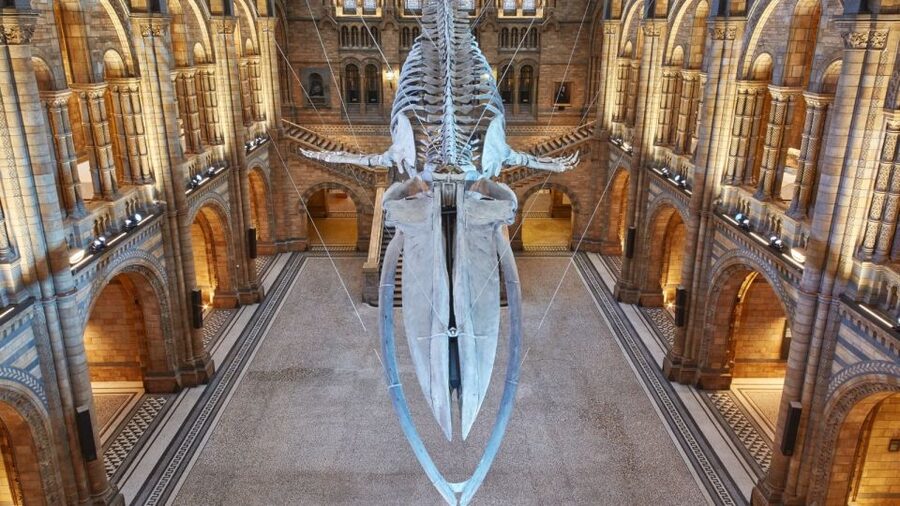
London’s Natural History Museum can easily swallow an afternoon. With 80 million specimens spread through a maze of galleries, the challenge is not finding something interesting. The challenge is knowing what deserves your limited time.
This tour gives you a clear thread. Instead of treating the museum as a collection of disconnected rooms, the guide links the story of the planet to the animals, fossils, plants, disasters, and people that shaped our understanding of it.
I like that approach because the museum contains objects with very different kinds of appeal. An enormous slice of Giant Sequoia is visually impressive. A first edition of On the Origin of Species matters because of its influence on science. The Dodo skeleton raises questions about extinction. A guide can connect those pieces so the visit feels like one story rather than a checklist.
The tour is conducted in English with a live guide. The supplied guide names include Ivo, Matilda, Sacha, Luis, Guy V., Laurence, Becky, Anthony, and Craig. The strongest praise has focused on their ability to explain difficult subjects in plain language, keep a good pace, and adjust to mixed-age groups.
More History Tours in London
- London Small Group Tour of Historical Pubs
★ 5.0 · 10,422 reviews - Soho Music & Historic Pubs Tour
★ 5.0 · 1,993 reviews - London: Historic Pubs of Central London Walking Tour
★ 4.9 · 1,065 reviews
Iguanodon teeth and the early story of life
The Iguanodon teeth fossils offer a useful beginning because they show how much scientists can learn from a small object. Teeth can reveal what an animal ate and how it lived, even when the complete creature is long gone.
From there, the tour traces the earth’s beginnings and the development of life. You should expect the guide to place individual specimens into a wider scientific story, rather than simply naming each display. That context is valuable for children, but adults benefit just as much. The museum is more rewarding when you understand why a specimen matters.
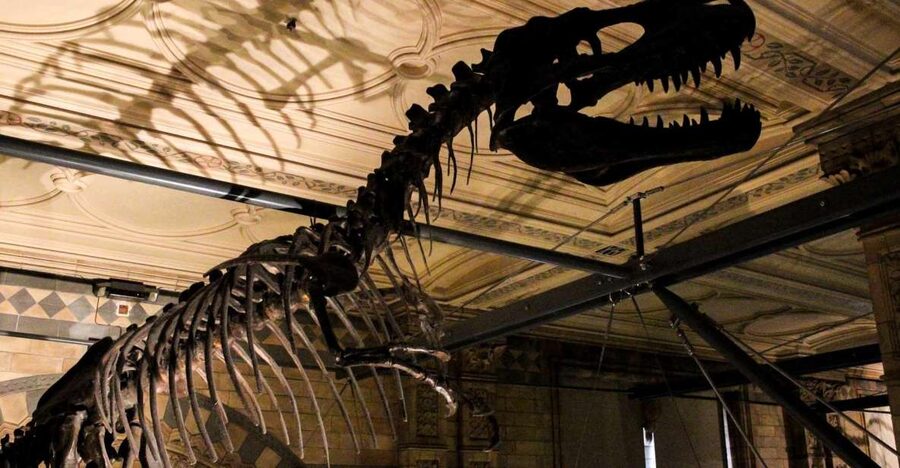
The route also introduces Sophie the Stegosaurus, one of the museum’s memorable dinosaur characters. The friendly name helps younger children connect with the subject, while the skeleton itself gives the group a direct look at the size and structure of an animal that once lived millions of years ago.
Families have found this section especially effective. Ivo was praised for involving children aged 11 and 16, while Guy V. was singled out for giving children patient, clear answers. Anthony was also praised for making an eight-year-old feel as if he were walking among dinosaurs and early humans.
That family focus is one of the tour’s strongest qualities. A guide who can speak to children without talking down to adults is worth paying for, particularly when you are traveling with curious youngsters who ask questions faster than you can answer them.
Archaeopteryx and the link between dinosaurs and birds
The rare Archaeopteryx is another major stop. It is often described as a possible missing link between dinosaurs and birds, making it a useful object for discussing how scientists understand evolutionary change.
The value here is not just seeing a rare fossil. It is hearing why the specimen has drawn attention and how its features connect different branches of life. The subject can become confusing when viewed through labels alone. A guide gives you a way to understand the evidence.
This is also a good place to listen closely rather than rush for a photograph. The tour lasts 2.5 hours, but the museum contains far more material than any guide could cover in that time. A focused explanation of one important specimen can be more useful than racing past ten displays.
I would particularly recommend this stop for adults and older children who enjoy science, natural history, or the big questions behind the exhibits. Younger children may respond more strongly to the dinosaurs, the Dodo, or the giant tree, but a good guide can still make Archaeopteryx accessible.
The Dodo skeleton and the meaning of extinction
The Dodo skeleton gives the tour an emotional center. It is not simply an unusual bird. It represents extinction and the permanent loss of a species.
Seeing a skeleton makes the subject more immediate than reading a short label about extinction. You can look closely at the animal’s structure and consider that no living Dodo remains. The guide can then place that loss within the wider history of species and human activity.
I like this kind of stop because it works for many interests. Children recognize the Dodo as a strange, almost storybook bird. Adults may think more about how museums preserve evidence of animals that no longer exist.
The Dodo also helps balance the dinosaur material. The tour is not only about prehistoric monsters. It moves across different periods and shows that natural history includes recent extinctions as well as distant fossils.
More Museum Visits in London
- Tower of London and Crown Jewels Exhibition Ticket
★ 4.5 · 6,677 reviews - London: Chelsea Football Club Stadium and Museum Tour
★ 4.8 · 4,576 reviews - Chelsea FC Stadium Tours and Museum
★ 5.0 · 1,908 reviews - London Transport Museum Entrance Ticket
★ 4.5 · 1,323 reviews
Pompeii casts and the human cost of disaster
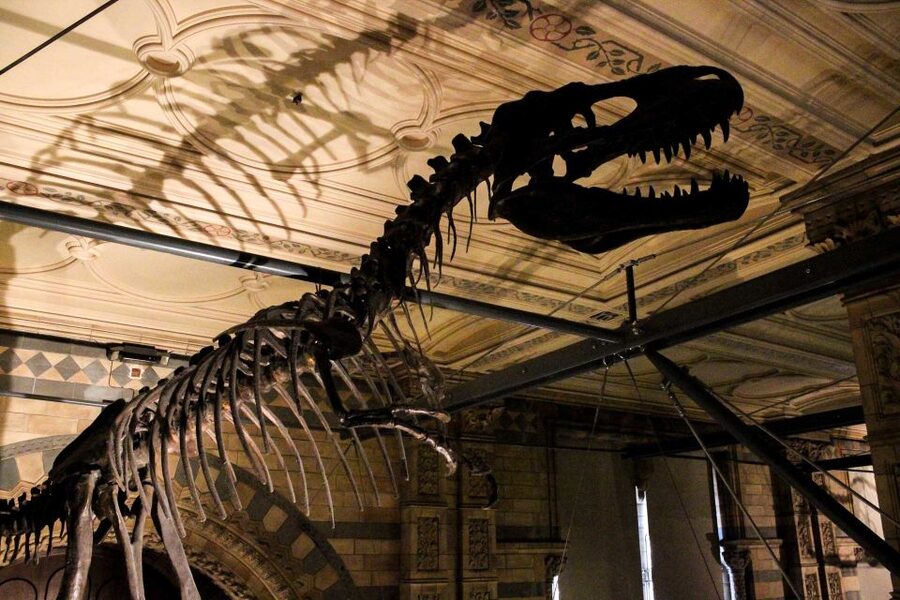
The Pompeii casts are among the most arresting displays on the route. These casts preserve the forms of victims caught in the volcanic disaster, turning a historical event into something immediate and deeply human.
This part of the museum may be unsettling. It is not a light family attraction, and parents should decide how much detail their children can handle. Still, the casts provide a powerful link between geology and human history. The eruption was not just a natural event. It changed lives and preserved a moment for later generations to study.
The guide also discusses civilizations that used human skulls as drinking glasses. That subject is grim, but it shows how the tour moves beyond animals and fossils. You are asked to consider how different societies treated the dead, what rituals meant to them, and how modern viewers interpret practices from the past.
I appreciate the range. One minute you are looking at dinosaur teeth, and later you are confronting human behavior, belief, and disaster. The tour gives the museum a wider purpose: it is about the natural world, but also about how people respond to it.
The Cursed Amethyst and the Giant Sequoia
The Cursed Amethyst adds a more mysterious note. Its story gives the guide an opening to discuss how objects gather legends and how people make sense of misfortune.
You may enjoy this stop even if you are more interested in science than folklore. The contrast is useful. Museums contain hard evidence, but they also preserve stories, beliefs, and human fears. A strong guide can explain the difference between a scientific account and a legend without draining the fun from the tale.
The Giant Sequoia slice provides the visual wow factor. An enormous section of tree lets you consider age and scale in a way that a small sample cannot. It is an easy object to understand at a glance, yet it also opens questions about long-lived trees and the size of the natural world.
These two stops help keep the pace varied. The tour is not a long lecture about evolution. It moves between fossils, living systems, human culture, disaster, folklore, and objects that simply astonish you.
A first edition of Darwin’s most important book
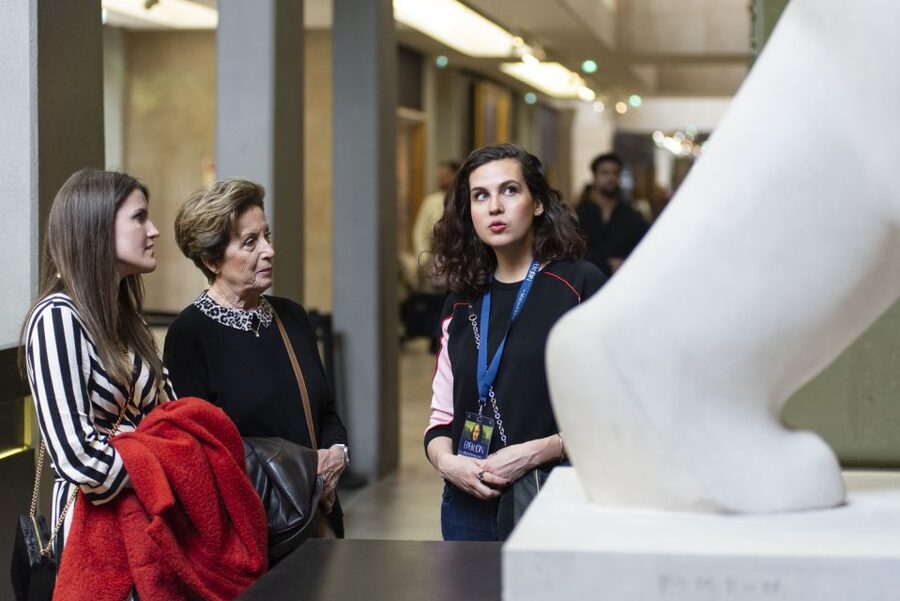
The first edition of On the Origin of Species is a quieter highlight. Unlike a dinosaur skeleton, it may not command attention from across the room. Its importance comes from the ideas it carried and the effect those ideas had on the study of life.
This is where the guide’s art history and museum background can make a real difference. You get more from an important book when someone explains why the object matters, not just what it is.
For me, this stop gives the tour intellectual balance. The museum displays specimens from the natural world, but it also shows how people observed, recorded, debated, and explained that world. The book represents a change in human thinking, while the fossils and skeletons provide physical evidence of life across time.
If you are visiting with teenagers, this can be a useful moment to connect the exhibits to school science. If you are visiting as an adult, it may be one of the stops that stays with you after the tour because it links a physical object to a major shift in scientific thought.
What the guide adds to the experience
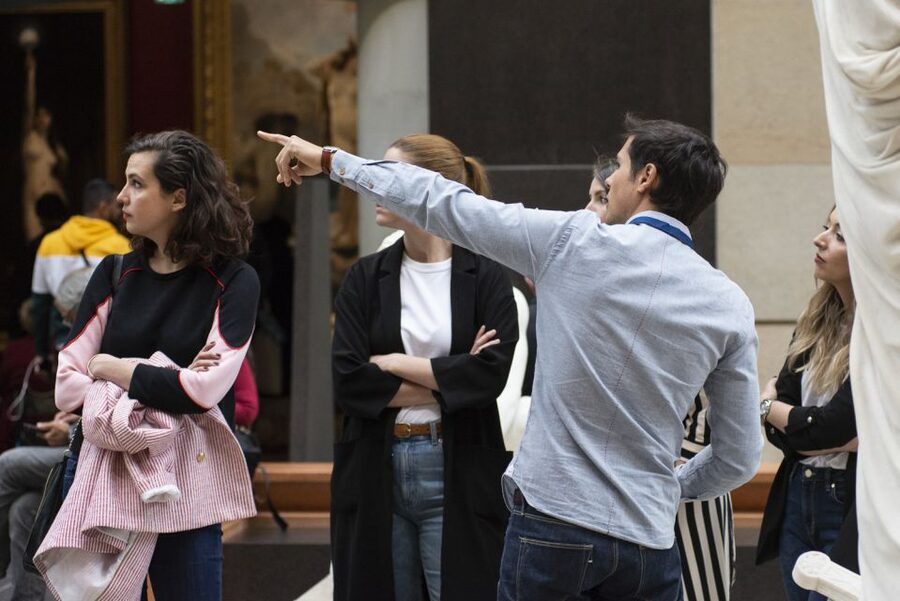
The strongest guide qualities are repeated across the individual experiences: clear English, enthusiasm, patience, humor, and good control of the group’s pace.
Ivo has been praised for giving families the big picture and making the material work for both children and adults. Matilda has been especially effective at identifying the most important objects and explaining them in a way that works for a 13-year-old and a parent. Sacha has been described as calm, friendly, and easy to understand.
Luis has also been praised for animated explanations and for accommodating a family group. One Spanish-speaking participant noted that his English was very clear and that he also spoke Spanish, although this tour is listed as an English-language experience. You should not assume another language is included unless it is confirmed when booking.
Group size matters here. A maximum of eight people is small enough for questions and conversation, and a private tour gives you more control over the pace. If you are traveling with children, the ability to ask questions without holding up a large crowd is a real advantage.
The tour does not promise a silent museum or unlimited time at every object. You are following a planned route, so independent explorers may occasionally wish to linger longer. The tradeoff is that you avoid spending your visit wandering past the major highlights.
Is $112 per person good value?
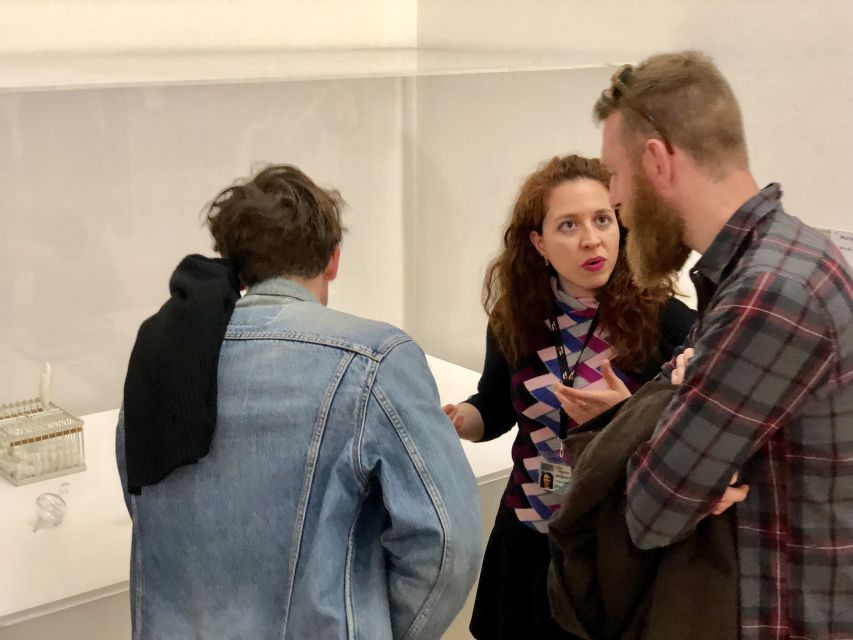
At $112 per person, this is not a budget museum visit. The value depends on how much you want from the guide.
I would consider it good value for a first visit, a short London stay, or a family that wants the major stories explained in one sitting. You are paying for the professional art historian guide, a route through an enormous collection, skip-the-ticket-line access, and the option of a private or small-group format.
The price is harder to justify if you enjoy reading every label, setting your own pace, or returning to the same display several times. The museum’s scale rewards independent wandering too, especially if you already know which subjects interest you.
The 2.5-hour length helps the calculation. It is long enough to cover the key highlights, but short enough to leave time for the museum cafe or another London sight afterward. One family finished the tour and headed to the cafe, which is a sensible plan.
I would book the guided visit when the museum is a priority and your time is limited. If the Natural History Museum is only a casual stop, you may prefer to save the money and explore independently.
Practical details that affect your day
Meeting points can vary depending on the option you book, so check your confirmation carefully. The tour is available daily, with starting times based on availability.
Bring a passport or ID card. The museum does not allow luggage or large bags, and only handbags or small thin backpacks can pass through security. Even with skip-the-line access, increased security can create some waiting.
A small amount of walking is involved, but you should still wear comfortable clothing and suitable shoes. Appropriate dress is required for entry into some sites on the route.
Private wheelchair tours are available only on request. The general experience is listed as unsuitable for wheelchair users, so you need to arrange a private option before relying on this tour for access needs.
Museum closures can happen without warning. If opening is delayed by more than an hour, an alternative will be offered, but a refund will not be available in that situation. That is worth considering if your schedule is packed tightly.
Cancellation is flexible up to 24 hours before the tour for a full refund, and you can reserve now and pay later. Temporary exhibits are not included, and food and drinks are also your responsibility.
Who should book this Natural History Museum tour?
I would recommend it most strongly to first-time visitors, families with school-age children, and anyone who wants the museum’s major themes explained in a sensible order.
It also suits you if English is not your first language but you can follow clear spoken English. Several guides have been praised for making complex ideas easy to understand, and Luis was specifically noted for speaking clearly.
Couples may enjoy the private option, especially if the museum visit is a special gift or part of a short London break. Small groups are also a good fit for friends who want to ask questions without being lost in a crowd.
Independent museum fans should think twice. You may prefer to spend an hour with one fossil or return to your favorite gallery later. This tour gives you breadth and context, not unlimited freedom.
Should you book it?
Book this tour if you want the Natural History Museum to make sense quickly. The route combines famous dinosaurs with less obvious highlights such as Archaeopteryx, the Cursed Amethyst, the Giant Sequoia, Pompeii casts, and Darwin’s first edition.
The best reason to pay for it is the guide. Ivo, Matilda, Sacha, Luis, Guy V., and the other guides have shown a strong ability to handle children, adults, mixed interests, and plenty of questions. At $112, it is a considered purchase, but the small groups and 2.5-hour focus make it worthwhile for a first visit.
Skip it if you prefer complete independence or plan to spend most of the day studying a few galleries in detail. For everyone else, this is a practical way to turn a huge museum into a memorable story.
FAQ
How long does the Natural History Museum guided tour last?
The tour lasts 2.5 hours.
What language is the tour offered in?
The live tour guide conducts the experience in English.
What are the main highlights?
The tour includes Iguanodon teeth fossils, Pompeii casts, a Dodo skeleton, a first edition of On the Origin of Species, the rare Archaeopteryx, the Cursed Amethyst, and a large slice of Giant Sequoia.
How many people are in the group?
The experience is available as a private tour or a group tour with a maximum of eight people. Group tours require at least two participants to run.
Is skip-the-line access included?
Yes, the activity includes skip-the-ticket-line access. Security checks can still create some waiting.
Can I bring luggage?
No. Large bags and suitcases are not allowed. Only handbags or small thin backpacks can pass through museum security.
Is the tour suitable for wheelchair users?
The general tour is not suitable for wheelchair users. Wheelchair tours are available only on request and only as a private tour.
What happens if the museum closes or opens late?
Museums can occasionally close without warning. If opening is delayed by more than one hour after the scheduled start, an appropriate alternative will be provided, but a refund will not be offered in that situation.
Recently added around London
- PRIVATE HIRE 45 min Speedboat Tour – Embankment/Westminster Pier★ 5.0 · 55 reviews
- Private Tour of London’s Historic Pubs★ 5.0 · 55 reviews
- From London: Glastonbury and Cheddar Gorge Guided Day Trip★ 4.8 · 55 reviews
- Gatwick Airport Taxi – Private Transfer to/from London★ 5.0 · 55 reviews
- London: Kew to Westminster River Thames Cruise★ 4.2 · 55 reviews
- London by Night – Tootbus Sightseeing Tour★ 3.5 · 55 reviews
- London: Tower of London After Hours Tour and Key Ceremony★ 4.8 · 56 reviews
- Private Round Trip Transfer between London Airports and Hotel★ 3.5 · 56 reviews
Museums, compared.

Liverpool Football Club Museum and Stadium Tour
Read our review →
Tower of London and Crown Jewels Exhibition Ticket
Read our review →
Chelsea Football Club Stadium and Museum Tour
Read our review →




Browse the lists this tour appears in