
Reviewed · MUSEUMS
London: Postal Museum Entry Ticket and Underground Rail Ride
Mail once raced beneath London. The Postal Museum brings that strange, brilliant system to life with a 15-minute Mail Rail ride through tunnels once used to move letters beneath the city. I like the mix of real objects and hands-on activities, and I especially like how the visit works for adults who enjoy history as well as children who need something to do.
I also enjoy the small, human details: the first Penny Black stamp, flintlock pistols carried to protect mail, and the wobbly carriage floor that shows how railway sorters worked. The main drawback is simple: the underground ride is short, and the museum can feel aimed at younger children when it is crowded.
- The Mail Rail ride lasts about 15 minutes, with tunnel views, projected films, and commentary explaining how London’s underground postal railway worked.
- The Penny Black is on display, giving you a close look at the stamp that changed ordinary communication.
- The sorting carriage is hands-on, with a moving floor that lets you try to sort mail while staying upright.
- Flintlock pistols reveal the risks of old postal work, when mail coaches could be attacked and robbed.
- The museum suits mixed-age families, thanks to games, dress-up activities, stamp design, and interactive displays.
- Plan for two to three hours if you want to read everything, even though the advertised visit length is about 1.5 hours.
In This Review
- Why London’s Postal Museum Is Worth Your Time
- Start With the Mail Rail Underground Ride
- See How Mail Moved Below London
- Explore 500 Years of Postal Objects
- Try the Wobbly Mail-Sorting Carriage
- Family Activities That Do More Than Fill Time
- Give Yourself More Than 90 Minutes
- Café, Shop, and Practical Comforts
- Who Will Enjoy It Most?
- Is the $24 Admission Good Value?
- Should You Book the Postal Museum?
- FAQ
- How long does the Postal Museum experience last?
- How long is the Mail Rail ride?
- What is included in the $24 ticket?
- Can children enjoy the Postal Museum?
- Is the Mail Rail ride suitable for people with claustrophobia?
- Is the Postal Museum wheelchair accessible?
- Can I book the Sorted! Postal Play Space with this ticket?
- Is there a café at the museum?
- Can I cancel my booking?
Why London’s Postal Museum Is Worth Your Time
London has grand museums devoted to kings, paintings, and famous battles. This one follows something more ordinary: the movement of letters. That makes it surprisingly engaging, because the story touches daily life, business, family news, romance, government, and the growth of modern communication.
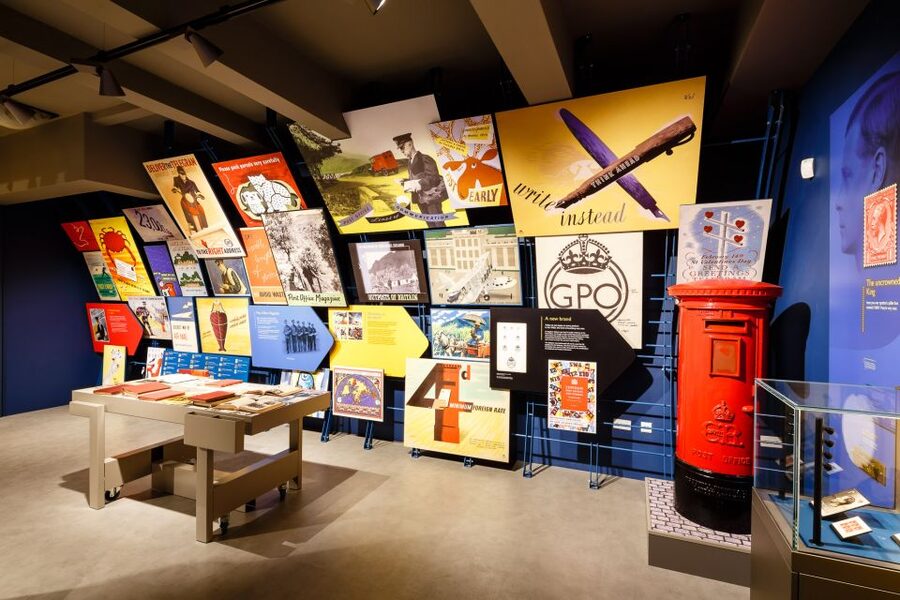
The Postal Museum covers more than 500 years of postal development. You see how people sent messages before instant communication, how the postal service protected valuable mail, and how workers moved huge quantities of letters through London.
I like the subject because it is practical rather than grand. You are not simply looking at old objects in glass cases. You are seeing the tools, machines, uniforms, vehicles, and systems that made communication possible.
At $24 per person, the admission is fair if you use the whole museum. The Mail Rail ride alone is the main draw, but the galleries add enough material to make this more than a brief underground attraction. If you rush through the exhibits, the price may feel high for a 15-minute ride. Give yourself at least two hours, and ideally closer to three if you read labels and try the interactive stations.
Start With the Mail Rail Underground Ride

The visit’s most memorable feature is the short ride through the old Post Office railway. The miniature train takes you beneath London through tunnels that were part of a postal transport system dating back more than 100 years.
This is not a long sightseeing train journey. The ride lasts around 15 minutes, so you should think of it as a compact historical presentation rather than a full underground tour. The train pauses at points where projected films and visual material explain the railway’s work.
That presentation is one of the ride’s strengths. Instead of simply rolling through dark tunnels, you get a story about the people and machinery behind the system. The projected timeline and videos help explain how letters were moved and sorted below street level.
I like this format because it gives the tunnels purpose. You are not just looking at brick walls and railway track. You understand why the railway existed and how it fitted into London’s postal network.
The train itself is small. If you are very tall or uncomfortable in confined spaces, pay attention to that before booking. One person found the experience unsuitable for someone who is claustrophobic or very tall, while others found it perfectly comfortable. The ride also includes a blackout moment, which could unsettle younger children.
The staff handle personal bags carefully. Before boarding, you may be asked to leave bags behind. Each train has separate lockers, and staff lock them before the ride and open them when you return. That system may cause a moment of concern, but it is designed to keep belongings secure during the journey.
The most common criticism is the length. Around 10 to 15 minutes is enough for children and keeps the ride manageable, but adults fascinated by underground transport may wish it lasted longer. If Mail Rail is your main reason for coming, keep that limitation in mind.
More Museum Visits in London
- Tower of London and Crown Jewels Exhibition Ticket
★ 4.5 · 6,677 reviews - London: Chelsea Football Club Stadium and Museum Tour
★ 4.8 · 4,576 reviews - Chelsea FC Stadium Tours and Museum
★ 5.0 · 1,908 reviews
See How Mail Moved Below London
The railway is interesting because it solves a very London problem: crowded streets and slow surface transport. The postal service needed a way to move letters across the city reliably, without depending entirely on horse-drawn vehicles and traffic above ground.
The railway’s long working life also helps you picture the scale of the postal service. This was not a novelty ride built for visitors. It was working infrastructure, hidden under the streets and used to carry mail.
The tunnel sections are paired with narration and projections rather than a guide speaking live in the carriage. That keeps the ride moving and lets you absorb information without needing to stand or read much.
The format also works well for families. Children get the excitement of a train and a dark tunnel. Adults get the background story. It is a good example of the museum’s general approach: take an industrial subject and turn it into something you can see, hear, and try.
Explore 500 Years of Postal Objects

After the railway, allow time for the main exhibitions. The displays follow the development of the postal system through objects and stories, rather than treating mail as a dry list of dates.
The first postage stamp, the Penny Black, is one of the key sights. It is easy to overlook a tiny stamp when surrounded by larger displays, but this small piece of paper changed how people paid for letters. It helped make postage simpler and more predictable.
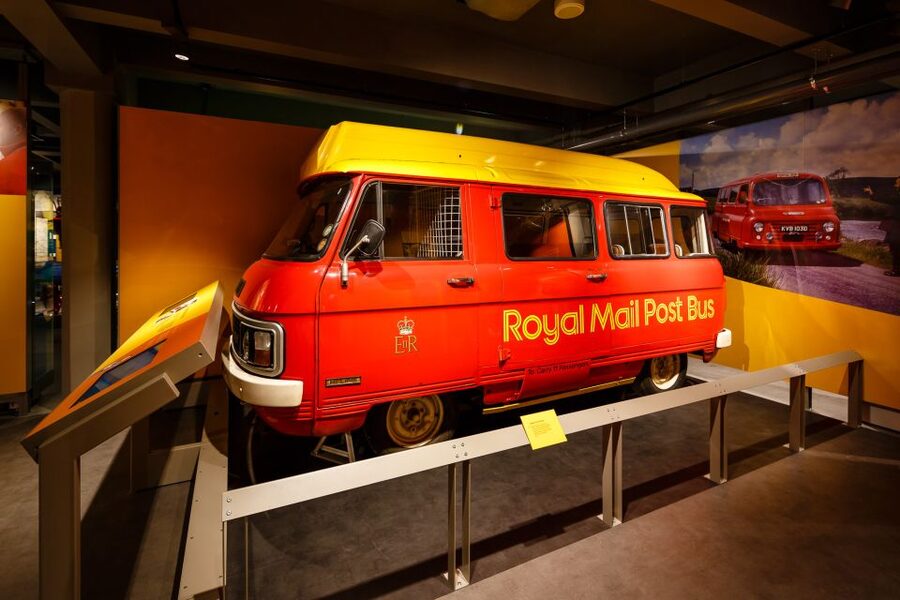
The museum also presents the wider world around postal work. You might see how post boxes and telephone boxes developed, and how methods of communication changed across generations. Older visitors may find themselves explaining rotary telephones and earlier postal habits to children who have never used either.
One especially memorable story concerns a mail stagecoach horse attacked by a lioness. It is the sort of odd, vivid detail that makes the past feel less tidy and predictable. Postal work involved animals, weather, theft, accidents, long journeys, and demanding schedules.
You can also see flintlock pistols once used to defend mail from theft. These weapons make the risks of earlier postal work clear. Mail was valuable, and moving it safely could require armed protection.
I appreciate these practical details. The museum does not present the postal service as a smooth machine. It shows the people, tools, dangers, and work that kept it running.
Try the Wobbly Mail-Sorting Carriage
One of the best hands-on sections recreates a railway mail carriage. You can try sorting letters while standing on a floor that moves beneath you.
The point is not simply to amuse you. It shows how difficult the job could be when workers had to sort mail in a moving train. Several people specifically enjoyed this activity, and it is easy to understand why. You quickly discover that even a simple task becomes awkward when the floor will not stay still.
This is a strong exhibit for children because it turns an invisible process into a physical challenge. Instead of hearing that postal workers sorted mail on trains, they get a small sense of what that work demanded.
Adults can enjoy it too, especially if you like old machines and working systems. It is also one of the displays that helps bridge the gap between the Mail Rail ride and the museum’s historic objects.
Expect some of the interactive exhibits to be popular with young children. On busy weekends, toddlers may take over the stations, so you might need patience before getting a turn. Visiting at a quieter time would make the galleries easier to enjoy, but the available information does not specify which times are least busy.
More Tickets in London
- London: The London Eye Entry Ticket
★ 4.6 · 35,875 reviews - London: Tower Bridge Entry Ticket
★ 4.7 · 15,560 reviews - London: Westminster Abbey Entrance Ticket
★ 4.6 · 11,254 reviews - London: St Paul’s Cathedral Entry Ticket
★ 4.7 · 9,813 reviews
Family Activities That Do More Than Fill Time
The Postal Museum is strongly family-friendly, but it is not only a children’s attraction. The activities give younger visitors a reason to slow down and look closely at the material.
Children can take part in educational games, try dress-up activities, and design their own stamp. These are useful because they connect directly to the museum’s subject. The games are not random distractions placed between cases. They help explain communication, postal jobs, and the design of mail systems.
The interactive approach also gives families different ways to visit together. One person can read about the Penny Black while another tries the sorting activity. A child may remember designing a stamp long after forgetting a date from a display label.
Some adults may find the museum too focused on younger children. That criticism is fair, particularly if you want a quiet, object-heavy museum visit. The exhibits are informative, but the collection is not enormous, and the interactive sections can dominate the experience.
For a family with children around seven to eleven, the balance looks especially good. One family with boys aged seven and eleven found that both parents and children stayed interested, partly because the exhibits connect postal history with familiar objects such as telephones.
There is also a separate Sorted! Postal Play Space for children aged eight. It must be booked separately through the Postal Museum website, so do not assume it is included with this entry ticket.
Give Yourself More Than 90 Minutes

The stated duration is 1.5 hours, but that is a tight schedule if you want to enjoy the galleries. It may work if you ride Mail Rail, glance through the main exhibits, and leave.
I would plan for two hours at a minimum. Three hours is more comfortable if you want to read the stories, use the activities, stop at the café, and browse the shop. One family spent about three hours and felt the admission offered good value. Another person needed longer because there was so much to read.
A sensible visit might look like this:
- Begin with the Mail Rail ride, if that is your priority.
- Move through the interactive gallery while the train experience is still fresh.
- Spend extra time with the Penny Black, postal vehicles, weapons, and telephone displays.
- Try the moving-floor sorting activity.
- Leave time for children to return to their favorite games or stamp-design station.
- Finish with a drink or snack in the family-friendly café.
The museum’s tickets remain valid for a year, according to one recent experience, which can be useful if you do not finish the exhibitions in one visit. Confirm the current ticket terms when booking, since policies can change.
Café, Shop, and Practical Comforts
The on-site café offers snacks and refreshments, making it easy to turn the museum into a relaxed afternoon stop. A cup of tea or coffee can be useful after the underground ride and the hands-on displays.
Service and cleanliness may vary during busy periods. One visit near closing time found dirty tables, spills on chairs, and wet or messy patches on the floor. That is worth noting for families, since floor spills can become a slipping risk. The café itself was still considered reasonably priced.
The shop focuses on communication-related goods, so it fits the museum rather than feeling like a generic souvenir stop. You might find postal or telephone-themed items, including the expected fridge magnet.
The museum is wheelchair accessible. The train has its own practical arrangements for bags, and staff are described as helpful with the boarding process and general visit.
The meeting point is simply the Postal Museum itself, so this experience does not involve a separate city-center meeting place or a guided walk to the attraction.
Who Will Enjoy It Most?
I would recommend the museum most strongly to families, postal enthusiasts, transport fans, and anyone looking for something different from London’s major art and royal attractions.
Children get movement, games, trains, costumes, and stamp design. Adults get the history of communication, the Mail Rail system, unusual objects, and stories about the dangers of moving mail.
It also works well for grandparents and grandchildren. The displays can prompt conversations about old telephones, post boxes, handwritten letters, and jobs that have changed or disappeared. One family connected the museum to a great-grandfather who had worked at the King Edward Building sorting office, which shows how personal the subject can become.
Couples and solo visitors can enjoy it too, particularly if they like engineering, transport, social history, or unusual London museums. If your interests run only to fine art or major landmarks, the museum may feel modest.
The strongest part is the combination of a real underground setting and practical exhibits. The weakest part is the limited length of the train ride and the child-focused atmosphere in some galleries.
Is the $24 Admission Good Value?
At $24, I consider this good value if you stay for two or three hours and use the museum as a full experience. The price covers entry to the Postal Museum, including the Mail Rail ride described here.
The attraction offers more than a short train trip. You get the Penny Black, postal equipment, historic weapons, film and audio presentations, interactive displays, and the moving-floor sorting carriage. Families may get particularly strong value because children have several activities rather than one central ride.
The value is weaker if you arrive expecting a long underground journey. Mail Rail lasts only about 15 minutes, and some of that time includes stops for projected films. It is carefully presented, but it is not a lengthy railway excursion.
Free cancellation up to 24 hours before the activity and reserve-now, pay-later booking can make planning easier. The museum is open on Tuesdays during the stated seasonal period, though you should check current opening days and times before setting your schedule.
Should You Book the Postal Museum?
Book it if you want a different side of London, especially if you are visiting with children or enjoy old transport systems. The Mail Rail ride is the clear highlight, but the museum earns its admission through the odd details, practical displays, and hands-on activities around it.
Skip it if you want a large museum packed with major artworks, or if a 15-minute train ride feels too short for the price. Also think twice if you dislike confined spaces or are very tall.
For most families and curious adults, I would book it and allow at least two hours. Arrive ready to try the sorting carriage, not just watch the children. That is where the Postal Museum turns an old communication system into a memorable London experience.
FAQ
How long does the Postal Museum experience last?
The stated duration is 1.5 hours. You may want two to three hours if you plan to read the exhibitions, use the interactive displays, visit the café, and browse the shop.
How long is the Mail Rail ride?
The underground Mail Rail ride lasts about 15 minutes. It includes tunnel travel, commentary, and projected video material.
What is included in the $24 ticket?
The ticket includes entry to the Postal Museum. The experience description also includes the underground Mail Rail ride.
Can children enjoy the Postal Museum?
Yes. The museum has educational games, interactive galleries, dress-up activities, stamp design, and the moving-floor mail-sorting exhibit. Children also tend to enjoy the train ride.
Is the Mail Rail ride suitable for people with claustrophobia?
The ride takes place in underground tunnels and the train is small. It may not suit people who are uncomfortable in confined spaces. The experience also includes a blackout moment.
Is the Postal Museum wheelchair accessible?
Yes, the activity is described as wheelchair accessible.
Can I book the Sorted! Postal Play Space with this ticket?
No. Sorted! Postal Play Space for children aged eight is booked separately through the Postal Museum website.
Is there a café at the museum?
Yes. The museum has a family-friendly café serving snacks and refreshments.
Can I cancel my booking?
You can cancel up to 24 hours in advance for a full refund, according to the stated booking conditions.
Recently added around London
- PRIVATE HIRE 45 min Speedboat Tour – Embankment/Westminster Pier★ 5.0 · 55 reviews
- Private Tour of London’s Historic Pubs★ 5.0 · 55 reviews
- From London: Glastonbury and Cheddar Gorge Guided Day Trip★ 4.8 · 55 reviews
- Gatwick Airport Taxi – Private Transfer to/from London★ 5.0 · 55 reviews
- London: Kew to Westminster River Thames Cruise★ 4.2 · 55 reviews
- London by Night – Tootbus Sightseeing Tour★ 3.5 · 55 reviews
- London: Tower of London After Hours Tour and Key Ceremony★ 4.8 · 56 reviews
- Private Round Trip Transfer between London Airports and Hotel★ 3.5 · 56 reviews
Museums, compared.

Liverpool Football Club Museum and Stadium Tour
Read our review →
Tower of London and Crown Jewels Exhibition Ticket
Read our review →
Chelsea Football Club Stadium and Museum Tour
Read our review →




Browse the lists this tour appears in