
Reviewed · MUSEUMS
London: Royal Museums Greenwich Day Pass
Time travel begins on a hill above London. The Royal Museums Greenwich Day Pass brings science, seafaring, art, and royal architecture into one walkable six-hour outing. I like the chance to stand with one foot in each hemisphere at the Prime Meridian, and I love that the Cutty Sark lets you climb aboard a real 19th-century tea clipper. The main drawback is distance and time: Greenwich is spread across a hill and riverside district, so you need a sensible plan.
At $40 per person, the pass is strongest if you visit both the Royal Observatory and Cutty Sark. The National Maritime Museum and Queen’s House are included too, but regular entry to both is free unless you choose a special exhibition or guided tour. I would not treat this as a quick hop between sights. It is a full day with plenty of walking, and the Observatory hill can feel demanding.
In This Review
- Key points at a glance
- Planning your Greenwich day
- Reaching the Royal Observatory on Greenwich Hill
- The Prime Meridian in the Meridian Courtyard
- Flamsteed House and the Astronomers Royal
- Time signals, the Great Equatorial Telescope, and the red ball
- Walking downhill to the Cutty Sark
- Aboard the Cutty Sark
- Queen’s House and its art collection
- The National Maritime Museum and the story of exploration
- How to use six hours well
- Who will enjoy this pass most
- Is the Royal Museums Greenwich Day Pass worth it?
- FAQ
- How much does the Royal Museums Greenwich Day Pass cost?
- How long does the experience last?
- Where does the experience begin?
- What attractions are included?
- Are Queen’s House and the National Maritime Museum free?
- Is an audio guide included?
- Which languages are available for the guide?
- Can I stand on the Prime Meridian Line?
- Is the pass wheelchair accessible?
- Can I cancel the booking?
Key points at a glance
- Stand on the Prime Meridian: Take the classic photo with one foot east and one west at the home of Greenwich Mean Time.
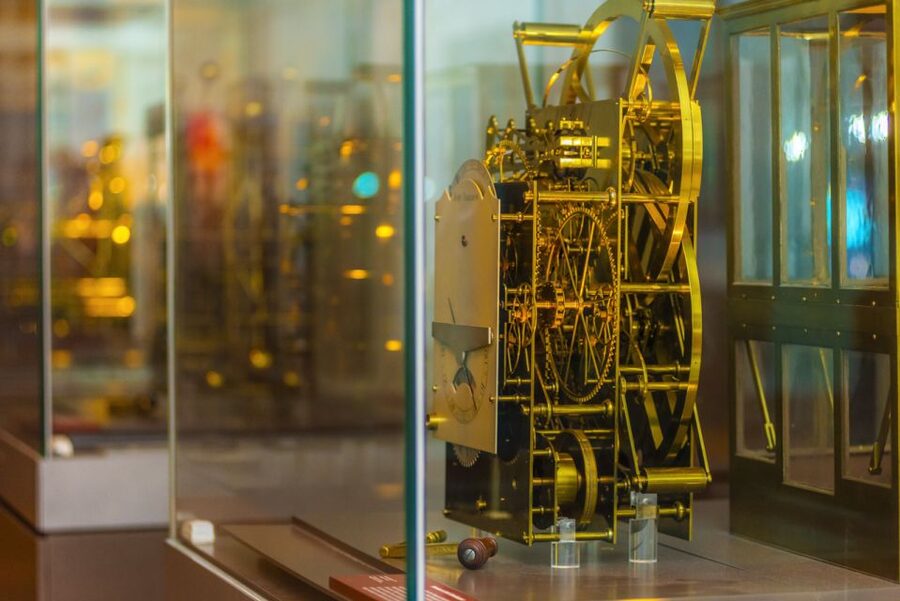
- See John Harrison’s clocks: These inventions helped solve one of navigation’s biggest problems, finding longitude at sea.
- Climb aboard the Cutty Sark: Explore sailors’ quarters, the ship’s wheel, main deck, masts, and 11 miles of rigging.
- Look inside a Wren-designed room: The Octagon Room in Flamsteed House is one of London’s best-preserved interiors by Sir Christopher Wren.
- Add free museums to your route: The Queen’s House and National Maritime Museum provide art and maritime history without another general admission charge.
- Allow the whole six hours: The sites are close enough to connect on foot, but each has enough material to absorb your time.
Planning your Greenwich day

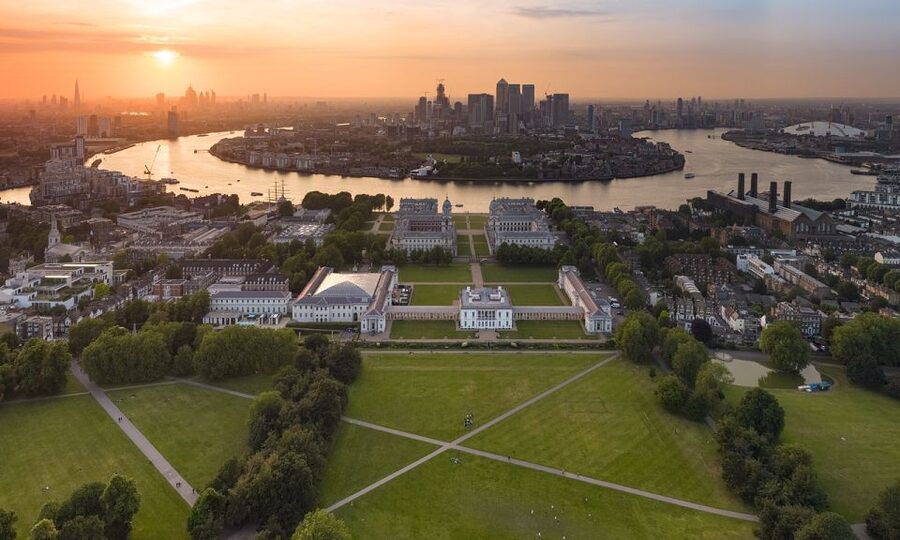
The experience begins at the Royal Observatory on Blackheath Avenue, high in Greenwich Royal Park. Cutty Sark is down at King William Walk, beside the River Thames. The National Maritime Museum and Queen’s House sit between the two main attractions.
All four sites open at 10 a.m. and close at 5 p.m., with last entry at 4 p.m. That narrow window matters. You cannot arrive late in the afternoon and expect to see everything properly.
I would plan for six hours, especially if you like museum displays, photographs, and short pauses. The basic route is uphill first, then downhill toward the ship, with the two free museums along the way. The views across the park, City of London, and Thames make the climb worthwhile, but you should wear comfortable shoes.
The pass costs about $40 per person. Since the National Maritime Museum and Queen’s House are free for general entry, the value depends mainly on the combined admission to the Royal Observatory and Cutty Sark. If those are your priorities, the pass saves you from arranging separate tickets and helps you fit the paid sights into one organized day.
More Museum Visits in London
- Tower of London and Crown Jewels Exhibition Ticket
★ 4.5 · 6,677 reviews - London: Chelsea Football Club Stadium and Museum Tour
★ 4.8 · 4,576 reviews - Chelsea FC Stadium Tours and Museum
★ 5.0 · 1,908 reviews
Reaching the Royal Observatory on Greenwich Hill
Start at the top. The Royal Observatory sits inside Greenwich Royal Park, and the approach gives you one of the best broad views in this part of London. From the grounds, you can look toward the Thames and the modern City skyline while moving toward a site that shaped the way the world measures time.
The hill is part of the experience, but it is also the day’s main physical challenge. One visitor described the walk as more demanding than expected, while another praised the view as worth every step. That is a fair reading. The climb is not a minor detail, particularly if you are visiting with children, managing limited energy, or carrying a full day pack.
The pass is wheelchair accessible, though the hill and the distance between buildings still deserve practical thought. You can enjoy the Observatory and the other museums at a slower pace, but do not build an overly tight schedule.
Inside, you can pick up a downloadable multilingual interactive guide. Languages include English, Spanish, Chinese, French, German, Italian, Portuguese, and Korean. Bring your phone charged and ready. The audio guide is useful, but one visitor found that Wi-Fi access and phone signal were not always strong, so downloading or preparing before entering is sensible.
The Prime Meridian in the Meridian Courtyard
Your first stop is the Meridian Courtyard, where the Prime Meridian Line runs through the Royal Observatory. This is the photo moment, but it is more than a novelty if you understand what you are seeing.
Place one foot east and one west of the line, and you are standing at the traditional reference point for 0 degrees longitude. Greenwich Mean Time grew from this location and became a standard for comparing time around the world.
The courtyard can be busy around the line, so take your photograph and then give yourself time to read the surrounding displays. The best part is the link between a simple brass line under your shoes and the enormous problem faced by sailors, scientists, and mapmakers.
Do not expect the Observatory to be a hands-on children’s attraction at every turn. Some families found it fascinating, while others wanted more activities for younger children. It suits older children, adults, and anyone curious about clocks, astronomy, navigation, and the systems behind modern timekeeping.
Flamsteed House and the Astronomers Royal

From the Meridian Courtyard, continue into Flamsteed House. This is where the Observatory feels most personal. You walk through rooms connected with the Astronomers Royal and see the working spaces behind the famous measurements.
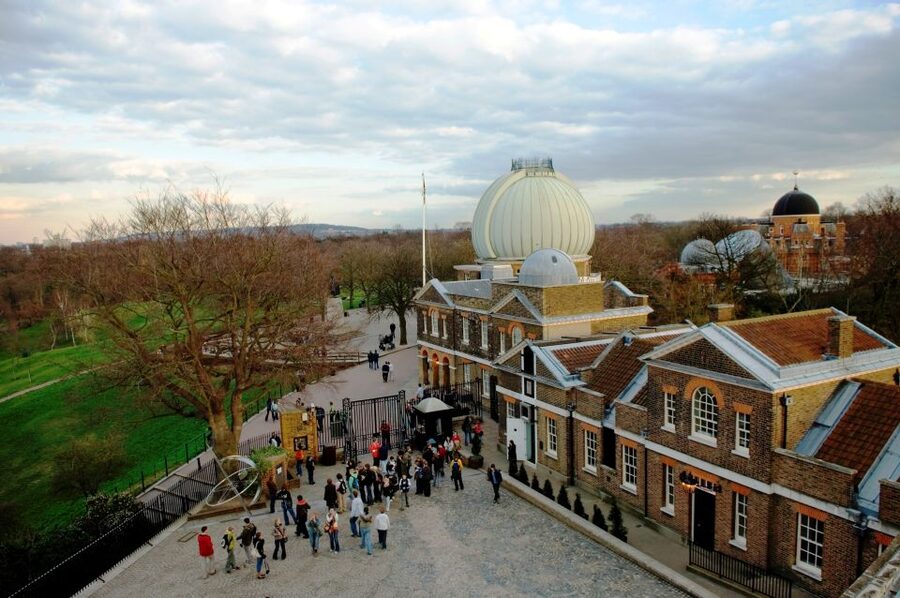
The Octagon Room is the architectural prize. Sir Christopher Wren designed it, and it remains one of the best-preserved Wren interiors in London. Its importance is not only visual. The room helps you picture astronomy as a careful, room-based science, carried out with instruments, tables, and long observations rather than computer screens.
Look for the displays connected with major scientific figures, including Newton, Halley, Bradley, Maunder, Airy, Harrison, and Einstein. The names can seem like a roll call at first, but the exhibits connect them with discoveries and tools used at, or associated with, the Observatory.
The standout objects for many visitors are John Harrison’s clocks. Harrison’s work helped change navigation by addressing the difficult task of finding longitude at sea. These are not just elegant old clocks. They represent an effort to make long-distance sailing safer and more accurate.
Give yourself time here. One of the mistakes you can make is treating Flamsteed House as a short corridor on the way to the Prime Meridian photograph. The displays reward slow looking, and this is the section most likely to turn a planned quick visit into several hours.
A different sort of outing around London:
- London: The London Eye Entry Ticket
★ 4.6 · 35,875 reviews - From London: Harry Potter Warner Bros Studio Tour
★ 4.7 · 26,588 reviews - London: Westminster to Greenwich River Thames Cruise
★ 4.5 · 22,836 reviews - Magical London: Harry Potter Guided Walking Tour
★ 4.7 · 22,044 reviews
Time signals, the Great Equatorial Telescope, and the red ball
Outside Flamsteed House, the Shepherd Gate Clock has an important place in public timekeeping. It was the first clock to show Greenwich Mean Time to the public. It is easy to walk past, so keep an eye out for it.
Above Flamsteed House, the bright red Time Ball provides another memorable detail. First used in 1833, it is one of the world’s earliest public time signals and still operates today. The object looks playful, but its purpose was practical: it gave people a visible signal for setting clocks.
The Great Equatorial Telescope is housed beneath the huge onion-shaped dome. More than a century ago, this instrument gave astronomers new views of the universe. The dome itself is one of Greenwich’s most recognizable features, and the telescope adds scale to the Observatory’s scientific story.
These smaller elements make the visit feel complete. The Prime Meridian attracts the photograph, but the clock, time ball, and telescope explain why Greenwich mattered.
Walking downhill to the Cutty Sark
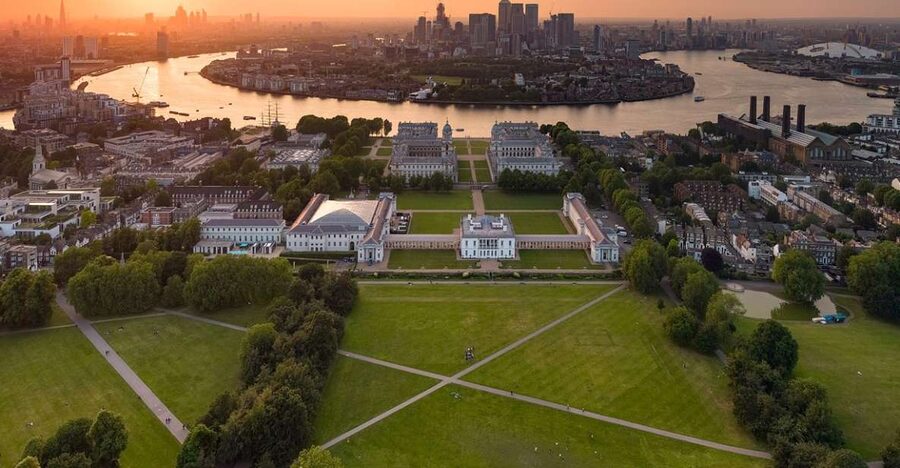
After the Observatory, walk downhill through Greenwich toward the Cutty Sark. The route passes through the park and toward the Queen’s House and National Maritime Museum, so you can choose the order that fits your energy and priorities.
I suggest visiting the Cutty Sark early if it is one of your main goals. Sue’s experience offers the clearest warning: she spent so much time at the Observatory, Queen’s House, and Maritime Museum that it was too late to enter the ship. Her practical solution was to visit Cutty Sark first, because it is a shorter experience, then spend the remaining time at the free museums.
That is sound advice if you have only one day. The Observatory can absorb you, especially if you stop at every display. The ship is easier to fit around the fixed closing time, but you still need to arrive before last entry at 4 p.m.
Aboard the Cutty Sark
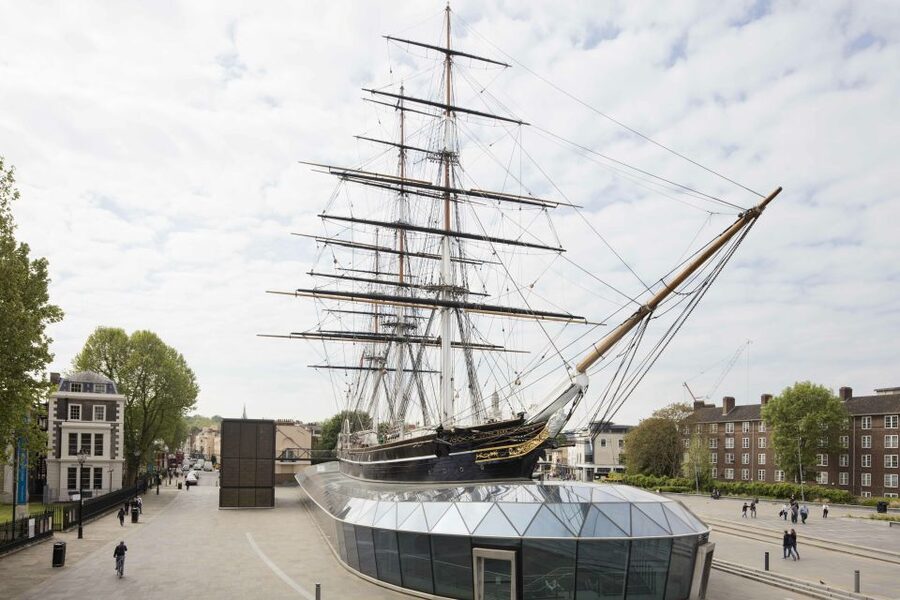
The Cutty Sark is the day’s most visual attraction. Built for the China tea trade and launched in 1869, it is the world’s sole surviving tea clipper. Its record-breaking passages around the globe made it a celebrated ship, and the preserved hull lets you see what that speed looked like in timber, iron, canvas, and rigging.
You can explore the ship in full. Go below to see the sailors’ quarters, then take the helm at the ship’s wheel. The main deck gives you views over the Thames and a close look at the ship’s towering masts and 11 miles of rigging.
The ship was carefully conserved during a six-year project and raised more than three meters. This allows you to stand directly underneath the hull and see its elegant lines and ground-breaking design. That underneath view is one of the strongest reasons to include the Cutty Sark rather than simply photograph it from the riverside.
The displays explain life aboard a working sailing ship, not just the ship’s shape. You get a sense of the cramped crew quarters and the hard routine behind the tea trade. Children often find the wheel and full-sized ship easier to connect with than the more technical displays at the Observatory.
The Cutty Sark earned the highest praise across the supplied comments, and I understand why. It is dramatic from the outside, but the interior turns it into a proper museum visit. You can see the structure, walk the decks, and picture the ship crossing oceans rather than sitting quietly in a dry dock.
Queen’s House and its art collection
Queen’s House sits between the Observatory and Cutty Sark. Designed by Inigo Jones, it is an important 17th-century royal villa and a pioneering work of architecture.
The building is elegant, but its appeal is different from the science of the Observatory or the physical presence of the ship. Inside, you will find art, architecture, and royal history. The house is free to enter except for special exhibitions and guided tours, so it is a useful addition to the day even if you decide not to spend long there.
Some people will love the paintings and formal rooms. Others may find it less compelling than the ship or clocks. I would treat it as a flexible stop. If the art catches your attention, stay. If you are trying to reach Cutty Sark before closing, keep moving and return to the free museums only if time allows.
The building’s position makes it easy to include, but its free admission means it should not be the reason you buy the pass.
The National Maritime Museum and the story of exploration
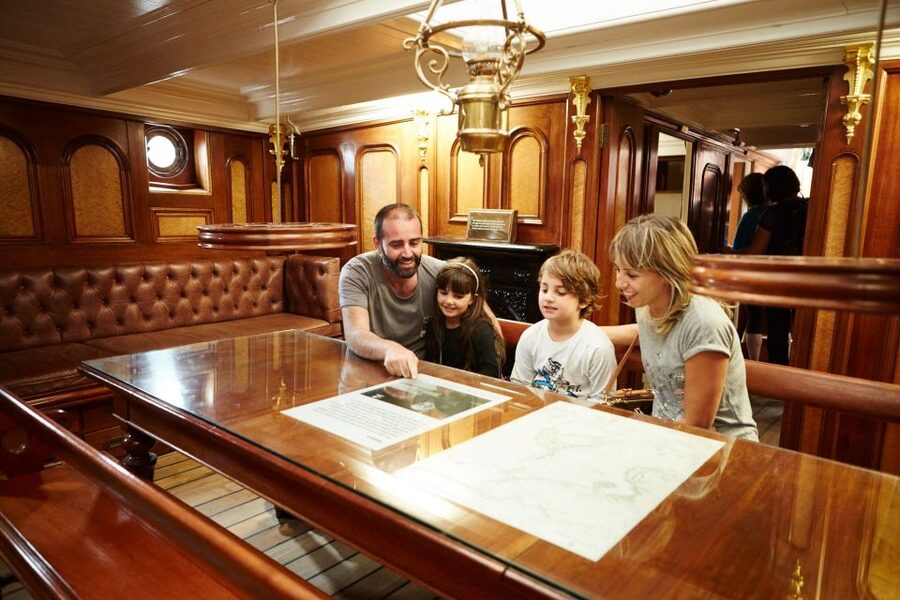
The National Maritime Museum is described as the largest museum of its type in the world. It presents stories of exploration and seafaring that helped shape the modern world.
This is the place to add context to the Cutty Sark. The ship shows you one vessel in detail, while the museum broadens the picture to navigation, voyages, maritime work, and the global impact of exploration.
You can enter the general museum without paying an additional admission fee. Special exhibitions and guided tours cost extra, and those are not included in the pass. If you have limited time, choose the permanent displays that interest you most rather than trying to cover the entire building.
A short food break can help. There is a cafe at the museum area, but food and drink are not included in the pass. Greenwich itself also has shops, cafes, and restaurants, making it easy to pause between sites rather than treating the day as one long museum march.
How to use six hours well
Here is the most practical order if you want all four sites:
- Arrive at the Royal Observatory close to opening time.
- Spend roughly two hours on the Meridian Courtyard, Flamsteed House, clocks, time signals, and telescope.
- Walk downhill and pause briefly at Queen’s House if the building and art appeal to you.
- Visit the Cutty Sark before the afternoon gets away from you.
- Finish at the National Maritime Museum, using any remaining time for selected displays.
The exact timing depends on your pace. The Observatory alone may take several hours if you read every display. The best plan is not a rigid schedule, but a firm rule: do not postpone Cutty Sark until the final hour.
If you want the least rushed experience, choose the two paid attractions as your non-negotiable stops and regard the free museums as bonuses. That approach protects you from the most common problem, spending too long at one site and missing another.
Who will enjoy this pass most
I would recommend it to people who enjoy a mix of science, history, architecture, and ships. Families with older children should find enough variety to keep the day moving, especially at Cutty Sark, though younger children may want more hands-on activities at the Observatory.
It also works well for anyone who wants a self-guided day rather than a fixed group tour. You set your pace, choose how long to stay, and use the interactive guide in your preferred language.
You should think twice if you dislike hills, long museum visits, or changing subjects from astronomy to maritime history to art. The experience is not a single, tightly directed attraction. It is a district-wide visit that asks you to walk and make choices.
The free cancellation policy gives you a practical safety net: you can cancel up to 24 hours in advance for a full refund. You can also reserve now and pay later, which helps if your London plans are still shifting.
Is the Royal Museums Greenwich Day Pass worth it?
Book it if you want both the Royal Observatory and Cutty Sark, especially if you value the convenience of one pass and a self-guided day. The Cutty Sark is the strongest visual highlight, while the Observatory provides the most distinctive London photo and the best science content.
I would skip the pass if you mainly want Queen’s House and the National Maritime Museum, since general admission to both is free. In that case, pay for the individual attraction you care about, if needed.
For most people, the best strategy is simple: arrive at 10 a.m., visit the Observatory with purpose, head downhill to Cutty Sark before lunch or early afternoon, then use Queen’s House and the National Maritime Museum to fill the remaining time. Plan for walking, protect your ship visit from schedule drift, and you will get solid value from the $40 price.
FAQ
How much does the Royal Museums Greenwich Day Pass cost?
The pass costs $40 per person.
How long does the experience last?
The suggested duration is six hours. All included sites open at 10 a.m. and close at 5 p.m., with last entry at 4 p.m.
Where does the experience begin?
The Royal Observatory is at Blackheath Avenue, London, SE10 8XJ. The Cutty Sark is at King William Walk, London, SE10 9HT.
What attractions are included?
The pass includes entry to the Royal Observatory and Cutty Sark, plus access to the National Maritime Museum and Queen’s House.
Are Queen’s House and the National Maritime Museum free?
General entry to both is free of charge. Special exhibitions and guided tours are not included and may require an additional fee.
Is an audio guide included?
Yes. A downloadable multilingual interactive guide is included at both the Royal Observatory and Cutty Sark.
Which languages are available for the guide?
The guide is available in English, Spanish, Chinese, French, German, Italian, Portuguese, and Korean.
Can I stand on the Prime Meridian Line?
Yes. At the Royal Observatory’s Meridian Courtyard, you can stand with one foot in the east and one in the west on the Prime Meridian Line.
Is the pass wheelchair accessible?
Yes, the activity is listed as wheelchair accessible. The Royal Observatory is on a hill, so the route and walking distance should still be considered when planning your day.
Can I cancel the booking?
Yes. You can cancel up to 24 hours in advance for a full refund. Reserve now and pay later is also available.
Recently added around London
- PRIVATE HIRE 45 min Speedboat Tour – Embankment/Westminster Pier★ 5.0 · 55 reviews
- Private Tour of London’s Historic Pubs★ 5.0 · 55 reviews
- From London: Glastonbury and Cheddar Gorge Guided Day Trip★ 4.8 · 55 reviews
- Gatwick Airport Taxi – Private Transfer to/from London★ 5.0 · 55 reviews
- London: Kew to Westminster River Thames Cruise★ 4.2 · 55 reviews
- London by Night – Tootbus Sightseeing Tour★ 3.5 · 55 reviews
- London: Tower of London After Hours Tour and Key Ceremony★ 4.8 · 56 reviews
- From London: Cotswolds Guided Trip Including Bourton-on-the-Water★ 4.5 · 56 reviews
Museums, compared.

Liverpool Football Club Museum and Stadium Tour
Read our review →
Tower of London and Crown Jewels Exhibition Ticket
Read our review →
Chelsea Football Club Stadium and Museum Tour
Read our review →




Browse the lists this tour appears in