
Reviewed · MUSEUMS
London: Tour of the British Museum
London keeps its oldest stories indoors. This two-hour British Museum tour gives you a clear route through human history, from ancient Egypt and Assyria to the Parthenon sculptures, an Easter Island moai, and Aztec objects. I like the low $14 price and the way a live guide helps you find major pieces in a museum that can otherwise feel like a maze.
I also like the choice of English or Spanish guiding, along with the chance to ask questions as you go. Guides such as Puri, Miguel, Eduardo, and Fernando have been praised for their humor, energy, and command of the subject. The main drawback is timing: two hours only covers selected highlights, and the entrance queue and meeting point can cause stress if you arrive late.
In This Review
- Key Points Before You Book
- Why a Guide Helps Inside the British Museum
- Meeting at Great Russell Street
- The Classical Greek Entrance
- Ancient Egypt and the Meaning of Funerary Rites
- Assyria and the Power of Monumental Art
- The Parthenon Sculptures from Athens
- Hoa Hakananai’a and the Moai of Easter Island
- Aztec Objects Bring the Route to a Close
- What Two Hours Really Gives You
- Is $14 a Good Price?
- Who Should Book This British Museum Tour?
- Practical Tips for a Smoother Visit
- Final Verdict: Book It If You Want the Museum’s Greatest Hits
- FAQ
- How long does the British Museum tour last?
- How much does the tour cost?
- Which languages are available?
- Where is the meeting point?
- What should I bring to the meeting point?
- Is the tour wheelchair accessible?
- Can I cancel the tour?
Key Points Before You Book
- $14 for a two-hour guided visit: This is unusually good value for a focused introduction to the museum.
- A route through major civilizations: Expect Ancient Egypt, Assyria, Greece, Easter Island, and Aztec objects.
- English and Spanish available: Check the selected language and starting time when booking.
- Meet after security: Find the guide on the main entrance stairs on Great Russell Street, near Starbucks.
- Arrive early: Entry lines can move faster than expected, but the guide’s blue-green flag may be easy to miss.
- Best for first-time visitors: The tour helps you see important objects quickly without wandering at random.
Why a Guide Helps Inside the British Museum
The British Museum is free to enter, but free entry does not mean easy sightseeing. Its collections cover vast stretches of time and many parts of the world. Without a plan, you can spend much of your visit trying to work out where to go next.
I like this tour because it gives your visit a backbone. Instead of reading every label or racing from room to room, you follow a path built around major objects and the stories behind them. That matters most if you have only one afternoon in London, or if you are visiting with children and teenagers who need a steady pace.
The guide also adds the myths and lesser-known stories that are easy to miss on your own. The experience is not just a parade of display cases. It aims to explain why each object matters, how it relates to a civilization, and what it tells you about the people who made or used it.
Past guides have included Miguel, praised for his humor and clear explanations, and Puri, whose enthusiasm for the museum has made a strong impression. Eduardo was noted for an interactive approach and a comfortable pace that allowed questions. Those details matter because a museum guide can either bring objects to life or turn the visit into a school lecture. Here, the strongest feedback points to friendly, lively teaching.
More Museum Visits in London
- Tower of London and Crown Jewels Exhibition Ticket
★ 4.5 · 6,677 reviews - London: Chelsea Football Club Stadium and Museum Tour
★ 4.8 · 4,576 reviews - Chelsea FC Stadium Tours and Museum
★ 5.0 · 1,908 reviews
Meeting at Great Russell Street
The meeting point is outside the main entrance on Great Russell Street, at the stairs in front of Starbucks. You must first pass the museum security checkpoint, then look for a guide holding a blue-green flag with the Paseando por Europa logo.
This detail is important. The flag is not especially large, and one visitor found the guide a little difficult to locate at first. I would arrive early, allowing time for the entrance line, security, and a careful look around the stairs.
The museum entrance can be busy, especially around Easter and other popular periods. One visitor arrived about an hour early, saw a line wrapping around the corner, and still found that it moved in roughly twenty minutes. That does not mean every queue will be so quick, but it shows why you should not cut the timing close.
The meeting instructions also ask you to show either the printed confirmation email or the mobile voucher. Keep it open on your phone before you reach the entrance. The guide may be hard to find if you are searching while also dealing with security and a crowded pavement.
The Classical Greek Entrance
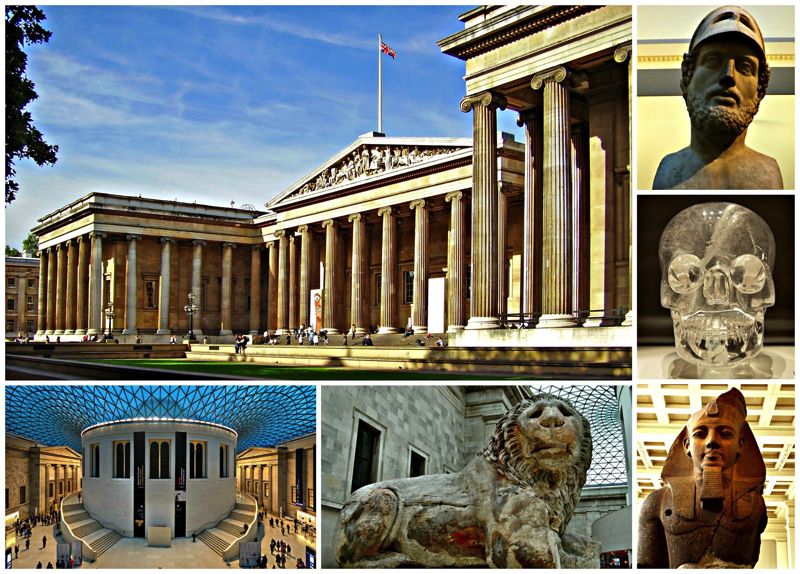
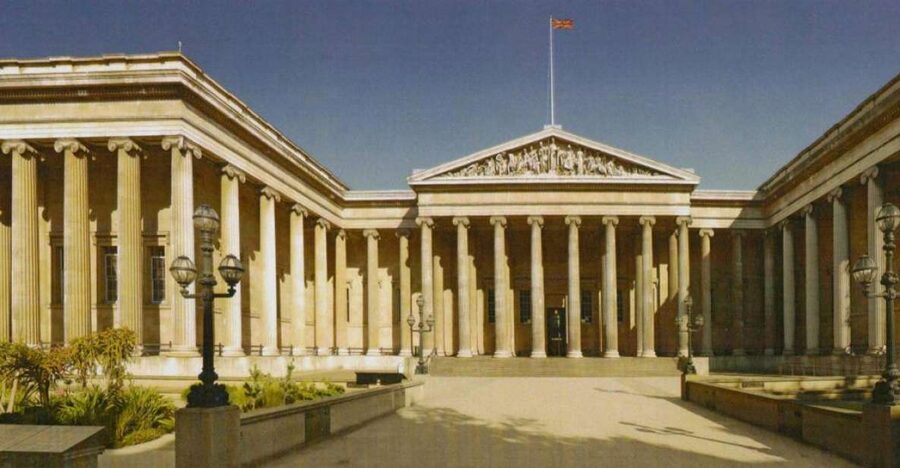
The visit begins outside, where the guide points out the museum’s resemblance to Classical Greek buildings. This is a useful opening because the architecture prepares you for the themes inside. The museum is not a neutral modern box. Its exterior reflects the European fascination with ancient Greece and the way museums often frame the past through their own cultural lens.
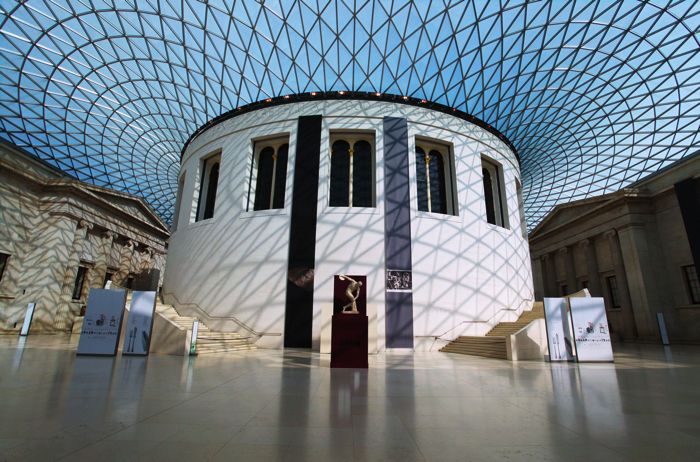
You will then move indoors toward the Hall of Enlightenment, described as the oldest room in the museum. It contains more than 60,000 books from the collection of King George III. This is a different kind of museum experience from the famous sculptures and mummies. Instead of focusing on one ancient civilization, the room shows how collecting, classification, and scholarship shaped the way people in Britain tried to understand the world.
I would pay attention here even if books are not your main interest. The hall offers context for the entire museum. Before you see the objects, you see the idea of gathering knowledge from far and wide under one roof.
Ancient Egypt and the Meaning of Funerary Rites
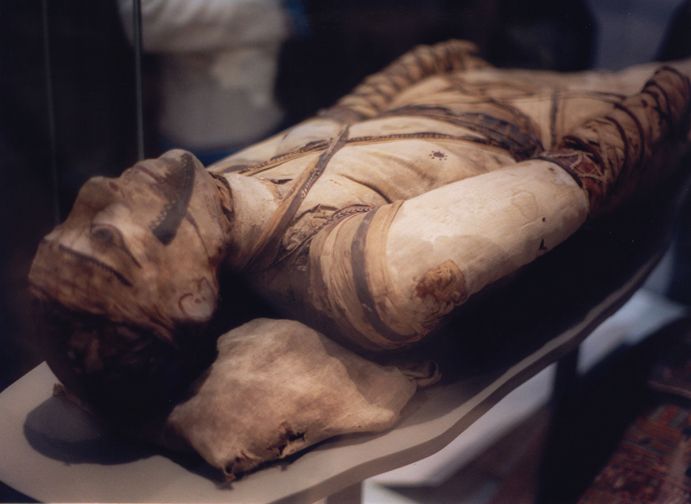
The Egyptian section is one of the main reasons many people book a British Museum tour, and this route gives it a central place. The guide explains Egyptian funerary rites, helping you read the objects as part of a belief system rather than as isolated antiques.
That context makes a major difference. Egyptian displays can otherwise become a blur of statues, coffins, symbols, and fragments. A guide can connect them to ideas about death, burial, and the afterlife, so you understand why certain objects were made and how they were used.
The tour is not designed to cover every Egyptian room. It takes you to important examples and gives you a framework for seeing more later. If Egypt is your main interest, you may want to return after the tour and spend extra time with the collection. The two-hour visit gives you an introduction, not a complete Egyptian study.
This is also where the guide’s personality matters most. The strongest experiences reported from this tour describe guides who explained difficult subjects with humor and enthusiasm. That can make the difference between remembering a story and forgetting a room full of names.
A different sort of outing around London:
- London: The London Eye Entry Ticket
★ 4.6 · 35,875 reviews - From London: Harry Potter Warner Bros Studio Tour
★ 4.7 · 26,588 reviews - London: Westminster to Greenwich River Thames Cruise
★ 4.5 · 22,836 reviews - Magical London: Harry Potter Guided Walking Tour
★ 4.7 · 22,044 reviews
Assyria and the Power of Monumental Art
From Egypt, the route continues to Assyrian civilization. This section adds a different mood and a useful contrast. Egyptian objects often bring you close to religious and funerary ideas, while Assyrian remains show the power of an empire through monumental art and royal imagery.
The tour’s value here is its range. You are not spending two hours on one famous collection. You are moving across cultures and seeing how different societies recorded power, belief, and identity.
The Assyrian material can be easy to pass without guidance because large reliefs may look like part of the room rather than individual works. Your guide helps you stop at the important pieces and understand what you are seeing. If you tried to cover the same ground alone, you might walk past some of the museum’s most significant objects simply because you did not know where to look.
The drawback is that this broad route leaves little time for quiet study. You will hear the main explanation, see the key objects, and continue. If you like reading every label, taking detailed notes, or sketching, plan to stay after the tour.
The Parthenon Sculptures from Athens
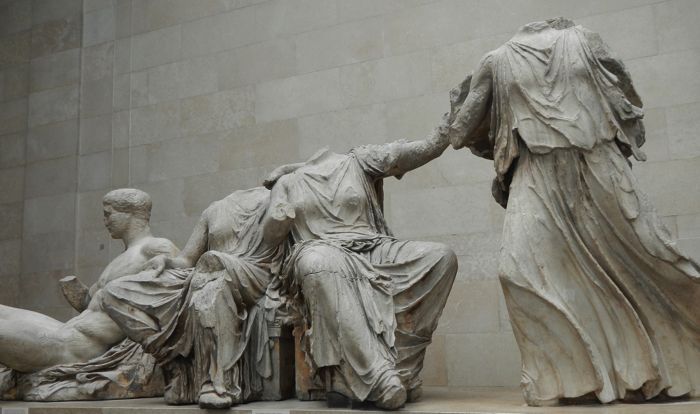
The Greek collection brings the tour to one of the museum’s best-known displays: an important part of the structure of the Parthenon in Athens. These sculptures are visually impressive, but they also raise questions about ownership, removal, and the role of major European museums.
The supplied tour details focus on the historical importance of the pieces rather than promising a debate about their modern political background. Still, I think you should treat this stop as more than a quick photo opportunity. Look at how the fragments once formed part of a larger building, and listen carefully to the guide’s explanation of their place in Greek culture.
The Parthenon material also connects neatly with the museum’s Greek-inspired exterior. You begin by seeing how the building echoes Classical Greece, then later encounter actual architectural sculpture from the Parthenon. That gives the tour a pleasing visual thread.
Because the British Museum is busy and the Greek galleries are popular, you may not get a long, uninterrupted view of every piece. Keep close to the guide and avoid assuming that the first crowded display you see is the meeting spot. The route can move on quickly.
Hoa Hakananai’a and the Moai of Easter Island
One of the most memorable stops is Hoa Hakananai’a, a moai from Easter Island that is more than two metres tall. The statue changes the pace of the tour. After rooms filled with fragments and smaller objects, you meet a powerful, human-shaped figure with a strong physical presence.
This is one of the tour’s best examples of why a guide helps. A moai can attract attention immediately, but its importance is not explained by size alone. The guide places it within the culture that created it and explains why this particular object belongs among the museum’s major works.
For many people, this may be the stop they remember best. It is visually clear, easy to appreciate, and very different from the Egyptian, Assyrian, and Greek material that comes before it.
You should also note that the tour presents objects from cultures across the world in one institution. That is part of the museum’s appeal, but it can also prompt questions about how these objects reached London. If you care about collection practices and cultural ownership, use this tour as an introduction and continue researching afterward.
Aztec Objects Bring the Route to a Close
The final part of the visit focuses on various Aztec pieces. After moving through Africa, the Middle East, Europe, and the Pacific, the route ends with another major civilization from the Americas.
This closing section helps keep the tour from becoming too Europe-centered. The experience presents human history as a wide story, not simply a sequence from Egypt to Greece. You get a chance to compare different ways societies expressed religion, political power, ceremony, and daily life.
The phrase various pieces is worth noting. The tour promises a selection rather than a complete survey of Aztec culture. If you have a special interest in Mesoamerica, ask questions during the visit and consider staying afterward to look more closely at related displays.
Ending here also gives you a natural choice. You can leave after the guided route, or continue through the museum independently if your schedule allows. One useful feature of a highlights tour is that it shows you where to return for a longer visit.
What Two Hours Really Gives You
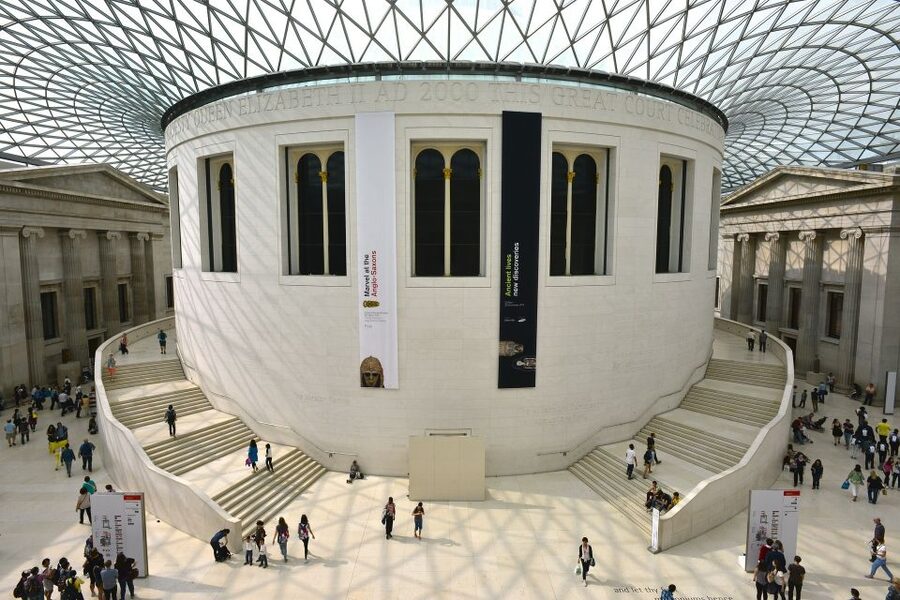
Two hours is enough for a strong orientation, but not enough to see the whole British Museum. That is not a flaw if you book it with the right expectation. You are paying for direction, explanation, and time saved, not a complete survey of every gallery.
I would describe the pace as focused but manageable. Past participants praised guides for allowing questions and keeping the group moving without rushing every stop. One visitor said the group was expected to have 11 people, while only four arrived in the end. Group size can affect the feel of the tour, so do not assume every departure will be identical.
A smaller group may make it easier to hear the guide and ask questions. A larger group may feel less personal, especially in crowded galleries. Either way, stay close and listen for instructions when the group moves between rooms.
The tour is wheelchair accessible, which makes it a practical option for visitors who need an accessible guided route. Oversize luggage, large bags, pets, smoking, and food or drinks are not allowed under the stated rules. Leave bulky items behind so security does not slow you down.
Is $14 a Good Price?
At $14 per person, I consider this excellent value for a first visit. The museum itself has free entry, so you are not paying for the collection. You are paying for a guide who can point out the major works, explain their background, and keep you from losing an hour in the wrong corridor.
That value is strongest if you are short on time or visiting the British Museum for the first time. It is also useful if you prefer listening to a person rather than reading dozens of labels. One visitor said the tour made it possible to see the main objects without getting overwhelmed, then continue alone afterward.
The price is less compelling if you already know the museum well or want a slow, specialist visit focused on one culture. In that case, the fixed route may feel too broad. You might get more from entering independently and choosing your own rooms.
The ability to reserve now and pay later adds flexibility, and cancellation is available up to 24 hours before the start for a full refund. Check the exact availability and starting time before booking, since the duration is fixed at two hours.
Who Should Book This British Museum Tour?
I would choose this tour for:
- First-time museum visitors who want a clear route through the highlights.
- Families with older children or teenagers who may enjoy stories, myths, and a moving itinerary more than silent label reading.
- Short-stay visitors with only a few hours for the museum.
- Spanish-speaking visitors who want a guided experience in Spanish.
- Anyone who feels overwhelmed by huge museums and wants help deciding what deserves attention.
I would think twice if you want to see every Egyptian object, study the Parthenon sculptures at length, or spend the whole visit in one specialist department. The guide will introduce you to major areas, but you will need extra time afterward for close study.
Practical Tips for a Smoother Visit
Arrive early enough to handle the queue and security before the meeting time. Once inside, head to the stairs by the main entrance and look for the blue-green Paseando por Europa flag.
Keep your voucher ready in printed or mobile form. Do not rely on finding the guide by name alone, since the advertised guides can vary by departure. If you are late, finding the group may be difficult, and one participant specifically wished there were a clearer way to tell the operator they were already at the meeting point or delayed.
Wear comfortable shoes. This is a walking tour through a large museum, and two hours on hard floors can feel longer than expected. Bring only what you need, since large bags and oversize luggage are not allowed.
If you have another appointment after the tour, leave a buffer. The museum queue may move quickly, but crowd levels and security checks are not fully predictable. If you have free time afterward, use the guide’s route as a map for a second, self-guided pass.
Final Verdict: Book It If You Want the Museum’s Greatest Hits
I recommend this British Museum tour for a first visit, especially at $14. The combination of a low price, a two-hour route, English or Spanish guiding, and major stops from Egypt to Easter Island makes it a smart introduction.
Book it if you want help with the museum’s scale and prefer stories over random wandering. Skip it only if you already have a detailed personal plan or want to spend your entire visit on one collection. Arrive early, watch for the small flag, and treat the tour as a highlights route with time to explore more afterward.
FAQ
How long does the British Museum tour last?
The tour lasts two hours.
How much does the tour cost?
The listed price is $14 per person.
Which languages are available?
The live guide is available in English and Spanish.
Where is the meeting point?
Meet at the stairs to the museum’s main entrance on Great Russell Street, in front of Starbucks, after passing the security checkpoint. Look for the blue-green Paseando por Europa flag.
What should I bring to the meeting point?
Bring your printed confirmation email or mobile voucher.
Is the tour wheelchair accessible?
Yes, the activity is listed as wheelchair accessible.
Can I cancel the tour?
Yes. You can cancel up to 24 hours in advance for a full refund. You can also reserve now and pay later.
Recently added around London
- PRIVATE HIRE 45 min Speedboat Tour – Embankment/Westminster Pier★ 5.0 · 55 reviews
- Private Tour of London’s Historic Pubs★ 5.0 · 55 reviews
- From London: Glastonbury and Cheddar Gorge Guided Day Trip★ 4.8 · 55 reviews
- London: Kew to Westminster River Thames Cruise★ 4.2 · 55 reviews
- Gatwick Airport Taxi – Private Transfer to/from London★ 5.0 · 55 reviews
- London by Night – Tootbus Sightseeing Tour★ 3.5 · 55 reviews
- London: Tower of London After Hours Tour and Key Ceremony★ 4.8 · 56 reviews
- From London: Cotswolds Guided Trip Including Bourton-on-the-Water★ 4.5 · 56 reviews
Museums, compared.

Liverpool Football Club Museum and Stadium Tour
Read our review →
Tower of London and Crown Jewels Exhibition Ticket
Read our review →
Chelsea Football Club Stadium and Museum Tour
Read our review →




Browse the lists this tour appears in