
Reviewed · MUSEUMS
Natural History Museum London – Exclusive Guided Museum Tour
The museum is too big for a casual sweep. This two-hour tour gives you a smart route through London’s Natural History Museum, from dinosaur bones and fossils to Pompeii casts, rare plants, and strange human customs. I like the focused sightseeing plan and the chance to ask questions as you go. I also like that guides such as Ivo, Becky, Matilda, Andi, and Sacha have earned repeated praise for making science lively and approachable.
The main catch is price. At $108.49 per person, this is a serious add-on when general museum admission is free, and one person called a two-person booking costing nearly £450 poor value. The tour makes the most sense if you have limited time, dislike wandering through huge museums, or want a private guide who can adjust the visit to your interests.
In This Review
- Key points at a glance
- Why this museum needs a route
- Meeting the building on Cromwell Road
- From planetary origins to extinct dinosaurs
- Fossils, plants, and specimens with strange stories
- Pompeii casts and the darker side of human history
- What makes the guides worth paying for
- Private or semi-private: read the booking choice carefully
- Is $108.49 a fair price?
- Timing, crowds, bags, and comfort
- Who should book this experience?
- Should you book the Natural History Museum guided tour?
- FAQ
- How long does the Natural History Museum guided tour last?
- What does the tour include?
- Is museum admission included?
- Is this a private tour?
- Where does the tour begin?
- Where does the tour end?
- Is the tour wheelchair friendly?
- Are hotel pickup and drop-off included?
- Can I cancel for a full refund?
Key points at a glance
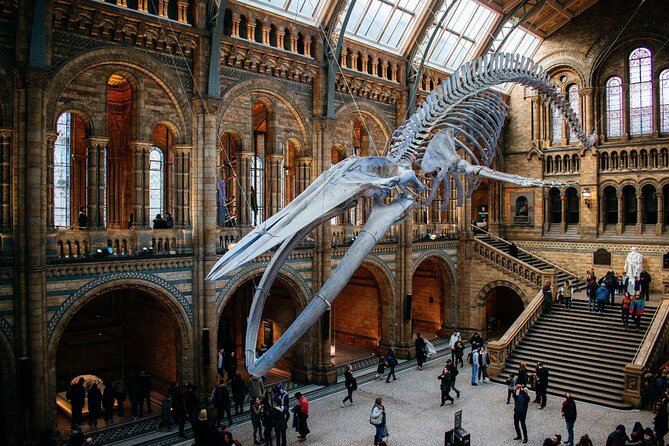
- The two-hour route tackles the museum’s biggest highlights: Archaeopteryx, Sophie the Stegosaurus, the Dodo, fossils, gemstones, Pompeii casts, and more.
- Your guide is the main value: Ivo, Becky, Matilda, Andi, Sacha, and Anthony Matthews are praised for clear explanations, humor, patience, and strong storytelling.
- A private booking means only your group participates: A cheaper semi-private option is available, but the exclusive guide and wheelchair-friendly promise do not apply to that choice.
- This is a time-saving visit: The museum is enormous, and a guide helps you avoid getting stuck reading every display while missing the major pieces.
- Families can do well here: Guides have kept young children engaged, including a three-year-old and children fascinated by dinosaurs.
- Pack light and plan for security: Large bags and suitcases are not allowed, while small handbags and thin backpacks can pass through security.
Why this museum needs a route
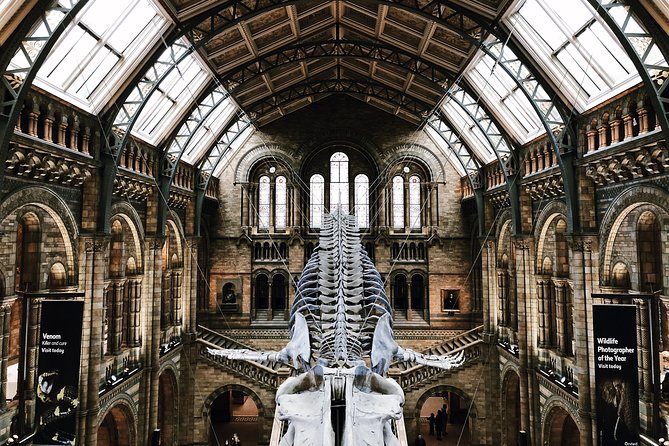
London’s Natural History Museum is not a small collection you can casually stroll through before lunch. Its displays cover the origins of the planet, volcanic disasters, extinct animals, plants, fossils, human development, minerals, and unusual cultural practices.
That scale is exciting, but it can also work against you. You may enter with a short list of dinosaurs and end up spending most of your time in one gallery. Or you may follow the crowds and miss exhibits that a guide considers essential.
This tour solves that problem with a planned two-hour circuit. You will only see part of the museum, but that is the point. A good visit here is not about checking every case. It is about seeing important specimens, understanding why they matter, and leaving with a clear sense of the larger story.
I especially like this approach for a first visit. You can always return later for the galleries that caught your attention. The guide gives you a starting map instead of leaving you to face the whole institution at once.
More History Tours in London
- London Small Group Tour of Historical Pubs
★ 5.0 · 10,422 reviews - Soho Music & Historic Pubs Tour
★ 5.0 · 1,993 reviews - London: Historic Pubs of Central London Walking Tour
★ 4.9 · 1,065 reviews
Meeting the building on Cromwell Road
The tour begins at the Natural History Museum on Cromwell Road in South Kensington, London SW7 2DH. The stated meeting point is Stop H outside the museum.
The museum is close to public transportation, which matters because South Kensington can be a busy part of a London sightseeing day. You will need to make your own way there. Hotel pickup and drop-off are not included, and the operator recommends using a taxi or Uber if that suits your plans.
Allow enough time to find the meeting point. The museum is large, and the exterior entrances can be confusing if you arrive in a hurry. You will also need to pass through security, so a small bag is the sensible choice.
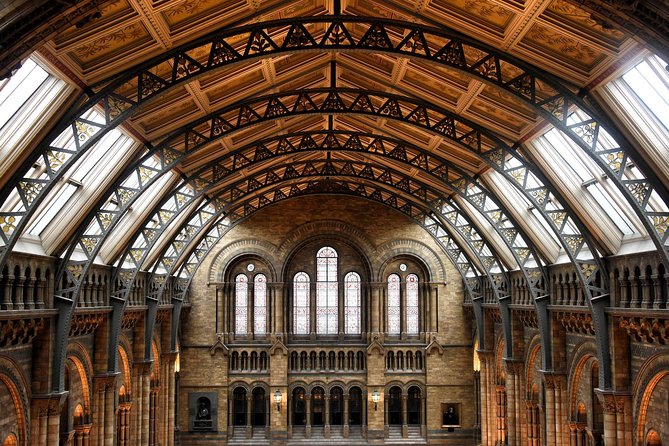
The building itself is part of the experience. Guides have pointed out architectural details that are easy to miss when you rush toward the dinosaurs. That extra attention helps turn the visit from a list of specimens into a look at a grand museum designed to make natural science feel important.
From planetary origins to extinct dinosaurs
The opening section sets up the broad story of Earth. Your guide takes you through the planet’s origins, volcanic disasters, the disappearance of dinosaurs, and the later arrival of humankind.
That order gives the tour a useful backbone. Instead of treating each object as a separate curiosity, you can see how the museum connects geology, living creatures, extinction, and human development.
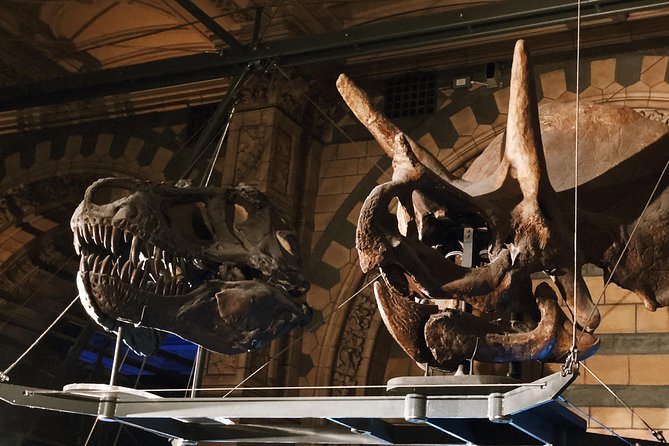
The dinosaur material is likely to be a major draw, especially for families. Sophie the Stegosaurus is one of the named highlights, and children can follow the story through a recognizable creature rather than facing a wall of scientific labels.
The Archaeopteryx is a more specialized stop. This rare fossil is presented as a link between dinosaurs and birds, making it valuable for visitors who want more than a large skeleton photo. A guide can explain why this specimen matters and help you see the scientific importance behind its fame.
The Dodo skeleton adds a human-sized reminder of extinction. Beside towering dinosaurs, it brings the subject down to one vanished bird and the consequences of losing a species. I like that mix of famous icons and quieter objects because it keeps the tour from becoming only a parade of giant bones.
Fossils, plants, and specimens with strange stories
The route also includes fossils and rare plants, along with an enormous slice of a Giant Sequoia. The sequoia display works well as a visual break from bones and cases. Its size makes the age and scale of the natural world easier to grasp.
Your guide also shares the secret histories behind major specimens. That phrase can mean the way an object was found, collected, preserved, or interpreted, so listen closely if you enjoy the human side of museums.
One unusual section includes animals preserved in alcohol. This is not necessarily the prettiest part of the museum, but it shows how scientific collections preserve evidence for study. The display may appeal to adults and older children who enjoy odd, slightly unsettling museum material.
The gemstones provide a different mood. You will see glittering minerals and hear about so-called cursed stones. That subject adds folklore to the science, but it also gives the guide room to separate legend from the physical properties and history of the objects.
Lawrence has been praised for using an iPad to add visual information during the visit. That can be useful when a specimen is difficult to understand from the case alone, though the exact tools used may depend on your guide and the day.
More Museum Visits in London
- Tower of London and Crown Jewels Exhibition Ticket
★ 4.5 · 6,677 reviews - London: Chelsea Football Club Stadium and Museum Tour
★ 4.8 · 4,576 reviews - Chelsea FC Stadium Tours and Museum
★ 5.0 · 1,908 reviews - London Transport Museum Entrance Ticket
★ 4.5 · 1,323 reviews
Pompeii casts and the darker side of human history
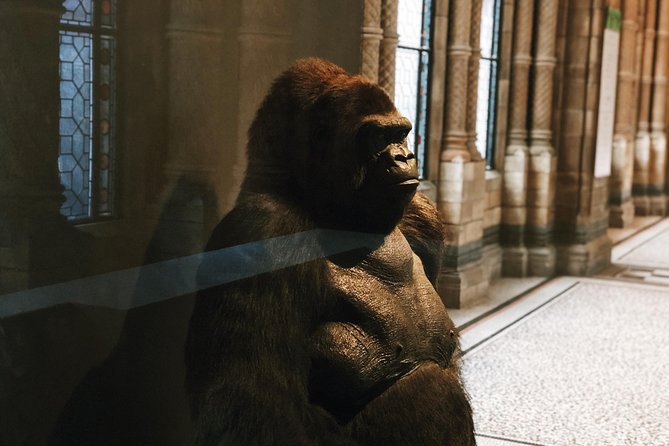
The tour includes casts of victims from Pompeii. This is one of the more emotionally serious moments, and it deserves a little time rather than a quick photograph.
The casts connect natural science with human disaster. They show what a volcanic eruption can do to a community, while also bringing the earlier discussion of volcanic activity into a human setting.
You will also hear why some civilizations used human skulls as drinking vessels. It is a disturbing detail, but it illustrates the value of a guided visit. A label can present the fact. A guide can explain the cultural context and answer the questions that naturally follow.
The museum’s material is not all cheerful. If you are visiting with very young children, you may want to judge their comfort level as you go. The family feedback is strong, with guides keeping even a three-year-old interested, but every child responds differently to dinosaur extinction, preserved animals, and human remains.
What makes the guides worth paying for
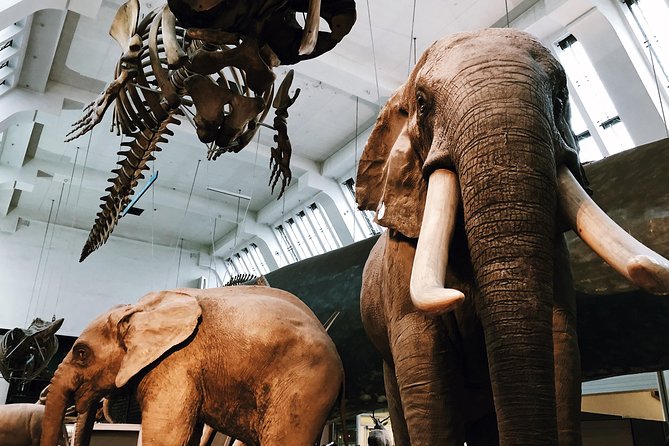
The strongest part of this experience is not a particular skeleton. It is the person leading you through the building.
Ivo is praised for his subject knowledge, patience with children, and ability to make dinosaur material exciting. One family said their child had so much fun that the tour ran a little longer while Ivo continued explaining the exhibits.
Becky receives similar praise for her warmth, humor, and ability to bring displays to life. She has also been singled out for working well with children and for getting a group through crowded areas without losing the important stops.
Matilda is described as enthusiastic, thoughtful, and a strong storyteller. Her route has helped people who felt daunted by the museum’s size, and she has been praised for answering questions and shaping the visit around the group’s interests.
Andi is noted for shepherding groups through a busy museum and pointing out architectural details as well as exhibits. That combination is useful if you want to understand the building, not just the collection.
Sacha, also spelled Sascha in one account, has been praised for covering a broad selection of important displays in two hours. The vault and the museum’s architecture were particular highlights, along with the preserved animals and library area.
Anthony Matthews has received praise for mixing solid information with personal stories. That kind of delivery can make a large collection easier to remember after you leave.
Guide quality can vary from one person to another, but the repeated pattern is clear: the best part of the tour is the guide’s ability to choose, explain, and adjust. You are not paying only for facts. You are paying for judgment and a route through a very large building.
Private or semi-private: read the booking choice carefully
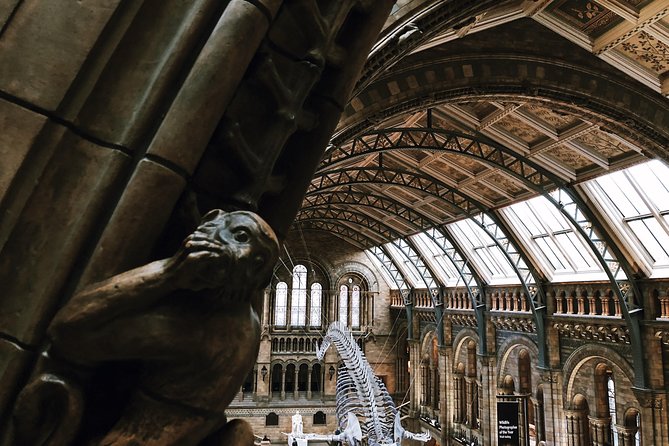
The experience is described as a private activity, with only your group taking part. That is a major advantage if you want to ask questions freely or keep the pace suited to your family.
There is also a cheaper option labeled Save! Book Semi-Private. The important conditions are easy to miss: the exclusive guide does not apply to that option, and the wheelchair-friendly feature does not apply either.
If you want a guide dedicated only to your party, choose the private version. If you are focused mainly on lowering the cost, the semi-private choice may be worth considering, but it changes the central promise of the experience.
The private setup is especially useful for families, mixed-age groups, and people with a particular interest in dinosaurs, geology, plants, or human culture. A guide can spend more time on your preferred subjects instead of following a fixed script for a larger crowd.
Is $108.49 a fair price?
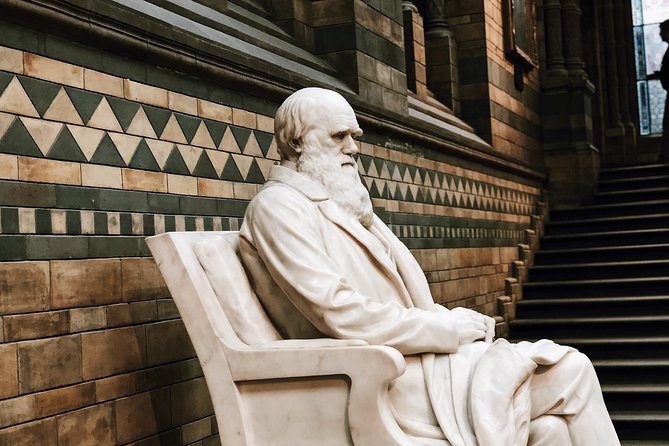
The price is $108.49 per person. Since general admission to the museum is free, you should think of the entire fee as payment for the guide, planning, and convenience.
That can be worthwhile. The museum is huge, and several guides have managed to cover the main highlights in two hours while avoiding much of the crowding. If you have only one short visit in London, losing an hour to wandering or backtracking has a real cost.
The price is harder to defend if you enjoy self-guided museum visits. You can enter for free, move at your own pace, return to a favorite gallery, and spend the tour money elsewhere. One poor-value assessment made exactly that point, particularly for a two-person booking.
I would book it for a first visit with a tight schedule, a family that needs structure, or anyone who wants stories rather than labels. I would skip it if you already know the museum well, prefer slow independent browsing, or are watching every pound.
Group discounts are available, which may improve the calculation for a larger party. Compare the final private price with the semi-private option before paying, and confirm which features apply to your selection.
Timing, crowds, bags, and comfort
The visit lasts about two hours and is offered in English. Private tours are available in both the morning and afternoon.
Morning and afternoon each have practical advantages, but the data does not promise that one time will always be quieter. Guides have helped groups move through crowded galleries, so the value is partly in knowing where to go when the museum is busy.
You should bring a mobile phone and provide the operator with a full mobile number, including the country code. This is listed as imperative, so do not leave it out when booking.
Wear suitable clothing for museum entry. Security does not allow large bags or suitcases, and only handbags or small thin backpacks can pass through. If you are carrying luggage, make another plan before arriving.
A moderate level of physical fitness is expected. The tour is wheelchair friendly in the private option, but that promise does not apply to the semi-private choice. Some rooms may require quiet or restrict speaking, and the guide will explain those rules before you enter.
Museum rooms and collections can change during the year. Occasional closures can also happen without warning. If opening is delayed by more than an hour, an alternative is provided, but the stated terms do not offer a refund or discount in that situation.
Temporary exhibitions are not included. If a special show is high on your list, you will need to arrange that separately.
Who should book this experience?
I see this as a strong fit for first-time visitors who want the museum’s essential pieces without spending a full day inside. It is also a good choice for parents who want someone else to keep the children focused and turn dinosaurs, fossils, and gemstones into a story.
It suits curious adults too, especially if you like odd details such as skull drinking vessels, alcohol-preserved animals, cursed gemstones, and the human stories behind scientific collections.
You may not need it if you are a confident museum navigator or want to read every label. Two hours is deliberately selective. The guide will help you see more of the important material, but you will not see everything.
The end of the activity is back at the meeting point, so you can continue exploring South Kensington afterward or make your own way to the next stop.
Should you book the Natural History Museum guided tour?
Book it if your time is short and you want a clear, lively route through one of London’s largest museums. The repeated praise for Ivo, Becky, Matilda, Andi, Sacha, and Anthony Matthews suggests that the guide can make the difference between feeling overwhelmed and leaving with a real understanding of what you saw.
At $108.49 per person, it is not a bargain in the usual museum sense. The museum admission is free, so the value rests entirely on personal guidance, saved time, and the private format.
My practical call: choose the private tour for a first visit, a family outing, or a group that likes questions and conversation. Skip it for a relaxed self-guided day, or consider the semi-private price only after checking its limits on exclusivity and wheelchair access.
FAQ
How long does the Natural History Museum guided tour last?
The guided tour lasts approximately two hours.
What does the tour include?
It includes a guided museum tour and an exclusive guide for your group if you choose the private option. The experience is offered in English.
Is museum admission included?
The itinerary lists admission as free. Temporary exhibitions are not included.
Is this a private tour?
Yes, the private activity is for your group only. A cheaper semi-private booking option is also available, but it does not include a guide exclusively for your group.
Where does the tour begin?
It begins at the Natural History Museum on Cromwell Road, Stop H, South Kensington, London SW7 2DH, UK.
Where does the tour end?
The activity ends back at the meeting point.
Is the tour wheelchair friendly?
The private option is wheelchair friendly. This does not apply if you choose the semi-private option.
Are hotel pickup and drop-off included?
No. You must make your own way to and from the museum. The operator recommends a taxi or Uber.
Can I cancel for a full refund?
Yes, if you cancel at least 24 hours before the experience start time. Cancellations or changes made less than 24 hours before the start time are not accepted for a refund.
Recently added around London
- PRIVATE HIRE 45 min Speedboat Tour – Embankment/Westminster Pier★ 5.0 · 55 reviews
- Private Tour of London’s Historic Pubs★ 5.0 · 55 reviews
- From London: Glastonbury and Cheddar Gorge Guided Day Trip★ 4.8 · 55 reviews
- London: Kew to Westminster River Thames Cruise★ 4.2 · 55 reviews
- Gatwick Airport Taxi – Private Transfer to/from London★ 5.0 · 55 reviews
- London by Night – Tootbus Sightseeing Tour★ 3.5 · 55 reviews
- London: Tower of London After Hours Tour and Key Ceremony★ 4.8 · 56 reviews
- Private Round Trip Transfer between London Airports and Hotel★ 3.5 · 56 reviews
Museums, compared.

Liverpool Football Club Museum and Stadium Tour
Read our review →
Tower of London and Crown Jewels Exhibition Ticket
Read our review →
Chelsea Football Club Stadium and Museum Tour
Read our review →




Browse the lists this tour appears in