

Reviewed · MUSEUMS
The Postal Museum Admission Ticket
London’s post office has a secret underground story. The Postal Museum brings it to life with old postal machines, hands-on displays, pneumatic tubes, and a ride through the former Mail Rail tunnels. I especially like the way the museum makes an everyday service feel surprising, and the underground train gives the visit a real sense of place.
I also like that the museum works for mixed-age groups. Children can press buttons and explore models while adults learn how postal workers helped connect communities across Britain and far beyond. The main drawback is that the experience is split between two buildings, and the Mail Rail ride can be unavailable during maintenance or poor conditions, so you should check before setting out.
The displays cover five centuries of communication, including early stamps, unusual postal cycles, workers’ lockers, and the story of postal services in the Caribbean. At about $25.55 per person, it is not a free museum visit, but the train ride and interactive exhibitions make it a fair choice for families seeking something beyond London’s usual grand sights.
In This Review
- Key points to know before you go
- Why a postal museum is worth your London time
- Start with Mail Rail, the small train under London
- Crossing the street to the main Postal Museum
- The social history is stronger than you might expect
- How much time should you allow?
- Price, extras, and overall value
- Food, facilities, and the practical visit
- What happens if Mail Rail is closed?
- Who will enjoy The Postal Museum most?
- Should you book The Postal Museum?
- FAQ
- How long does a visit to The Postal Museum take?
- Is the Mail Rail ride included?
- Are there extra costs inside The Postal Museum?
- Is The Postal Museum suitable for children?
- Is The Postal Museum accessible?
- Can I cancel or change my ticket?
Key points to know before you go
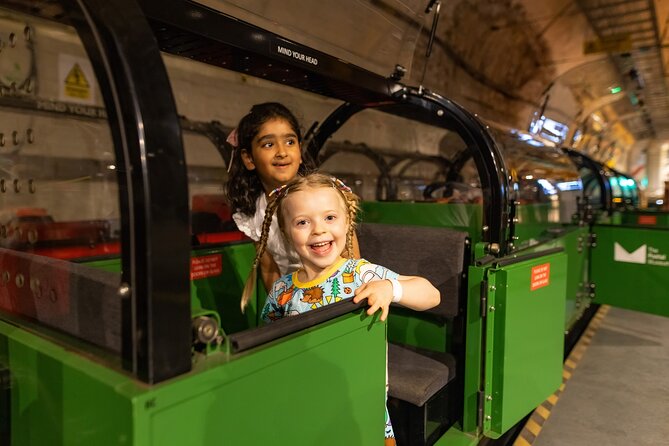
- Mail Rail is the star attraction: Ride London’s former underground postal railway through dark, narrow tunnels, with stories and historical scenes along the way.
- The museum has two locations: The Mail Rail building and the main Postal Museum are across the street from each other, so allow time to visit both.
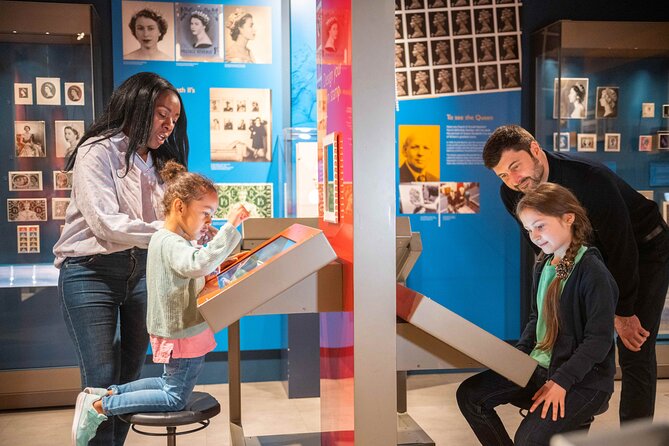
- Good for children and adults: Interactive displays, pneumatic tubes, and working models keep younger visitors involved while the social history gives adults plenty to consider.
- Allow two hours if you can: The advertised visit lasts about 1 hour 30 minutes to 2 hours 30 minutes, but children may need extra time for the hands-on exhibits.
- Check the ride before booking: Mail Rail can close for planned maintenance or operational reasons, and the ticket is normally non-refundable.
- Plan around mobility needs: The museum spaces have step-free access, but the experience requires walking at least 100 metres on uneven surfaces and climbing about 70 steep steps.
Why a postal museum is worth your London time
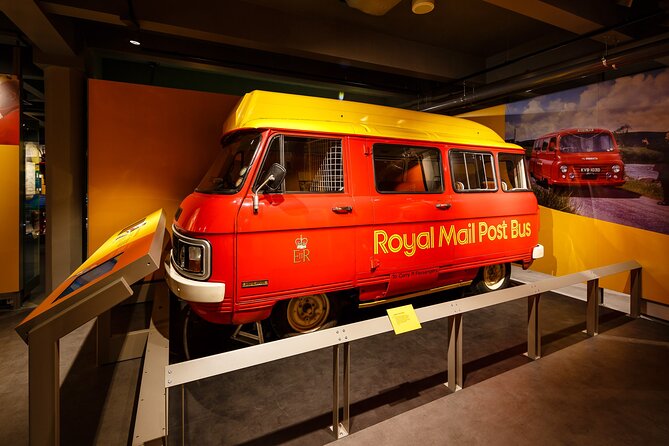
Postal services are easy to overlook because they are part of daily life. The Postal Museum shows how much depended on them. Letters carried news, money, family updates, official orders, and personal stories. The museum uses that ordinary subject to explain how communication shaped British society and connected people across the world.
I find that approach more useful than a collection of old objects with labels. You see how a stamp, a sorting system, or a delivery route affected real people. The exhibitions also make room for difficult subjects, including the Voices of Resistance: Slavery and Post in the Caribbean display. That adds social and political depth to what could otherwise be a light museum about envelopes and bicycles.
This is not a giant national museum that demands half a day. It is a focused experience, usually manageable in two hours. That makes it especially useful on a rainy London afternoon, when you want an indoor stop that feels active rather than passive.
More Museum Visits in London
- Tower of London and Crown Jewels Exhibition Ticket
★ 4.5 · 6,677 reviews - London: Chelsea Football Club Stadium and Museum Tour
★ 4.8 · 4,576 reviews - Chelsea FC Stadium Tours and Museum
★ 5.0 · 1,908 reviews
Start with Mail Rail, the small train under London
The Mail Rail ride is the main reason many people book this ticket. It takes you into the old underground railway built to move post beneath London. The journey is short, but the setting does much of the work: low tunnels, dim lighting, tight spaces, and the sense that you are entering a working part of the city that most people never see.
The ride presents the railway’s story as you move along. You learn how the system operated and how it changed over time, rather than simply looking at a stationary train. Historical details and staged scenes help explain the workers’ routines and the practical problems of moving huge amounts of mail underground.
I would make the ride your first priority. One family arrived to find a 20-minute wait, and the train can become the busiest part of the visit. If the ride is operating, doing it early gives you peace of mind and leaves the main museum for a more relaxed wander.
The train is fun for adults as well as children. Several families found that children who had lost interest in other museums became fully engaged once they were moving through the tunnels. The ride is also educational without feeling like a lecture.
There are a few cautions. The railway is dark and loud, so it may frighten some young children or feel uncomfortable for anyone sensitive to sound. Tall adults may find the carriage cramped. One person who was 5 feet 11 inches reported that their head nearly touched the roof. If you are tall, sit carefully and expect a compact ride rather than a roomy railway journey.
The Mail Rail building also includes displays you can explore after the ride. Do not treat the train as the entire attraction. The post-ride exhibits help explain what you have just seen and give children more buttons, models, and visual material to investigate.
Crossing the street to the main Postal Museum
The museum’s second part sits across the street in the main building. This layout is easy to miss, especially if you arrive focused on finding the train. Look for the main exhibition before leaving, since some visitors have nearly skipped it because the signs were not clear enough.
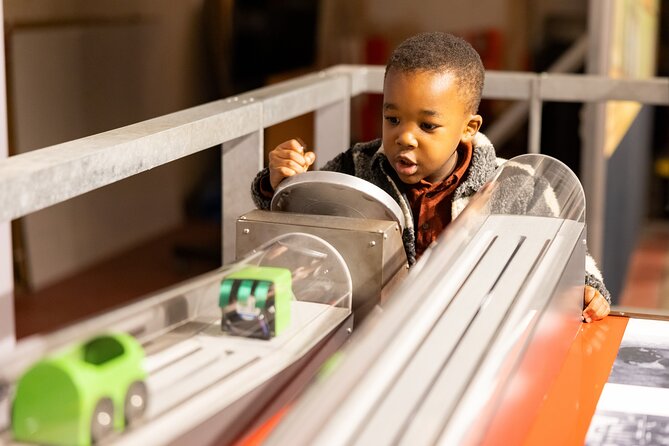
This larger section tells the postal story in a more traditional museum setting, but it still gives you plenty to do. Interactive exhibits show how messages and parcels moved through the system. Pneumatic tubes are a particular hit, offering a simple, physical way to understand how postal technology once moved items quickly through buildings.
You may also see five-wheeled cycles and early stamps, along with equipment and objects linked to postal workers. These details are valuable because they make the service personal. The post was not just a network of counters and sorting rooms. It depended on people, machines, routes, and local knowledge.
The displays also reach beyond technology. The museum looks at the role of postal workers in British communities, when the postman or postwoman could be a familiar and trusted figure. This gives grandparents a natural way to explain how communication worked before email and mobile phones became routine.
I would allow children time to test the interactive models instead of rushing from case to case. A family that visited with children aged 10 and 8 found they needed extra time for the hands-on sections. Although the museum can be busy, there is generally enough room to move around without feeling trapped in a crowd.
The social history is stronger than you might expect
The best part of The Postal Museum is not simply the machinery. It is the reminder that postal networks helped hold communities together. Mail carried information during ordinary days, emergencies, family separations, and major political changes.
The Caribbean slavery exhibition adds an important perspective. It asks you to think about whose voices were carried through the postal system, whose stories were suppressed, and how communication supported wider systems of power. If you want a museum visit with more substance than a novelty train ride, spend time here.
The museum also includes small human details that reward a slower pace. The contents of workers’ lockers were left in place when one station closed, giving the underground site a more immediate feel. Such objects show the people behind the system better than polished machinery alone.
An archive in the main building opens on the second Saturday of each month. It can offer a quieter corner for anyone who needs a break from the louder, more active displays. Since this is a specific opening schedule, check it before planning your day around the archive.
More Tickets in London
- London: The London Eye Entry Ticket
★ 4.6 · 35,875 reviews - London: Tower Bridge Entry Ticket
★ 4.7 · 15,560 reviews - London: Westminster Abbey Entrance Ticket
★ 4.6 · 11,254 reviews - London: St Paul’s Cathedral Entry Ticket
★ 4.7 · 9,813 reviews
How much time should you allow?

The official visit length is roughly 1 hour 30 minutes to 2 hours 30 minutes. I would use the shorter estimate only if you are mainly interested in the train and need to catch another appointment. For the full experience, two hours is sensible, and families with young children may want closer to three.
A practical order looks like this:
- Arrive and go to Mail Rail first.
- Allow time for the queue if the ride is busy.
- Explore the displays in the Mail Rail building after disembarking.
- Cross to the main Postal Museum.
- Spend time with the interactive exhibits and social history displays.
- Stop at the café if you need a break.
If you are visiting London with a tight schedule, the museum can still work as a compact indoor activity. Just avoid placing it immediately before a train departure unless you are willing to skip parts of the main collection.
You can choose from several time slots when booking. Confirmation is provided at booking, and the ticket is mobile, so you do not need a printed voucher.
Price, extras, and overall value

The admission price is listed at $25.55 per person. That is more than you pay for many of London’s major public museums, but this is a paid specialist attraction with a working-style ride included. The Mail Rail makes the price easier to justify, especially for families who want an activity rather than several hours of quiet gallery viewing.
The museum’s exhibitions also carry enough substance to prevent the visit from feeling like a train ride with a small display attached. If you engage with the social history and interactive sections, you get a rounded experience.
Two extras cost more:
- Annual entry to the museum exhibitions costs £2 per person.
- Sorted! The Postal Play Space costs £4.50 per person for children aged 0 to 8.
The play space may suit families with very young children, but it is not part of the standard admission. Budget for it only if you know your child will benefit from a dedicated play area.
An audio guide is available as an upgrade. I would consider it if you prefer more background while moving through the displays, particularly if postal technology and social history are new subjects for you. Families with small children may prefer the freedom of the interactive exhibits instead.
Food, facilities, and the practical visit

The museum is near public transportation, making it a straightforward addition to a central London day. The two-building arrangement is the main logistical point to remember. Give yourself time to cross the street and locate the second entrance.
There is an accredited family-friendly café, which is useful because children often need a break after the train and displays. Food selection may be limited, and hot food is not always available. If you need a full meal, do not rely on the café without checking what is being served that day.
The museum has gender-neutral accessible toilets and a Changing Places facility. Service animals are allowed. Children must be accompanied by an adult.
The museum areas have step-free access, and the Mail Rail building is also step-free except for the ride itself. However, the overall experience requires you to walk unaided for at least 100 metres over uneven surfaces with minimal lighting and climb at least 70 steep steps. That requirement matters even if the exhibition entrances appear accessible.
The museum provides accessibility information, including resources for autistic visitors and an audio-described introduction. If you have specific access needs, check those details before paying, since the ticket is normally non-refundable.
What happens if Mail Rail is closed?
This is the most important risk to understand. The train can be shut for planned maintenance or other operational reasons, and a closure can be especially disappointing if the ride is the main reason you booked.
Poor weather may also affect the activity, since the experience requires suitable conditions. If the experience is canceled because of poor weather, you are offered another date or a full refund. That is different from choosing to cancel yourself, as this ticket cannot normally be refunded or amended for personal reasons.
Check the museum’s website close to your visit, especially during periods when maintenance is possible. If the ride is unavailable, the main museum still offers interactive displays, postal technology, and social history, but the overall value changes. I would not book this ticket without confirming that the train is expected to operate if it is your top priority.
Who will enjoy The Postal Museum most?
I recommend this experience most strongly to:
- Families with children roughly school age, especially young train fans.
- Adults who enjoy transport, engineering, or unusual London stories.
- Anyone looking for an indoor activity on a wet day.
- People interested in how communication shaped society.
- Visitors who prefer a two-hour museum rather than a full-day institution.
It is less suitable if you dislike enclosed spaces, loud rides, dark tunnels, or hands-on displays. Deaf visitors may also find the spoken information on the train difficult to follow, since much of the ride depends on audio. Ask about available support before booking if that is important to you.
The experience is offered in English. An audio guide upgrade may help some visitors, but the supplied information does not confirm which languages are available.
Should you book The Postal Museum?
Book it if you want an unusual, family-friendly London museum with a real ride at its center. Mail Rail earns the ticket price for many people, and the main museum gives the visit enough weight to appeal to adults. The best plan is to ride the train first, cross to the main building, and allow at least two hours.
I would hesitate only if the ticket price feels high for your budget, if you need a fully quiet experience, or if the underground train is not running. Check the operating status, plan for the steep steps and dark sections, and do not skip the main museum across the street. With those points in mind, The Postal Museum is a smart rainy-day choice and one of London’s more unexpected family outings.
FAQ
How long does a visit to The Postal Museum take?
The estimated duration is about 1 hour 30 minutes to 2 hours 30 minutes. Families with children may need closer to three hours to enjoy the interactive exhibits without rushing.
Is the Mail Rail ride included?
Yes. Admission includes access to the Mail Rail experience when it is operating, along with the museum exhibitions.
Are there extra costs inside The Postal Museum?
Annual entry to the museum exhibitions costs £2 per person, and the Sorted! Postal Play Space costs £4.50 per person for children aged 0 to 8. An audio guide is also available as an upgrade.
Is The Postal Museum suitable for children?
Yes. The museum is family-friendly, with interactive displays and the Mail Rail ride. Children must be accompanied by an adult, and the train is dark and loud, which may frighten some younger children.
Is The Postal Museum accessible?
All museum spaces have step-free access. The Mail Rail building is step-free except for the ride, but participants must be able to walk at least 100 metres on uneven surfaces with minimal lighting and climb at least 70 steep steps.
Can I cancel or change my ticket?
The ticket is non-refundable and cannot normally be changed. If the experience is canceled because of poor weather, you are offered another date or a full refund.
Recently added around London
- PRIVATE HIRE 45 min Speedboat Tour – Embankment/Westminster Pier★ 5.0 · 55 reviews
- Private Tour of London’s Historic Pubs★ 5.0 · 55 reviews
- From London: Glastonbury and Cheddar Gorge Guided Day Trip★ 4.8 · 55 reviews
- Gatwick Airport Taxi – Private Transfer to/from London★ 5.0 · 55 reviews
- London: Kew to Westminster River Thames Cruise★ 4.2 · 55 reviews
- London by Night – Tootbus Sightseeing Tour★ 3.5 · 55 reviews
- London: Tower of London After Hours Tour and Key Ceremony★ 4.8 · 56 reviews
- From London: Cotswolds Guided Trip Including Bourton-on-the-Water★ 4.5 · 56 reviews
Museums, compared.

Liverpool Football Club Museum and Stadium Tour
Read our review →
Tower of London and Crown Jewels Exhibition Ticket
Read our review →
Chelsea Football Club Stadium and Museum Tour
Read our review →




Browse the lists this tour appears in